
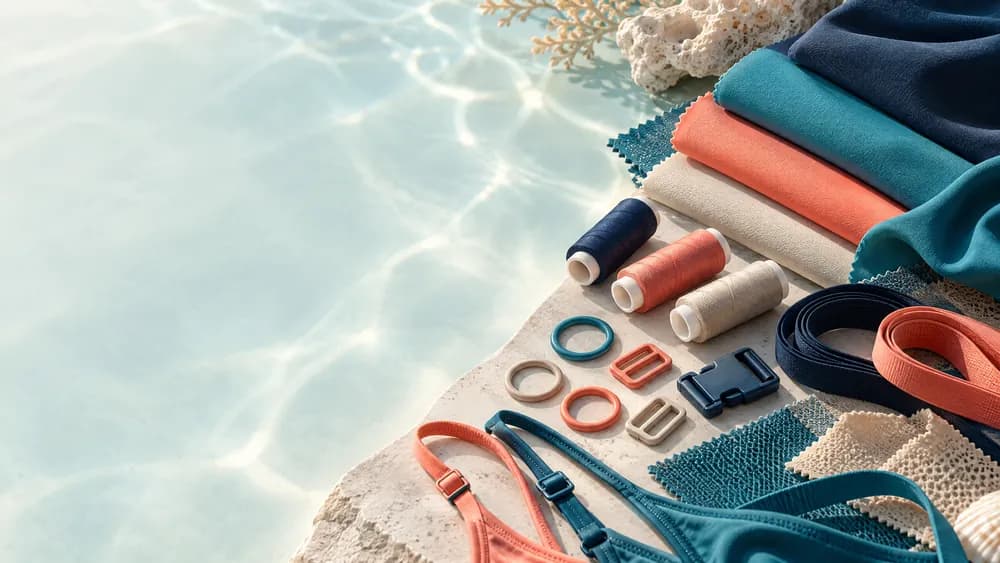
Swimwear Fabric and Trim Sourcing in China
Fabric, lining, trims and packaging compared against one brief, with the evidence you need before you commit.
Material choices decide how swimwear looks, fits and lasts. This page explains how we help you choose and confirm fabrics, linings, trims, labels and packaging, what references you can browse first, and what needs evidence before you rely on it.
- Materials covered
- Fabric, lining, trims, branding and packagingIncluding recycled nylon and polyester options for discussion.
- Start without an order
- Material support without a production orderYou can request sourcing or development support first.
- Evidence
- Documents for the specific materialCertification and performance claims are verified, not assumed.
- You decide
- Material choices and substitutionsUnless specific authority is agreed in writing.
How material sourcing works
Who does what
You provide
Your direction: style, look and feel, performance needs and target market
Reference images, swatches or specifications you already have
Quantity targets and timing
Any certifications or test reports your buyer or market requires
We do
Connect your material choices to a practical development path
Compare fabric, lining, trims, branding and packaging options against the same brief
Handle sample requests and availability and substitution discussions
Request current documents for the selected material and flag what they do and do not cover
You receive
Comparable material options, with differences in specifications, MOQ, lead time, and cost made visible
Material samples for evaluation, with scope and shipping confirmed first
A record of approvals and changes
Decisions that stay with you
| Decision point | What needs to be clear |
|---|---|
| Material choice | You choose fabric, lining, trims, branding and packaging after reviewing the options and samples. |
| Substitutions | You approve any material substitution, including when availability changes. |
| Evidence | You decide whether the documents provided are enough for your buyer or target market. |
| Before bulk production | The approved sample or reference, confirmed specifications, allowed tolerances, packaging requirements, and any unresolved development issues. |
You retain approval of suppliers, spending, material substitutions, specification changes, and shipment release unless specific authority is agreed in writing. Our role is to surface issues, coordinate action, and document decisions, not silently make commercial commitments for your brand.
What we can source and discuss
| Area | What we can discuss |
|---|---|
| Fabrics | Nylon/spandex, polyester/spandex, and recycled options. |
| Textures | Mesh, rib, matte, glossy, and neoprene references. |
| Printing | Digital printing on polyester fabrics, and direct-to-garment printing on nylon fabrics. You provide the design. |
| Hardware | Zipper pulls, adjusters, rings, and metal pendants with your brand logo. |
| Labels and packaging | Custom woven or printed labels, hangtags, branded packaging bags, and logo printing (silkscreen, heat transfer, embroidery). |
| Custom fabric | Custom fabric development, with sample fabric before bulk. |
Confirm composition, weight, stretch, finish, and the required performance for the selected material.
Reference costs
| Item | Reference |
|---|---|
| Custom hardware | One-time mold fee, typically $50–150 (for example $80 for size customization or logo engraving). The mold belongs to you. Bulk unit price about $0.30–2.00, with no minimum quantity for the hardware. Over 10,000 stock accessories need no mold fee. |
| Woven labels | Mold fee $30–80. Woven logo labels $60, MOQ 500–1,000 pieces. |
| Custom fabric | Sample fabric $100 for 3–5 meters. Bulk MOQ 1,000 kg, about 8,000 bikinis, 6,000 one-pieces or 3,000 modest swimwear sets, with 3–5 colors. |
Physical-service prices, quantities, and timelines are project references. Confirm the selected materials, scope, and current quotation before committing. See Pricing & Fees for all published references.
Evidence before you rely on a material
Ask for current documents for the specific material, product, and required scope, such as applicable OEKO-TEX, recycled-material certification, or performance test reports. Confirm what each document covers and whether it applies to your selected item.
Do not assume that every library reference or finished product has the same certification. Recycled nylon and polyester options are available for discussion, but composition, performance, and certification coverage should be verified for that material rather than assumed to match every conventional alternative.
Chlorine resistance, sun protection, and other performance claims need applicable evidence, not just a fabric category name.
Browse before you ask
Many early-stage brands start by choosing a fabric direction, lining type, logo application, or packaging idea first. You can browse references before you contact us.
Common questions
What fabrics do you offer?
Explore nylon/spandex, polyester/spandex, recycled options, and textures such as mesh, rib, matte, glossy, and neoprene references. Confirm composition, weight, stretch, finish, and the required performance for the selected material. Chlorine resistance, sun protection, and other performance claims need applicable evidence, not just a fabric category name.
Do you offer sustainable or recycled fabrics?
Recycled nylon and polyester options are available for discussion. Request current certification and material documentation for the specific selection. Composition, performance, and certification coverage should be verified for that material rather than assumed to match every conventional alternative.
Which certifications do your materials have?
Ask for current documents for the specific material, product, and required scope, such as applicable OEKO-TEX, recycled-material certification, or performance test reports. Confirm what the document covers and whether it applies to your selected item. Do not assume that every library reference or finished product has the same certification.
Can I print my own patterns on the fabric?
Yes. We support digital printing on polyester fabrics and direct-to-garment printing on nylon fabrics. You provide the design, and we print it on the fabric.
Can I choose fabrics or trims before I have a final design?
Yes. Many early-stage brands start by choosing a fabric direction, lining type, logo application, or packaging idea first. OYOYI can help connect those choices to a practical swimwear development path, but final sampling details should be confirmed before bulk production.
What is the minimum for custom fabric?
Sample fabric costs $100 for 3–5 meters. Bulk custom fabric has a minimum of 1,000 kg, which is about 8,000 bikinis, 6,000 one-pieces or 3,000 modest swimwear sets, with 3–5 colors.
Can I request material sourcing without a production order?
Yes. You can request material sourcing or development support without committing to a production order.
Choosing materials for your next style?
Share the style, the look and feel you want and your target market. We confirm scope and sample arrangements before any work begins.