
How Many Pieces Should Your First Swimwear Order Be?
For a first-time brand without swimwear sales history, the observed 30–60-piece range across 3–4 sizes can be a discussion starting point, rather than a universal recommendation. At that quantity, the per-unit price is higher than a bulk run — that's simply the real math of small-batch cutting and setup — but the actual worry for most first-time brands isn't the per-piece price. It's inventory: sitting on units that don't sell. Returns also deserve a separate allowance. The NRF’s 2025 Retail Returns Landscape estimated that 19.3% of online sales would be returned in 2025. That is an online retail figure, not a swimwear return rate, and should not be used as your brand’s forecast. The practical question is how much unsold or returned stock you can comfortably hold.
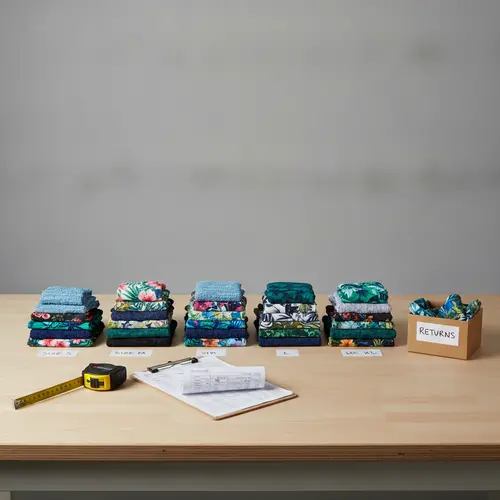
When a bigger first order actually makes sense
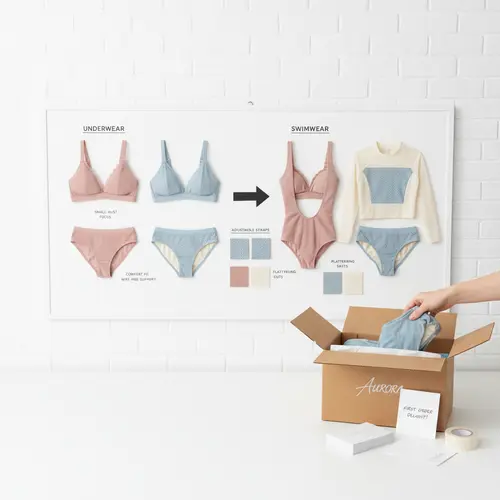
One TideLine client went against the small-and-cautious default. It was an established underwear brand with a loyal existing customer base, built specifically around a niche body type (small-bust customers). When they expanded into swimwear, they targeted the exact same audience they'd already validated in underwear — not a new, unproven segment. That confidence showed up in their first order size, which was high relative to a typical first-timer. TideLine reports that the relationship subsequently grew into substantial repeat orders. The useful point for a first-order decision is that the customer base existed before the swimwear launch; this outcome is not a forecast for another brand.
The lesson isn't "order big and hope." It's that a bigger first order made sense because the audience-market fit was already proven elsewhere — not because the brand was simply more confident or better-funded.
When staying small — even with more variety — is the smarter call
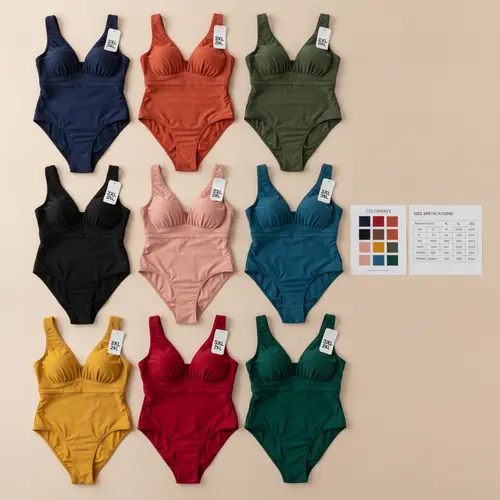
A second TideLine case cuts the other way. A US plus-size brand placed a first order for one style, spread across multiple colors and sizes, totaling around 500 pieces. We were honestly a little cautious about that combination going in — more colors and sizes per style adds real complexity even at a modest total quantity. The supplier reported positive feedback when describing the order; no sell-through or return-rate data was supplied.
What's notable here isn't the exact number — it's the shape of the order: one proven style, tested across the color/size range the brand actually needed, rather than several unproven styles at once. For more on how quantity, color, and size combine to define what a real minimum looks like, see our breakdown of how no-MOQ manufacturing handles fabric, customization, and order size.
A pattern worth naming honestly
In TideLine’s experience, overstock after larger first orders was observed more often among domestic customers than overseas clients. Lower domestic shipping costs and access to resale channels were offered as possible explanations. This was an operational observation, not a measured comparison of the two markets, and it should not determine an individual brand’s order size.
For your own decision, test the assumptions behind demand. The U.S. Small Business Administration’s market-research guidance recommends examining demand, market size, and pricing, and distinguishes general market data from direct customer research. An existing audience is useful evidence, but it still needs to match the swimwear product you plan to sell.

How order size actually maps to real outcomes
Order pattern | Real example | What made it work (or worth watching) |
|---|---|---|
Small, single style, narrow size run | Typical first-timer: 30-60 pieces, 3-4 sizes | Less stock exposure than a larger order of the same product; not a universal target |
Larger first order, proven audience | Underwear-brand crossover into swimwear, same niche audience | Confidence came from already-validated demand, not just bigger budget |
Moderate total, spread across colors/sizes | US plus-size brand, 1 style, multiple colors/sizes, \~500 total | More complexity per style even at a modest total; supplier reported positive feedback; sell-through was not provided |
FAQ
Q: Is there a minimum first order quantity?
A: OYOYI’s no-MOQ manufacturing guide explains quantity-based pricing and separate material or customization constraints. The 30–60-piece range in this article is a supplier observation, not a mandatory minimum; confirm the requirements for your actual materials and style.
Q: Will I get a worse price if I order a small first batch?
A: Per-unit price is higher at smaller quantities — that's real, not a penalty. See our hidden-costs breakdown for what specifically drives that difference.
Q: Should I order more if I'm confident in my designs?
A: Confidence in the designs themselves isn't the same signal as confidence in demand. The cases where a bigger first order worked involved brands with an already-validated audience for that specific niche — not just strong belief in the product.
Q: Does ordering across more colors or sizes increase my risk even if the total quantity stays the same?
A: It adds complexity, yes — more combinations to get right on fit and color matching — and the total alone does not tell you whether each size and color has enough demand. Confirm the allocation rather than treating 500 pieces in many combinations as equivalent to 500 of one item.
Q: How does order size affect my production timeline?
A: Separate sample development from bulk delivery: the linked article covers sampling, not a complete production-and-shipping schedule. See the real sample lead-time cases for what actually moves timing.
Q: Do you recommend a specific number for my first order?
A: The decision should reflect your evidence of demand, available cash, size and color allocation, and replenishment plan. OYOYI can review the quantity and explain development and sourcing trade-offs before you commit.
Not sure what quantity fits your first collection?Submit your tech pack or reference materials for review (sign-in required) so OYOYI can review the project, clarify material and customization requirements, and discuss a quantity-based quote.
Written by oyoyi.ai with AI assistance, based on supplier experience and cited research.