
What 'Low MOQ' Actually Means: Style, Color, or Size?
Most swimwear manufacturers advertise "low MOQ" — but low compared to what? At oyoyi.ai, there is no fixed minimum at all: you can order one piece or five hundred, and the only things that change are the per-unit price and the production timeline. That's a genuinely different model from what "low MOQ" usually means in the industry, where the number on the homepage often hides a second, smaller threshold underneath.
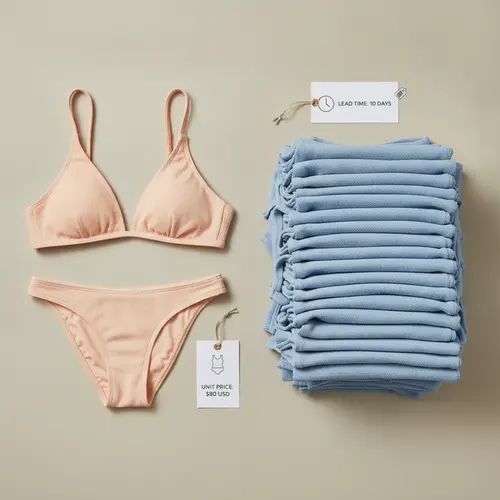
The MOQ number on a factory's homepage isn't the whole story
When a supplier says "MOQ 50" or "MOQ 100," that number is almost always scoped to something more specific than "any order." The three most common scopes:
Scope | What it actually restricts | What buyers assume it means |
|---|---|---|
Per style | 50 pieces of one design, any mix of colors/sizes | "I can order 50 pieces total" |
Per color/print | 20 pieces of one design _in one specific colorway_, even if the style-level MOQ is lower | "I can mix colors freely under the style MOQ" |
Per size | A minimum quantity per size within a style/color | "I can order just the sizes I actually need" |
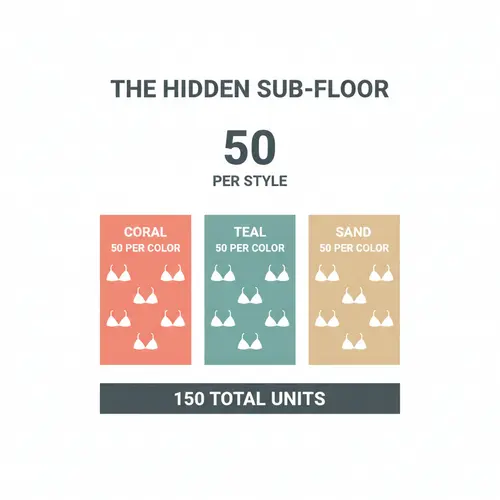
A brand that wants one bikini style in three colorways can hit a real wall here: a "low MOQ" of 50 per style can quietly become 150 units the moment three colors are required, because the color-level floor sits underneath the style-level number. This is exactly the kind of gap that separates what a homepage promises from what a quote actually charges — and it's a pattern worth checking on any quote, not just ours.
Why this is getting more attention now, not less
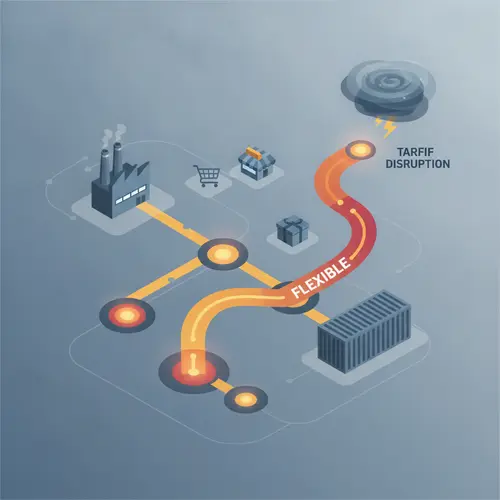
Sourcing flexibility has moved from a nice-to-have to a stated strategic priority across the industry. The Business of Fashion and McKinsey's State of Fashion 2026 survey found trade disruption and tariff pressure sitting at the top of executives' concerns for the year, with many leaders describing the operating environment as more challenging than in prior years as they look ahead to 2026, shaped by a fundamentally new reality of tariffs, shifting consumer spending, and rapid technological change. Separately, the University of Delaware/USFIA 2026 Fashion Industry Benchmarking Study found that brands are intentionally prioritizing capacity, flexibility, and inventory agility in how they choose and manage suppliers, rather than simply chasing the lowest unit cost. Put plainly: buyers are getting more sophisticated about what "flexible" actually has to mean, and a MOQ number with hidden sub-floors doesn't hold up to that scrutiny anymore.
External sources referenced: McKinsey — The State of Fashion 2026 · SupplyChainDive — USFIA 2026 Fashion Industry Benchmarking Study
How oyoyi.ai's model actually works
There's no per-style, per-color, or per-size floor here. Order one piece of one colorway, or one piece each of five colorways, or 500 of a single color — all of it is accepted. What changes with quantity is:
Price per unit — smaller orders carry a higher per-piece cost, the same way any non-standard production run does; this isn't a penalty, it's the real math of small-batch cutting and setup time
Production lead time — smaller, more customized orders typically take longer proportionally, since they don't benefit from the batching efficiency of a large single run
That's it. There's no separate gate to clear once you're past the headline number. For the real cost curve at different quantities and processes, our breakdown of what actually drives low-MOQ costs and the hardware mold-fee example both walk through this with real numbers, and our full cost breakdown covers the rest of the categories.
FAQ
Q: Doesoyoyi.aihave a minimum order quantity at all? A: No. There is no fixed minimum — any order quantity is accepted, at any mix of colors or sizes. Price per unit and lead time are the two variables that move with quantity, not eligibility to order.
Q: If I order one style in three different colors, does each color need to hit its own minimum? A: No — there's no per-color floor to clear. You can split a single style across as many colorways as you want without triggering a separate threshold for each one.
Q: Will my per-unit price be the same at 1 piece and at 500 pieces? A: No, and no honest supplier would tell you it is. Smaller runs carry a higher per-piece cost because cutting, setup, and material waste don't scale down linearly. See our real cost breakdown for what specifically moves the number.
Q: Does a small order get a longer or shorter lead time than a bulk order? A: It depends on the specifics — customization level, whether materials are stock or need to be sourced, and current production queue all matter more than raw quantity alone. See our real sample lead-time range for the actual variables involved.
Q: Why do some factories advertise "low MOQ" but still block small brands at the color or size level? A: Because "MOQ" as a marketing number is usually scoped to one dimension (style) while the real constraint sits on a different dimension (color or size) that isn't mentioned upfront. It's worth asking any supplier directly: "is that MOQ per style, or per color, or per size?" before assuming the number covers your actual order shape.
Q: Does ordering a small quantity mean lower priority or less attention to quality? A: No — the same construction standards and quality checks apply regardless of order size. What changes is cost and timeline, not the level of care in production.
Q: What do you need from me to get a real per-unit quote at my specific quantity? A: Your style details (or tech pack/reference image), your target colorways, and your quantity per colorway. With those three, we can give you a real quote rather than a generic range.
Ready to see what your specific quantity and color mix actually costs?Submit your style and quantities for a real quote — no MOQ gate to clear first.
Written byoyoyi.ai