
Custom Swimwear Hardware: The Real Mold Fee and No-MOQ Logic
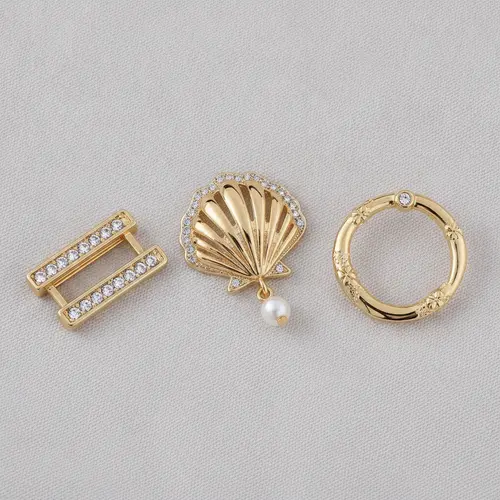
Custom swimwear hardware — a decorative charm, a jeweled slider, a shaped ring — works on a different economic logic than the garment itself, and it trips up a lot of first-time brands: there's no fixed minimum order quantity for custom hardware, because the real cost driver is the mold, not the piece count. Once the mold is paid for, it's paid for — the only variable left is how the per-unit price scales with volume. Here's how that process actually works, and what it costs in practice.
At a Glance
Garment MOQ Logic | Custom Hardware MOQ Logic | |
|---|---|---|
What sets the floor | Fabric, cutting, and labor efficiency at low volume | The mold itself — a fixed, one-time tooling cost |
Typical minimum | A real per-size, per-color floor (varies by factory) | No fixed floor — the mold cost applies whether you order 10 pieces or 10,000 |
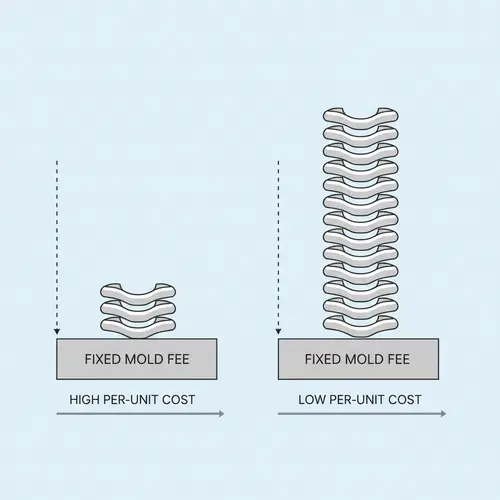
What changes with volume | Total cost and per-unit price both drop | Per-unit price drops; the mold fee doesn't change |
Real cost reference | Varies by garment | \~$80-100 USD mold fee (design-dependent), confirmed against actual supplier quote |
How Custom Hardware Actually Gets Made
The process starts with whatever the client already has — a logo file, a sketch, a 3D render, or in some cases just a reference photo of a similar piece. From there:
The design gets converted into a mold specification. If only a flat logo file (like a PSD) is available rather than a physical sample, that's enough to start — the supplier works from the 2D file to plan the mold structure.
The mold fee gets quoted, based on design complexity — more intricate shapes, multiple components, or fine detail work all push the fee up. A real reference point from our own sourcing: roughly $80-100 USD for a moderately complex custom piece, though this is confirmed against the actual supplier's quote rather than fixed in advance.
Tooling is built, then a physical sample is produced from the same material and finish planned for the real production run, so the brand can check weight, scale, and detail before committing further.
Production runs from the same mold at whatever quantity the brand orders — this is the step where "no MOQ" actually plays out, since the mold doesn't need to be re-made or re-amortized differently at low volume, it's simply priced per unit at whatever tier the order falls into.
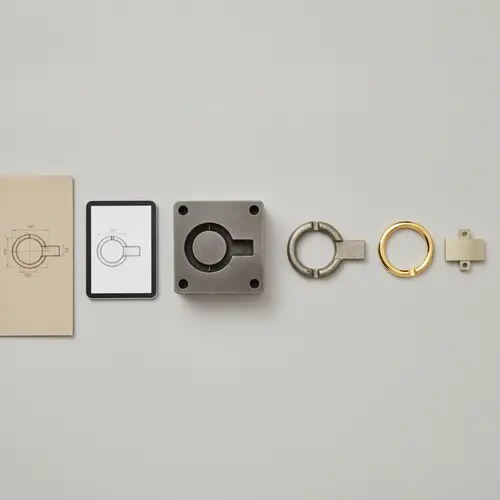
This progression — design file to mold quote to tooling to sample to production — isn't unique to swimwear hardware; it mirrors how custom jewelry and small metal hardware get developed generally, where mold and design costs are described as fixed, one-time investments distinct from the recurring per-unit cost of plating or finishing. One industry cost breakdown frames this well: a mold might cost $80 once, while plating runs $5-15 per piece — meaning the mold is a fixed asset, not a recurring expense, and its cost per unit shrinks the more pieces are produced from it.
Why "No MOQ" Doesn't Mean "No Minimum Spend"
It's worth being precise about what "no MOQ" actually means here, because it's easy to misread it as "order any tiny quantity for the same price as a large one." It doesn't mean that. What it means is: the mold fee is the same whether the first order is small or large, and there's no separate piece-count gate blocking a small order from happening at all. The trade-off is straightforward and doesn't disappear just because there's no formal minimum — a small first order absorbs the mold fee across fewer pieces, so the effective per-unit cost is higher than it would be at volume. This is the same logic behind our genuinely flexible, low-MOQ manufacturing model generally — a flexible minimum doesn't mean the underlying economics of scale disappear, it just means the door isn't closed on a first, smaller test order the way a hard MOQ would close it.
 The mold fee is only one part of the minimum-order conversation. Before combining hardware and garment quotes, check how MOQ is scoped by style, color and size so you know which part of the order each condition applies to.
For context on how this compares to sourcing arrangements generally: in a custom OEM relationship, the buyer typically covers the full mold fee since the design is proprietary to that brand — which is exactly the arrangement described here, and it's worth knowing that this isn't a swimwear-specific quirk, it's standard practice across custom hardware and jewelry sourcing generally. For the fuller picture of what a small order carries in added cost beyond just the mold fee — fabric minimums, cutting efficiency, shipping brackets — see the full breakdown of what low MOQ actually costs before finalizing a first order size.
Material and Durability: A Separate Cost Line From the Mold Fee
The mold fee pays for tooling — it doesn't specify metal quality or finish durability on its own, which is worth knowing before assuming a low mold quote covers everything. We've written about the plating, material, and testing side of this in detail elsewhere: why plating method (rack vs. barrel) and material choice (zinc alloy vs. stainless steel) matter more than most buyers assume, including the real chlorine-resistance and tensile testing swimwear hardware needs to pass. That article also confirms the same $80 USD reference point for hardware tooling used here, alongside the separate ~$50 mold fee for trim items like hang tags — worth knowing that hardware and trim tooling are two distinct cost lines, not one extension of the other.
What's specific to custom hardware, beyond material and plating, is the mold-development workflow itself and the commercial logic that comes with it — which is what the rest of this article covers.
A Real Judgment Call: When We Push Back on a Client's Own Design
Custom hardware development isn't a pure execution service, and it's worth being direct about that. On a real design brief, one element — a decorative pendant — had a sharp, angular shape as submitted. We flagged it directly: a sharp-edged metal piece positioned on a bikini, worn against skin in and out of water, carries a real risk of scratching or cutting the wearer, regardless of how the design looks on paper. That's not a subjective styling opinion — it's a safety judgment, and it's the kind of thing worth raising even when a client hasn't asked for that feedback, rather than manufacturing a design exactly as submitted and letting the brand find out about the risk after it ships.
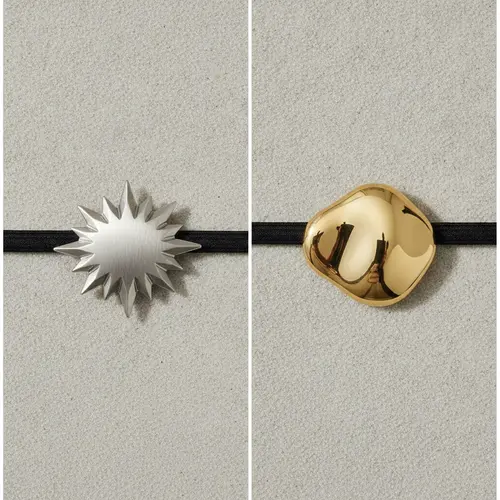
This also came up on the same brief in a more routine way: two separate decorative elements were confirmed as producible from two independent molds, which matters for a brand budgeting a multi-piece hardware set — each distinct shape usually means a distinct mold and a distinct fee, not one mold covering multiple different pieces.
When Custom Hardware Tooling Actually Makes Sense
Worth the mold investment:
The hardware is a genuine brand identifier — a shaped logo charm, a distinctive silhouette — not something equivalent hardware already covers
The design will be reused across multiple future collections, spreading the one-time mold cost over more total units over time
Off-the-shelf hardware genuinely can't achieve the look the brand needs
Not worth it yet:
The brand is still validating a first collection and hasn't confirmed repeat demand
A close, ready-made hardware option exists that would achieve a similar effect at zero tooling cost
The design is likely to change again soon, which would mean paying for a second mold shortly after the first
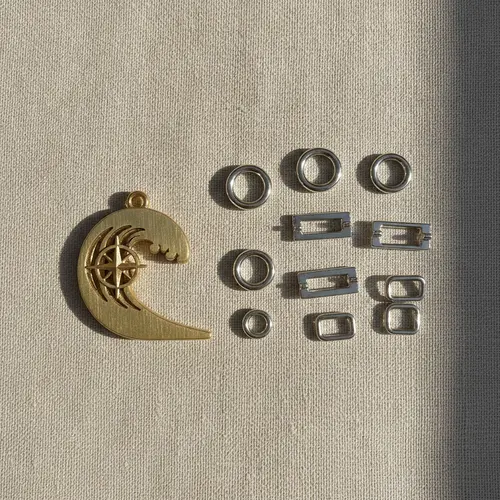
Our hardware and trims library is browsable directly if you want to see what's available off-the-shelf before deciding whether a custom mold is worth it for your design. This sits alongside the broader no-MOQ manufacturing model we apply across fabric, trims, and hardware sourcing generally, and the rest of the real specs documented in our fabric and trim library.
FAQ
Q: Is there really no minimum order for custom swimwear hardware?
A: There's no fixed piece-count floor blocking a small order, because the mold fee — not the unit count — is the real fixed cost. A small first order is still more expensive per unit than a larger one, since the mold cost is spread across fewer pieces, but there's no formal MOQ gate preventing the smaller order from happening.
Q: How much does a custom hardware mold actually cost?
A: In our own sourcing, a moderately complex custom design runs around $80-100 USD, confirmed against the actual supplier's quote rather than fixed upfront — more intricate or multi-part designs cost more.
Q: Do I need a physical sample to start custom hardware development, or is a design file enough?
A: A design file — even just a logo or a flat 2D file — is enough to start the mold-quoting process. A physical reference sample can help but isn't required.
Q: What material is custom swimwear hardware usually made from?
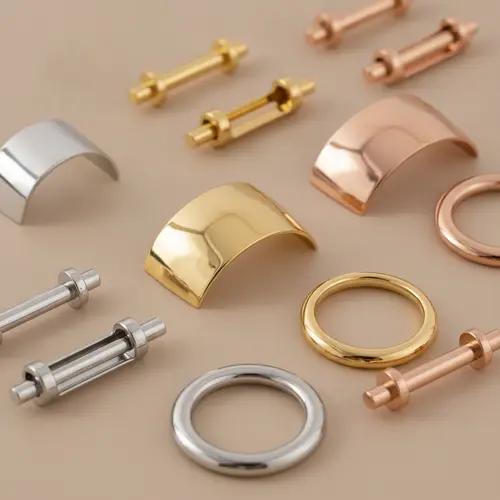
A: Zinc alloy with electroplating is the standard approach, in gold, silver, or rose gold finishes, verified with real chlorine-resistance testing (we run ours at 48 hours) given how harsh pool and ocean conditions are on plated metal.
Q: If my design has multiple decorative elements, is that one mold or several?
A: Usually several — each genuinely distinct shape typically requires its own mold and its own fee, rather than one mold covering multiple different pieces.
Q: Will a factory manufacture any hardware design exactly as submitted?
A: Not necessarily, and that's a good thing for the brand. A design with a real safety issue — like a sharp edge on a piece worn against skin — is worth a manufacturer flagging directly, even without being asked, rather than producing it exactly as drawn.
Q: Is custom hardware tooling worth it for a first, unproven collection?
A: Not always. If demand for the design hasn't been validated yet, or a close off-the-shelf option already exists, it's often more sensible to launch with ready-made hardware and reserve custom tooling for a design you're confident will be reused across future collections.
Developing custom hardware for your swimwear line and want a real mold quote before you commit? Send us your design file — a physical sample isn't required to get started.