
Ruffle Swimwear Construction: Gathered vs. Sewn-On Strip
Ruffle detailing is a real, recurring presence in 2026 swimwear trend coverage — Marie Claire's swim trend roundup specifically calls out soft ruffles as one of the season's directions. Like most swimwear texture trends, the visual effect hides a construction decision most coverage skips entirely — and based on real production experience, there isn't one fixed way to build it.
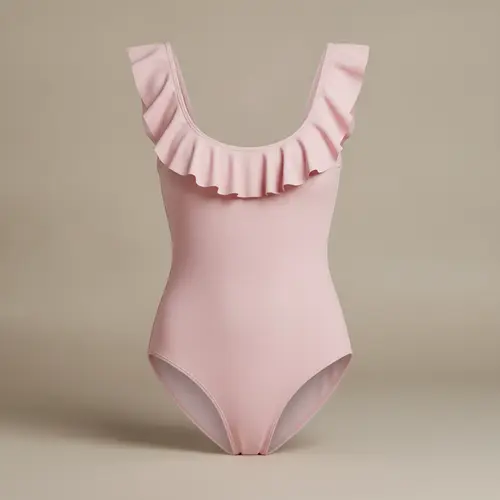
Two Real Construction Methods — Chosen Per Style
Ruffles in swimwear get built one of two genuinely different ways:
Gathering the fabric itself — the same underlying technique behind the elastic thread ruching we've covered for crinkle texture and scrunch-back bikini bottoms: fabric is drawn in on itself during stitching to create the ruffled, dimensional effect directly from the garment's own material.
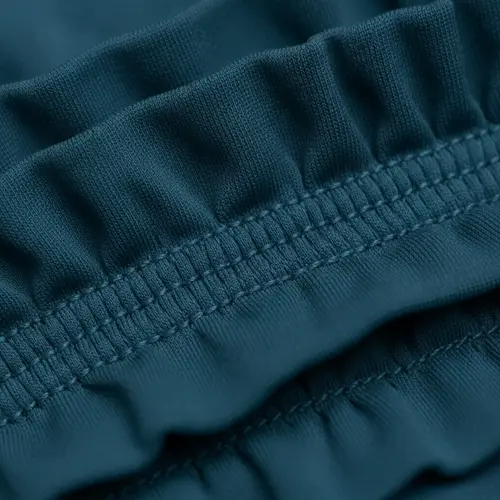
A separately cut ruffle strip, sewn on — a distinct piece of fabric is cut to a ruffle shape and attached to the garment as a trim, rather than gathering the base fabric itself.
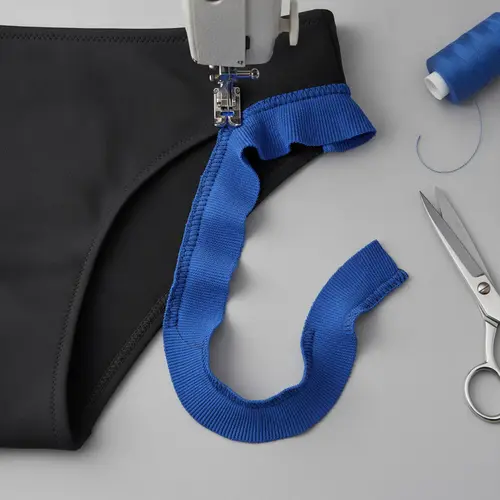
Which method gets used depends on the specific design — neither is a default, and a factory that only offers one is limiting your actual design options. This is the same "real construction depends on style, not one fixed technique" pattern that shows up across crinkle texture and other trend-driven details we've written about.
The Real Quality Risk: The Outer Edge, Not the Gather
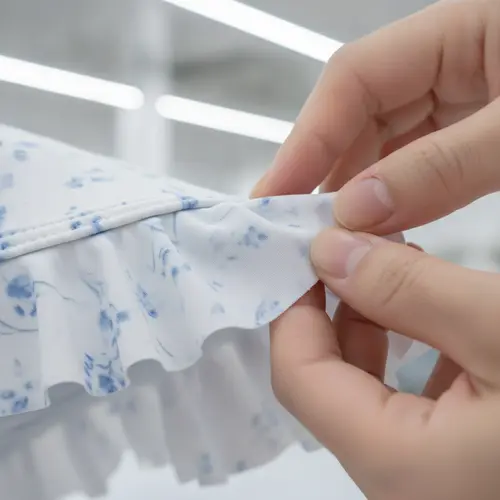
Here's a genuine, specific quality consideration worth knowing: the outer edge of a ruffle — wherever it's cut with a curved or scalloped line — has a real tendency to come out uneven or discontinuous during cutting. This isn't a hypothetical risk; it's a recurring, checkable issue.
The real fix isn't a special cutting technique — it's manual quality inspection. Every ruffle edge gets checked by hand during QC, and any unevenness gets manually smoothed and rounded out before the piece moves forward. This is a genuinely different quality-control profile than a straight-seam construction detail: it requires a trained eye checking a curved edge specifically, not just a standard pass/fail seam check.
What This Means for Sourcing
If you're specifying a ruffle detail, it's worth asking a supplier directly which of the two construction methods they're planning to use for your design, since gathered and sewn-on-strip ruffles read and drape differently even when the finished look seems similar in a reference photo. It's also worth asking how they catch and correct outer-edge irregularities during QC — a factory without a clear answer here is more likely to ship pieces with visibly uneven ruffle edges.
This is one entry in the full real construction guide organized by swimwear type.
FAQ
Q: Is there one standard way ruffles are built into swimwear?
A: No — it's genuinely style-dependent. Ruffles are built either by gathering the base fabric itself (the same technique behind scrunch/ruched construction) or by attaching a separately cut ruffle strip as trim.
Q: What's the most common quality issue with ruffle swimwear?
A: The outer edge of the ruffle — anywhere it's cut with a curve or scallop — has a real tendency to come out uneven during cutting. This gets caught and corrected through manual QC inspection, not through the cutting process itself.
Q: Does a gathered ruffle look different from a sewn-on ruffle strip?
A: Yes, generally — the two methods produce different drape and dimensional effects even in similar-looking designs, which is why the specific technique is worth confirming with your supplier rather than assuming "ruffle" means one fixed construction.
Q: Is ruffle detailing a real, lasting 2026 trend or a passing reference?
A: It's showing up across independent fashion trend coverage as a real seasonal direction, not a single brand's styling choice.
Specifying a ruffle detail for your next collection and want to know which construction method fits your design? Send us the reference — we'll tell you honestly which real technique gets you there.