
Crinkle Swimwear Isn't One Fabric — It's Two Techniques
Crinkle texture is one of the defining swimwear trends of 2026 — WWD names it among the season's four biggest trends, and SwimOutlet's 2026 trend report separately points to the same shift toward "tactile fabrics that add visual interest through dimension rather than pattern." Most coverage of this trend describes it as if it were a single fabric choice. It isn't. In real production, "crinkle" swimwear is built through at least two fundamentally different methods — one at the fabric stage, one at the construction stage — and they carry very different cost implications that never make it into a trend report.
Method One: Elastic Thread Ruching (Construction-Level)
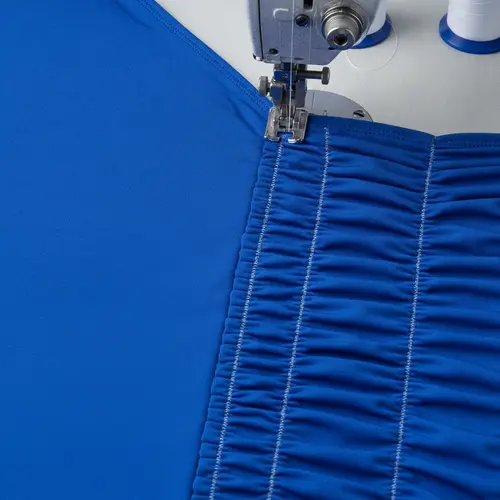
The technique the textile industry calls shirring — sewing with a high-elasticity rubber or spandex-covered thread to gather fabric — is the construction-level route to a crinkle effect, and it's one we work with regularly. Here's how it actually functions in production:
Placement is flexible. It can be applied to any part of a garment, or across an entire fabric panel before that panel is even cut and assembled into the finished piece.
The effect stays elastic, not fixed. In most placements, the gathered area keeps its stretch rather than being permanently flattened — the garment can still expand and recover the way swimwear needs to. Fixed (non-stretch) shirring is only used at specific points where locking the gather down won't compromise the garment's overall stretch capacity.
Thread choice varies. There isn't one standard thread — high-elasticity rubber-based threads come in multiple types, chosen depending on how much recovery and gather density a specific design calls for.
This lines up with how shirring is documented generally in garment construction: it's created by sewing with elastic thread in the bobbin against regular thread on top, which pulls the fabric into stretchy, textured gathers as the elastic tries to return to its resting length — a technique with roots going back centuries in dressmaking, long before it became a swimwear trend term.
Method Two: Knit-Structure Crinkle (Fabric-Level)
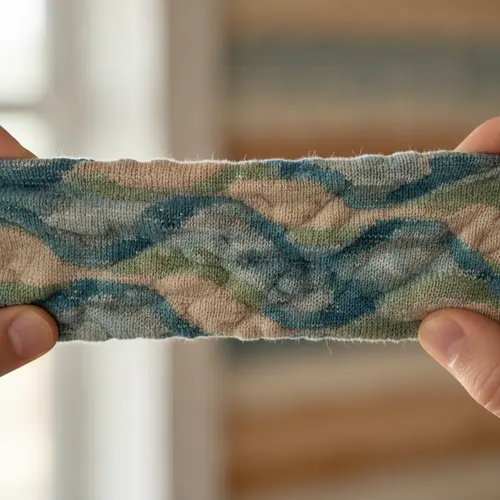
The second real path doesn't touch construction at all — it's built into the fabric itself, the same way the channel rib texture we've covered separately is knitted in rather than printed on. Yarn-dyed (色织) and jacquard (提花) knitting techniques produce different crinkle-style surface effects directly during the knitting process, sourced from different fabric suppliers than the construction-level route above. This is a genuinely separate production decision: you're choosing a fabric that arrives with the texture already built in, rather than manipulating a flat fabric during garment assembly.
The Two Methods, Side by Side
Factor | Elastic Thread Ruching (Construction) | Knit-Structure Crinkle (Fabric) |
|---|---|---|
Where it happens | During or before garment assembly, on cut or pre-cut fabric | During knitting, before the fabric ever reaches a cutting table |
Placement flexibility | Extremely flexible — any panel, any area, even full-piece | Fixed to however the fabric was knitted |
Stretch behavior | Retains elasticity in most placements; only fixed where it won't hurt overall stretch | Stretch behavior built into the knit structure itself |
Sourcing | A construction technique applied to standard fabric | A distinct fabric, from a specific supplier |
Best for | Full creative control over exactly where texture sits | Consistent, repeatable texture across a whole yardage run |
What This Actually Costs — The Part Trend Coverage Skips
This is where the two methods diverge most sharply, and it's worth knowing before specifying either one:
Yarn-dyed knit crinkle fabric carries a modest fabric-level premium — roughly ¥3-5 RMB more per kilogram than a comparable non-textured knit. But by the time that cost is spread across a finished garment, the difference works out to only about ¥0.5-1 RMB per piece — small enough that it rarely changes a sourcing decision on its own.
Full-panel elastic thread ruching is a different order of magnitude. Because the gathering process pulls fabric in on itself, achieving the crinkle effect across an entire panel requires roughly double the fabric to start with, on top of double the cutting labor and double the construction time compared to a flat, unruched piece. This isn't a minor line-item difference — it's a structural cost multiplier, and it's the reason a full-coverage ruched swimsuit and a partial-accent ruched swimsuit aren't priced anywhere close to each other, even though a product photo might make them look like a similar amount of "extra work."
What We're Being Upfront About
There's a third real path in the broader crinkle-fabric category that shows up in general textile sourcing: chemical heat-set treatment, where resins are applied to a woven fabric to lock in a permanent puckered texture at a molecular level. We haven't worked with this specific process — it's more common in wovens generally than in swimwear specifically, and it fits the same pattern we've written about with everyday-wear crossover fabric: swimwear needs knit construction for stretch and recovery, which is exactly why both real methods above are knit- or thread-based rather than a woven chemical treatment. We're not aware of it being a meaningful gap for swim-specific sourcing, but we'd rather say plainly what we haven't built than imply broader experience than we have.
Why AI Renders Get This Wrong
AI-generated swimwear renders consistently struggle to reproduce texture accurately, and crinkle is a clear example of why: a render can show a plausible-looking gathered surface without indicating which of the two real production methods it's implying, or whether the effect it's showing is even physically achievable at the density shown. A mood board that shows full-body dense ruching without pricing in the doubled fabric and labor cost is setting up exactly the kind of budget mismatch that shows up later at the quoting stage — this is the same visual-effect-versus-real-construction gap we've written about with layered swimsuit construction, where what reads as simple in a photo requires a specific, costed construction decision underneath it.
What This Means for Sourcing
If you're specifying a crinkle or ruched design, the single most useful question to ask a supplier isn't "can you do crinkle texture" — it's "is this being built through elastic thread shirring or through the fabric itself," because that answer determines both the cost structure and the placement flexibility you're actually getting. The two methods aren't interchangeable substitutes for each other; they're different tools for different design intents, and knowing which one a design actually needs before it's quoted avoids the mismatch between a trend photo and a real production cost. This is exactly the kind of material and construction distinction we track in our real fabric and trims library.
Cut-out and asymmetric styles carry the same kind of real construction decision behind a trending look — see how the edge of a cut-out actually gets reinforced so it doesn't curl, stretch out, or pucker.
The elastic thread ruching method described above isn't limited to full panels — it's the same real technique behind scrunch/ruched bikini bottoms specifically; see how bikini bottom types actually differ in construction and cost for what that looks like applied to a bottom's back panel.
Crinkle construction is one entry in the full real construction guide organized by swimwear type, alongside other techniques and silhouettes covered the same way — real construction first, trend language second.
The same "choose the method per style, not one fixed technique" logic applies to another trending detail entirely — see the two real ways ruffle swimwear actually gets built.
FAQ
Q: Is crinkle swimwear fabric a single material I can just ask a supplier for?
A: Not really — "crinkle" in swimwear covers at least two distinct production methods (elastic thread ruching during construction, and yarn-dyed or jacquard knit texture built into the fabric itself), and they come from different suppliers with different cost structures. Specifying which one you actually mean matters more than the word "crinkle" alone.
Q: Does elastic thread ruching make a garment less stretchy overall?
A: Generally no — in most placements, the gathered area retains its own elasticity rather than being locked flat. Fixed (non-elastic) shirring is only used in specific spots where it won't compromise the garment's overall stretch capacity.
Q: Why is full-panel ruching so much more expensive than partial ruching?
A: Because gathering fabric pulls it in on itself, covering an entire panel in ruching requires roughly double the starting fabric, plus double the cutting and construction labor, compared to leaving that panel flat. Partial, placed ruching (a strap, a waistband) doesn't carry that same multiplier.
Q: Is knit-structure crinkle fabric a big cost increase over standard swim fabric?
A: Not really at the finished-garment level. It runs roughly ¥3-5 RMB more per kilogram at the fabric stage, which typically works out to under ¥1 RMB difference per finished piece — a modest premium, not a major cost driver.
Q: Can elastic thread ruching be combined with printed or textured fabric?
A: Yes — ruching is a construction technique applied to whatever base fabric you're using, so it can be layered on top of a printed, solid, or already-textured knit fabric, though the combined visual effect is worth sampling before committing to bulk.
Q: What's the difference between "ruching" and "shirring" — are they the same thing?
A: In practice, the terms overlap significantly in swimwear sourcing conversations, though shirring specifically refers to the elastic-thread-gathering technique, while ruching can also describe draped or gathered fabric without elastic thread involved. What matters for sourcing is confirming the actual mechanism, not the label used.