
Antimicrobial Swimwear Fabric: What Is Actually Treated?
Antimicrobial Swimwear Fabric: What Is Actually Treated?
At oyoyi.ai, the antimicrobial-treated fabric described here is used in the gusset and lining area of swimwear bottoms, mainly the crotch lining. It is not a treatment across the entire swimsuit. We buy the material pre-treated from suppliers as “antimicrobial and odor-resistant,” and we have not independently tested its antibacterial performance. That is the starting point for an honest sourcing discussion: identify the component, establish what the supplier is claiming, and separate that claim from a verified result.
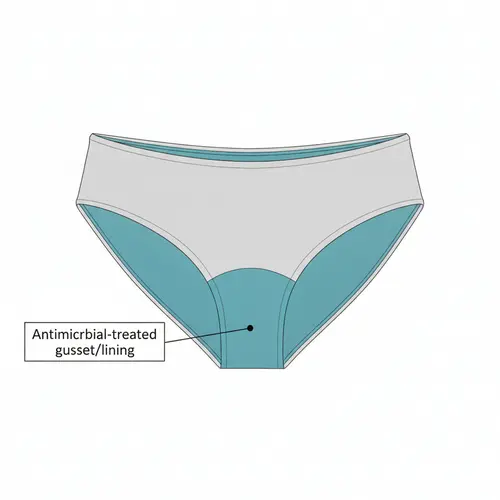
Where we actually use this material
Our reported use is specific: the inner gusset or lining of a bottom, rather than its outer shell or every panel in the garment. A brand considering the same option should mark that component in its material list and sample instructions. “Antimicrobial lining” and “antimicrobial swimsuit” describe different scopes; a claim for one small panel should not quietly become a claim for the whole product.
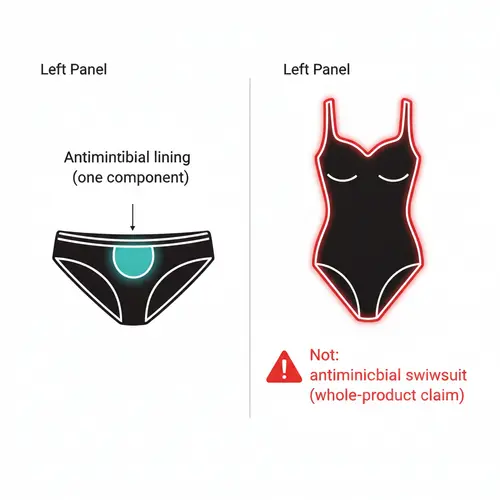
This is a construction choice we have used, not evidence that the lining provides a medical benefit or outperforms an untreated lining during wear. We do not have comparative wear-test data to make either claim. For the wider material-selection context, our real fabric and trim library explains how we work from actual materials and specifications during development.
What the supplier label does—and does not—tell us
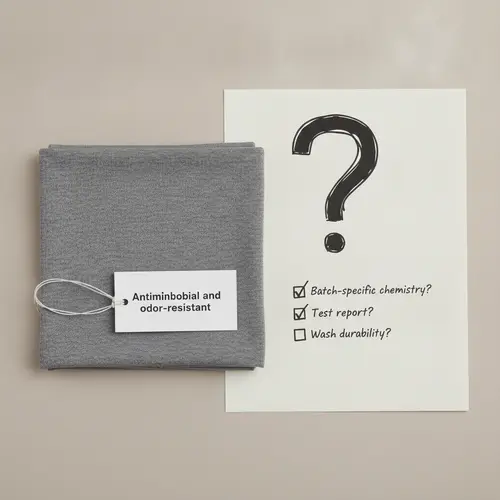
We buy the fabric pre-treated; we do not apply the treatment ourselves. In the experience behind this article, we have not always had visibility into the exact chemistry used for a particular batch. Naming a familiar treatment technology would not resolve that gap. Before describing an ingredient on a product page, obtain the supplier's material-specific documentation.
These are the distinctions we would put into a sourcing discussion:
Item | What we can report | What still needs evidence |
|---|---|---|
Garment location | Our use is mainly in the crotch lining of bottoms | Whether the selected sample and production order use that same material |
Supplier description | The purchased material is described as antimicrobial and odor-resistant | Exact treatment identity, application and supporting report |
Antibacterial performance | We have not independently tested this fabric | Results for the identified material under a stated method and conditions |
Wash durability | No verified wash-life result is available for this fabric | Results after a defined laundering procedure and number of cycles |
Whole-product claims | A treated lining is one component | Evidence supporting any broader claim about the finished swimsuit |
Do not assume that a generic certificate covers the material actually delivered. Our fabric certificate verification guide discusses the sourcing problem of matching documents to the material supplied. For this lining, ask the supplier and laboratory to identify the tested sample clearly enough to connect it to the fabric you plan to order.
What a test can establish
Two examples of relevant methods are AATCC TM100 for evaluating antibacterial textile finishes and ISO 20743:2021 for determining antibacterial activity in textile products. AATCC's public scope describes a quantitative evaluation and distinguishes growth inhibition from claims that bacteria are killed. ISO's public abstract describes quantitative methods applicable to antibacterial textile products, with method selection depending on the intended use and textile properties.
These method descriptions are not proof that our lining meets a performance threshold. A report must relate to an identified sample and specified test conditions. Ask the laboratory which method fits the material and intended claim, rather than selecting a method name solely because it appears on another supplier's brochure.
Our practical evidence checklist is:
Identify the fabric reference, tested sample and treatment information available from the supplier.
Agree the proposed claim with the laboratory before testing.
Record the method and edition, test organisms, conditions, controls and results in the report.
If wash durability matters, agree the laundering procedure and cycle count before the test.
Check that the wording used by the brand stays within the evidence obtained.
An antibacterial result should not be presented as proof of odor control, skin safety or disease prevention. Each is a different claim that needs appropriate supporting evidence. We do not make those promises for the lining described here.

How long does the effect last?
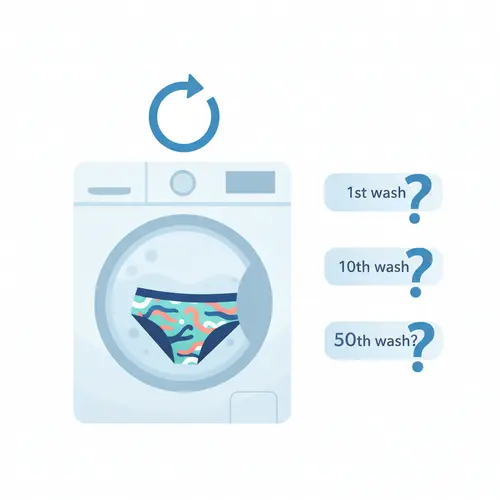
We cannot give a verified number of washes for our fabric. A supplier description alone does not establish performance after laundering, and we do not have an independent before-and-after wash report for this material. We therefore cannot promise a lifetime effect—or state a universal wash count at which all treatments stop working.
If a supplier offers a durability figure, ask what was tested, how it was washed, and what result remained afterwards. Treat that as a question about the particular material and test conditions, rather than a property shared by every fabric sold under the same label.
Pool performance also needs its own review. An antibacterial claim does not establish chlorine resistance, colorfastness or retained stretch. Our separate discussion of what makes swimwear fabric chlorine-resistant covers that sourcing question and discloses the limits of our own testing experience. A lining option should be reviewed alongside the rest of the swimsuit's material requirements.
Who arranges independent verification in our experience?
In the client experience behind this article, many brands ask about testing when a material claim comes up, but relatively few go on to commission it. When they do, they usually engage a laboratory independently rather than asking us to handle the samples and test process. Larger established brands often already have testing partners.
Those are observations from our own work, not a measured industry-wide rate or a rule that every project follows. For this antimicrobial lining, independent verification remains a separate project decision. Agree who selects the laboratory, supplies the samples, receives the report and checks the proposed claim. Do not assume that placing a production order includes testing that has never been commissioned.
FAQ
Q: Is the entire swimsuit made from antimicrobial fabric?
A: Not in the use described here. Our reported application is the gusset and lining of bottoms, mainly the crotch lining. Confirm the exact component on the sample and material list.
Q: Is the treatment silver, chitosan or another chemistry?
A: We cannot identify it from the supplier's general label alone. We buy pre-treated material and have not always had batch-specific chemistry information. Request that documentation before naming an ingredient.
Q: Have you independently tested this lining?
A: No. The experience reported here relies on the supplier's description, not an independent antibacterial test result commissioned by us.
Q: Can we claim that the effect lasts a certain number of washes?
A: We have no verified wash-life figure for this material. A numerical durability claim needs evidence for the identified fabric under defined laundering and test conditions.
Q: Does an antibacterial report prove odor control or a health benefit?
A: Do not treat it as that evidence. Check what the report actually measures and obtain appropriate support for any separate claim you intend to make.
Q: What should a small brand do first?
A: Define the lining component and intended claim, obtain the supplier's documentation, and decide what independent verification the project requires before approving consumer-facing wording.
Have a lining requirement for a specific style? Sign in to submit your style details, and include the intended lining location, supplier reference and any testing requirements so they can be discussed during development.
Written by oyoyi.ai with AI assistance, based on reported supply-chain experience and the cited testing-method sources.