
What Makes Swimwear Fabric Actually Chlorine-Resistant
This is one entry in our broader real construction guide organized by swimwear type — chlorine resistance is one of several cross-type fabric-performance questions covered there alongside stretch recovery and other real specs.
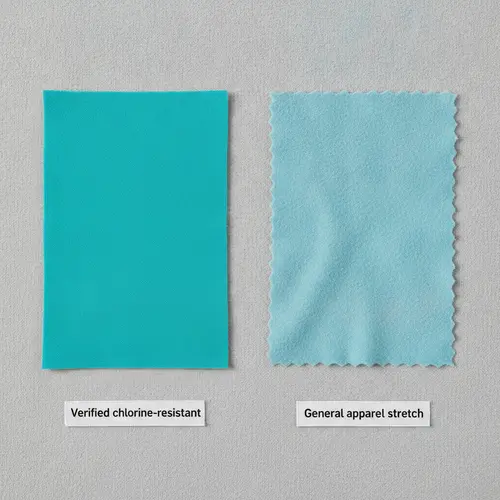
Chlorine resistance isn't a premium feature in swimwear fabric — it's the baseline. Any fabric sold for swim use is supposed to survive repeated exposure to pool chemicals without falling apart. The real question isn't whether a fabric "has" chlorine resistance — almost every supplier will say yes. The question is whether it actually does, and that comes down to a specific, measurable difference: fabric that is genuinely chlorine-resistant costs roughly $1.5 USD more per kilogram, $0.5 USD more per meter, which works out to about $0.25 USD more per finished bikini than fabric that only claims the same thing. That's the price of getting the most basic configuration right.
Chlorine resistance is standard, not an upgrade
A lot of brand founders come to sourcing conversations treating "chlorine-resistant" as a special spec to request, the way they'd ask for UV protection or compression. It isn't. Every fabric intended for swimwear — regardless of GSM, elastane ratio, polyester or nylon base, weft-knit or warp-knit construction, matte or glossy finish, yarn-dyed or piece-dyed, laminated or single-layer — is expected to hold up to chlorinated pool water as a matter of course. What separates a genuinely durable fabric from a fabric that merely gets sold into the swim category isn't a special additive tier. It's whether the base fabric was actually engineered and verified for this use in the first place, or whether it's a stretch fabric borrowed from general apparel that happens to look and feel similar.
That second category has become more common recently. As swimwear styles have expanded into "beyond the pool," multi-scene wear — pieces meant to double as activewear or streetwear — a wider range of stretch fabrics not originally built for pool exposure has entered the swim supply chain. Some of these fabrics perform fine as everyday stretchwear and fail quickly once actually swum in, which is a related but separate problem covered in why swim fabric fails as everyday wear beyond the pool.
What actually determines whether fabric holds up
The base fiber matters, but it isn't the whole story. Elastane is what gives swimwear its stretch and recovery, and it's also the most chlorine-sensitive part of the construction — in practice, a fabric's failure usually traces back to the elastane breaking down before the base fiber itself does. So the practical variables that decide whether a fabric actually resists chlorine are:
Variable | Why it matters |
|---|---|
Base fiber (polyester vs. nylon/polyamide) | Polyester's chemical structure is inherently more chlorine-stable than nylon |
Elastane type and covering method | Standard spandex degrades fastest; chlorine-resistant elastane yarns are engineered with added chemical resistance |
Knit structure (warp-knit/tricot vs. weft-knit) | Denser, warp-knit structures often deliver real durability gains without changing fiber chemistry |
GSM (fabric weight) | Affects strength and how much stress the elastane inside the fabric absorbs during wear |
Finish (matte, glossy, oil-sheen, laminated) | Surface treatments and bonding can add or reduce chlorine exposure at the fiber surface |
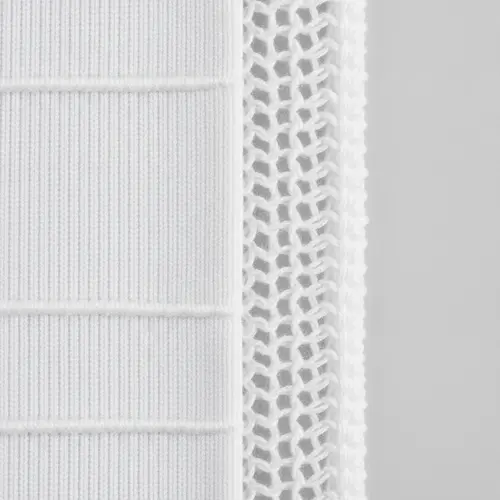 We source our chlorine-resistant fabric from real, established fabric mills we've worked with for over a decade, chosen specifically because they're large-scale suppliers who can back their fabric with matching UV- and chlorine-resistance certificates, at a price that's reasonable and — just as important — stable over time. That last part is our actual vetting method: a price that swings wildly between orders, or that's suspiciously close to non-chlorine-resistant apparel fabric, is the signal that something in the fiber or finish is being cut. A small workshop supplier offering "chlorine-resistant" fabric at general-apparel pricing almost never survives that scrutiny.
How the industry actually measures it
Outside of price and supplier track record, there are established lab tests that quantify chlorine resistance directly, rather than relying on a supplier's word:
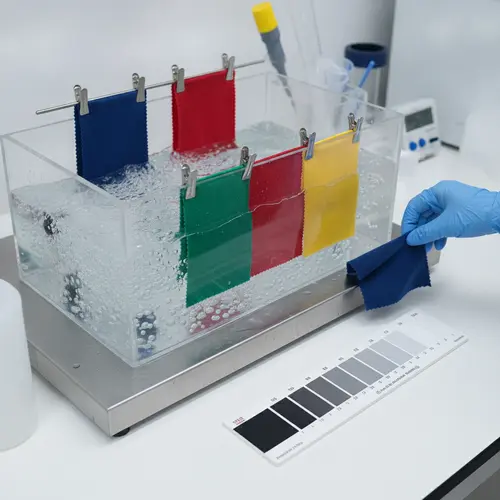
Colorfastness to chlorinated water — the international standard here is ISO 105-E03, which defines how to test a textile's color resistance against the chlorine concentrations actually used to disinfect pool water, with specific test levels set aside for swimwear. The equivalent U.S. standard, AATCC TM162, covers the same ground and is directly aligned with ISO 105-E03. Results are rated on a grey scale, with commercial swimwear generally expected to score 4.0 or higher.
Stretch and recovery retention after chlorinated immersion — this measures how much of the fabric's original elasticity survives extended soaking, since elastane degradation (not color fading) is usually what actually ends a swimsuit's usable life.
We haven't run formal lab tests like these ourselves — that's worth saying plainly rather than implying otherwise. What we go by instead is what we can actually observe: color fading, visible fabric aging, and elastane losing its stretch. One real example: a section of our warehouse gets constant direct sunlight, and we noticed by chance that nylon fabric stored there for about a year had visibly faded — an informal observation, not a controlled test, but a real one, and a reminder that fading shows up faster than most people expect even without a swimsuit ever touching water.
That's also why we treat our breakdown of why swimwear fades and our explanation of what stretch recovery numbers actually mean as the other two-thirds of this picture. Chlorine resistance, colorfastness, and stretch recovery aren't three separate specs — they're three angles on the same underlying question: does this fabric actually survive real pool use, or does it just look good on day one?
Why the fabric market is more crowded with "special" options than it used to be
Grand View Research's swimwear market analysis points to fast-drying, chlorine-proof, and UV-protective fabric innovation as one of the market's real growth drivers. That innovation is genuine, but it also means more fabric options are competing for the "chlorine-resistant" label than before — including fabrics developed primarily for other performance categories (activewear, general stretchwear) that get relabeled for swim without the same level of pool-specific engineering or testing behind them.
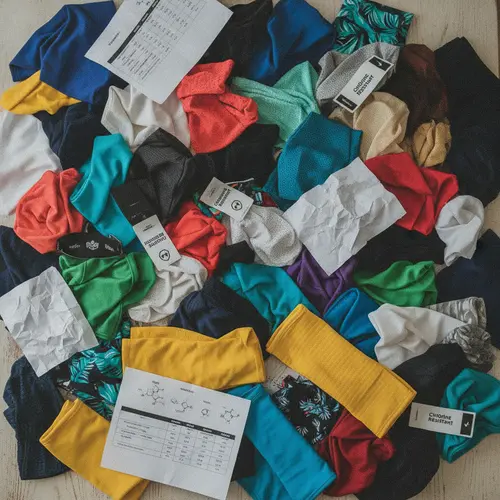
For a founder sourcing fabric, the practical implication is: don't take "chlorine-resistant" at face value on a spec sheet. Ask which fiber and knit structure specifically deliver that resistance, ask whether the price reflects genuine cost (roughly that $0.25/bikini gap, scaled to your order), and be skeptical of chlorine-resistant claims priced identically to general apparel stretch fabric.
FAQ
Q: Is chlorine-resistant fabric a premium upgrade I need to specifically request? A: No. It's the baseline requirement for any fabric intended for swim use, not an add-on tier. If a factory is quoting swim fabric that isn't chlorine-resistant by default, that's worth asking about directly.
Q: How much more does genuinely chlorine-resistant fabric actually cost? A: Based on our real sourcing, the gap between claimed and verified chlorine-resistant fabric is around $1.5 USD/kg or $0.5 USD/meter — roughly $0.25 USD more per finished bikini. It's a small, predictable difference, not a major cost driver.
Q: What fails first in swimwear fabric — the color or the elastane? A: Elastane degradation is usually the real failure point, even when fading gets noticed first. A suit can look fine in color and still have lost most of its stretch recovery.
Q: Does polyester or nylon resist chlorine better? A: Polyester is generally more chlorine-stable than nylon (polyamide) as a base fiber. That's part of why chlorine resistance depends on more than just picking one fiber — knit structure and elastane type matter as much or more.
Q: How can I verify a supplier's chlorine-resistance claim before ordering? A: Ask for the specific fiber and knit construction behind the claim, check whether pricing is stable and consistent with genuine chlorine-resistant fabric (not general apparel stretch fabric pricing), and favor established, large-scale mills with a real track record and matching UV/chlorine certificates over unfamiliar small suppliers.
Q: Do you lab-test fabric to AATCC 162 or ISO 105-E03 standards yourselves? A: Not formally — we're honest about that. We rely on supplier certification, long-term sourcing relationships, and our own observed signals (fading, fabric aging, elastane recovery) rather than in-house lab testing to these specific standards.
Q: Why are more "chlorine-resistant" fabrics on the market not actually built for swim? A: Swimwear styles have expanded into multi-scene, beyond-the-pool wear in recent years, which has pulled more general stretch fabrics into the swim category. Some of these were never engineered or tested for chlorinated water exposure, even though they're marketed as swim-ready.
oyoyi.aiworks with real fabric mills, real spec sheets, and honest disclosure about what we've tested versus what we haven't. If you're sourcing swimwear and want to talk through fabric verification for your specific style, reach out to discuss what we can actually confirm — or browse ourreal fabric & trim libraryfor the full picture on what's actually available.