
Why a Fabric Certificate Alone Doesn't Prove Anything
A certificate and a signed contract feel like protection. They aren't always. We learned that firsthand the first time we sourced recycled fabric — and it's a story worth telling in full, because it changed how we vet every supplier since.
A Real Story: When a Signed Contract Wasn't Enough
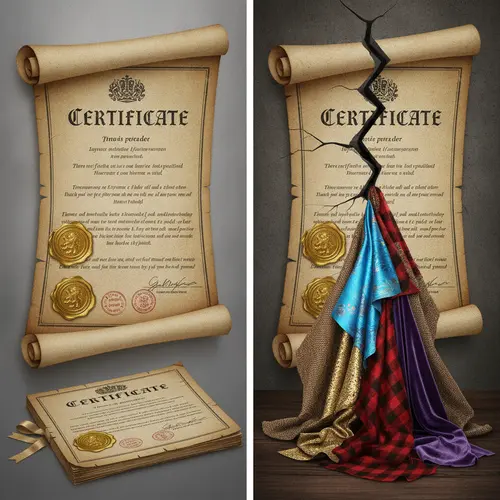
The first time we worked with recycled fabric, we were careful about it — we had the fabric independently tested rather than just taking the supplier's word for it, and we had a signed contract in place with the supplier who provided both the fabric and its certificate. The test results came back completely different from what the certificate claimed. When we raised it, the supplier's response was that the fabric wasn't even theirs to begin with — despite the signed agreement. There was little we could do about it after the fact.
That experience changed our process permanently: we now physically visit and inspect the mill before agreeing to work with a new fabric supplier, rather than relying on documentation alone. Since making that change, we haven't had the issue recur.
Why This Happens: A Certificate Doesn't Automatically Cover What You Think It Does
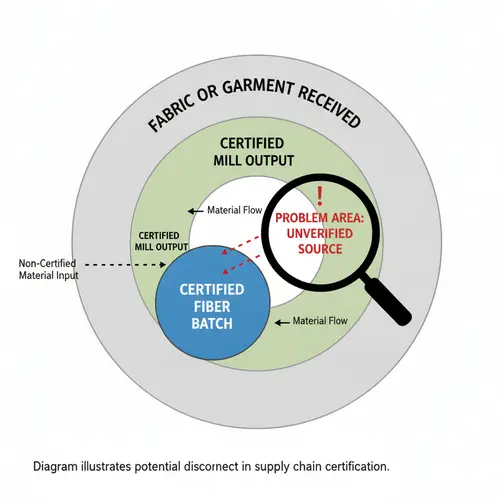
Part of what makes this possible is a gap most buyers don't know to look for: a certificate can apply to a specific batch, a specific mill, or a specific fiber input — and not automatically extend to the actual fabric or garment you receive. A supplier can hold a genuine certification for some of their production while shipping you fabric that was never part of that certified batch. This is a known, documented problem in sourcing: GRS certification is built specifically to track recycled content through the full supply chain, via chain-of-custody documentation — a claim that isn't backed by that documentation isn't actually verified, no matter how confidently it's presented.
This exact gap — real recycling technology at the raw-material level, paired with almost no visibility into whether a specific claim actually holds up — is the same honest problem we laid out for recycled ocean plastic swimwear fabric specifically: the technology to process ocean-source plastic into yarn is real, but whether any given garment's marketing claim is backed by real chain-of-custody documentation is a separate question that needs asking every time.
How to Actually Verify a Certificate — Not Just Look at One
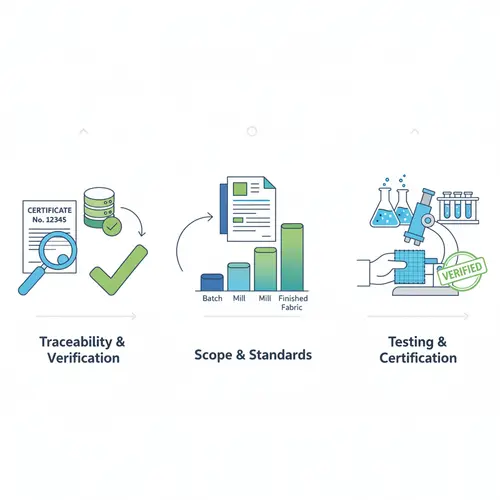
Check the certificate number format and the issuing body's public database. Legitimate OEKO-TEX certificates carry a specific test number (in a format like "24.HCN.12345"), and OEKO-TEX maintains a public database where that number can be checked directly — a supplier who can't or won't provide a checkable number is a real warning sign.
What that number checks against changed in 2026, too — OEKO-TEX's STANDARD 100 certification tightened its chemical limits and, for renewals, is moving toward requiring certification at each wet-processing step rather than just the final fabric mill; see what OEKO-TEX's 2026 update actually means for sourcing if you're checking a certificate dated around that transition.
Ask what scope the certificate actually covers — this specific fiber batch, this mill's general output, or the finished fabric you're being sent. These are not the same thing, and the gap between them is exactly where the kind of mismatch we experienced happens.
For elastane content specifically, there's a standardized chemical test to settle a disputed percentage — ISO 1833-20 determines the actual mass percentage of elastane in a blended fabric directly, rather than relying on a declared spec sheet number. The same verification question comes up when deciding whether a branded fiber like Lycra is worth the price premium over generic elastane — a certificate doesn't resolve a fiber-brand question any more than it resolves a content-percentage dispute.
Treat a certificate as a starting point for verification, not the end of it. Independent testing on the actual fabric you receive — not just the certificate that came with it — is the only way to know what you're actually getting, especially the first time you work with a new supplier or fiber type.
The same distinction matters for antimicrobial swimwear lining: a supplier’s label does not establish antibacterial performance for the fabric delivered, so the claimed treatment and relevant test evidence need checking separately.
This same caution applies to compliance-related certificates too — see our note on how we handle PFAS-related buyer questions, where a supplier certificate is what we pass along, with the same limits.
Why This Is Becoming Urgent, Not Just Good Practice
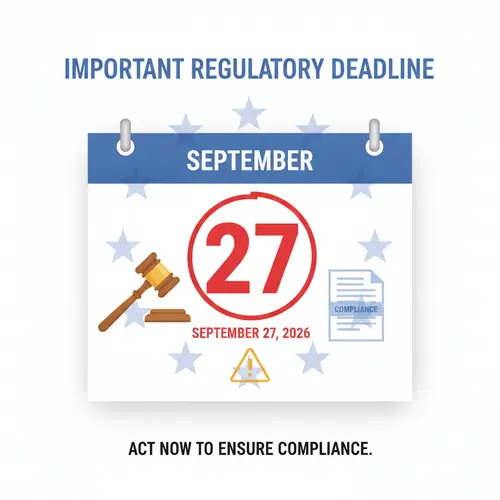
This isn't only a sourcing-integrity issue anymore — it's about to become a legal compliance issue for any brand selling into the EU. The EU's Empowering Consumers for the Green Transition Directive takes full enforcement effect on September 27, 2026, banning generic, unverifiable sustainability claims outright and requiring that any environmental claim be backed by recognized, checkable certification. Brands making recycled-content or sustainability claims based on a supplier certificate that turns out not to hold up are no longer just risking a bad batch — they're risking a compliance penalty on top of it. If your Fall/Winter 2026 or Spring/Summer 2027 collections carry any sustainability language, this deadline applies to you directly.
FAQ
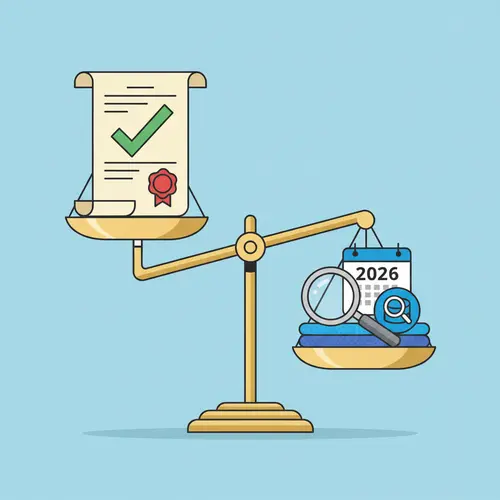
Q: If a supplier provides a certificate, isn't that proof enough?
A: Not by itself. A certificate can be genuine but still not cover the specific batch or fabric you're actually receiving. Verifying the certificate number against the issuing body's official database, and understanding exactly what scope it covers, matters as much as the certificate existing at all.
Q: What can I do if a supplier's certificate doesn't match independent test results?
A: Document everything and address it immediately — but be aware that even a signed contract doesn't guarantee resolution if a supplier disputes the fabric's origin after the fact. The more reliable long-term fix is verifying suppliers before the relationship starts, including on-site inspection for new or high-risk materials like recycled fiber.
Q: Does a fabric-level certification automatically apply to the finished garment?
A: No — this is one of the most commonly misunderstood points in sourcing. Certified fabric doesn't automatically make the finished garment "certified" unless the chain of custody is documented through every subsequent production stage.
Q: Why does this matter more starting in late 2026?
A: The EU's Empowering Consumers Directive enters full enforcement on September 27, 2026, banning vague or unverifiable environmental claims and requiring recognized certification to back any sustainability language used in marketing or on labels — making unverified supplier claims a direct compliance risk, not just a quality risk.
Q: What's the most reliable way to avoid this problem with a new fabric supplier?
A: Independent testing on the actual fabric received, verification of certificate numbers against official databases, and — for higher-risk categories like recycled fiber — physically inspecting the mill before committing to the relationship.
This kind of verification is part of how we maintain our fabric and trim library — every material listed there has been handled directly, not just certified on paper.
Sourcing recycled or certified fabric and want a second opinion before you commit? Send us the certificate and fabric details — we'll help you verify what it actually covers before you sign anything.