
Why "No Problem" From a Swimwear Factory Is a Red Flag
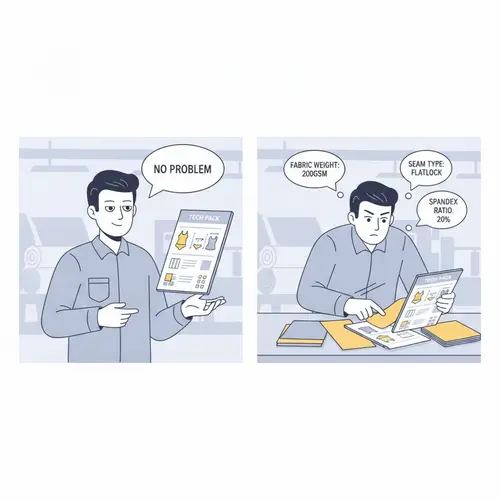
The number of new swimwear brands launching has surged over the past few years — and that's changed how factories behave, not just how many of them there are. When a factory has more inbound inquiries than it can properly handle, the easiest way to move fast is to say yes to everything without actually engaging with the details. If a manufacturer answers every question with "no problem" and never pushes back or asks anything in return, that's not reassurance — it's usually a sign they're not really evaluating your project at all.
The Real Warning Signs
These aren't guesses — they show up consistently across sourcing guides and founder accounts of what actually goes wrong:
Warning Sign | Why It Matters |
|---|---|
Answers every question with "no problem," no specifics | A factory that isn't asking questions back usually isn't engaging with your actual requirements — it's a scripted response, not an evaluation |
Rushes to quote without asking about your fabric, fit, or use case | A manufacturer worth working with typically asks detailed questions before quoting rather than rushing to a number |
You're choosing based on price alone | Selecting purely on the lowest quote, without checking production capacity and delivery reliability, is a documented path to delays and quality issues once your order isn't the priority near ship dates |
Generic answers instead of specific technical detail | A manufacturer with real swimwear experience can speak in specifics — fabric weights, spandex ratios, seam types; vague, marketing-style answers usually mean they're not actually specialized in swim |
One flat price or lead time quoted before they've seen your design | Real pricing and real sample time both depend on your specific materials and quantity — a number given before that conversation is a placeholder, not a quote |
"Yes" to every fabric function claim, with nothing they admit is untested | A factory willing to say "we haven't lab-tested that specific claim" is telling you more than one that agrees to everything |
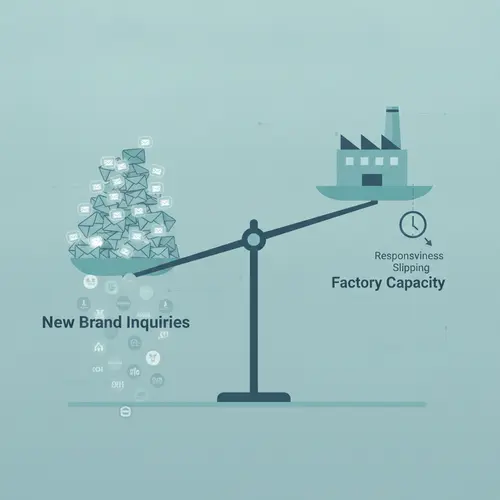
There's a structural reason this has gotten worse recently, not better: as more new swimwear labels have launched, the supply-and-demand balance between brands and manufacturers has shifted — factories that once worked hard to win business and replied quickly now have more inbound requests than they can meaningfully handle, and responsiveness is often the first thing that slips.
What Real Responsiveness Actually Looks Like
This isn't abstract — it's worth describing what it looks like in practice, because it's the difference between a factory that's actually invested in your project and one that's just processing volume.
A lingerie brand expanding into swimwear came to us with no existing swim line. We didn't just quote a price — we analyzed their competitive position and market first, then sent that analysis back to them before any quote was discussed. Once we started building, we developed a fully custom sponge cup pad mold from scratch — a genuinely significant undertaking — and turned it around fast enough that the brand hit their campaign shoot deadline. That speed and the depth of engagement were, in the client's own words, a deciding factor in continuing to work with us. Their first order came in at over 3,000 units, and their monthly volume has since stabilized above 20,000 units.
That's what responsiveness actually looks like when it's real: engagement with the specifics of your project before a quote, not just a fast "yes" to whatever you ask for.
This same standard shows up across our own published work, not just in theory. We don't have an independent UV transmission test for our tan-through mesh, and we say so directly rather than let the fabric's physical mechanism stand in for a certified number — see the honest breakdown of what's real and what isn't tested. Our own sample times range from 2 days to 30, depending on materials and custom parts, not one fixed promise — the two real cases are broken down here. And the reason a small order costs more per piece is a specific mechanical one — hand-cutting below a threshold, loose-cut fabric pricing below a full roll — not a vague "small orders cost more" — see how many suits one roll actually makes.
Questions That Actually Reveal Responsiveness
Instead of asking "can you make this" — a question that will almost always get a "yes" — ask questions that require a factory to demonstrate real engagement:
"Walk me through your exact process from design to delivery, step by step."
"What's your typical timeline for each stage, and what happens if something slips?"
"What fabric weight and spandex ratio would you recommend for this specific design, and why?"
"What seam type would you use here, and what's the risk if we used a different one?"
"If my order is below your MOQ, what actually changes about the price and why?" — a factory that can explain the real mechanism (hand-cutting vs. automated cutting, full-roll vs. loose-cut fabric pricing) is describing its actual floor, not just its sales policy.
"Have you lab-tested this specific fabric claim?" — ask about one claim at a time, not "is this good quality." A factory willing to say "no, we haven't tested that" about something specific is more trustworthy on everything else than one that says yes to every question.
"What's the real range for my sample time, and what would make it faster or slower?" — a single fixed number quoted before they've seen your materials is a guess. A range tied to your fabric, print method, and revision rounds is a real answer.
"What's something you don't know yet about this project?" — the hardest question to fake. A factory that names a real, specific gap is telling you more than one that claims full certainty on every point.
A manufacturer with real experience will answer these with specifics. A manufacturer that's just trying to close volume will answer in generalities or default back to "no problem, we can do it."
It's also worth asking directly for documentation — certifications, past production examples, fabric test reports. A factory that's genuinely transparent will produce these readily; for fabric specifically, that includes things like OEKO-TEX STANDARD 100 certification, which any legitimate supplier should be able to share without hesitation.
For a broader view of supplier vetting outside swimwear specifically, Global Sources' own sourcing guidance separates verifying a company is legitimate from verifying it can actually make your product — both matter, and neither substitutes for the other.
Being upfront about a real, specific quality risk — rather than staying silent about it — is the same principle behind how we talk about a known issue with adhesive hygiene stickers on swimwear. See what can actually go wrong, and why we'd rather flag it than not
FAQ
Q: Is it a bad sign if a manufacturer agrees to everything I ask for?
A: Not agreeing itself, but agreeing with no follow-up questions is. A manufacturer genuinely evaluating your project will usually come back with questions about fabric, fit, or use case before confirming feasibility — silence on that front usually means they're not actually engaging with the specifics.
Q: Why have factories gotten less responsive recently?
A: The number of new swimwear brands launching has grown significantly, and many manufacturers now receive more inquiries than they can meaningfully handle. Responsiveness and depth of engagement are often what slips first when a factory is stretched thin.
Q: What's the best way to test a manufacturer's real expertise before committing?
A: Ask specific technical questions — fabric weight, spandex ratio, seam type, timeline for each production stage — rather than general "can you make this" questions. Specific, confident answers indicate real swimwear experience; vague or purely reassuring answers usually don't.
Q: Does choosing the cheapest quote increase my risk?
A: It can, if price is the only factor. Lower-margin or smaller orders are sometimes deprioritized near ship dates when a factory is juggling capacity, which is where delays and quality slips tend to show up — confirming production capacity and delivery reliability matters as much as the quoted price.
Q: What's the most revealing question I can ask about pricing below MOQ?
A: Ask what specifically changes and why, not just what the price is. A real answer names the mechanism — hand-cutting instead of automated cutting, loose-cut fabric instead of full-roll pricing — rather than just quoting two numbers.
Q: Should I trust a factory that admits it hasn't tested something?
A: Generally yes, more than one that hasn't admitted anything. A specific, honest gap — a test not run, a material not yet sourced — is a sign of real engagement with your question, not a weakness to avoid.
Trying to evaluate whether a manufacturer is really engaging with your project, or just saying yes? Send us your tech pack or concept — we'll tell you honestly what we'd need to know before quoting it.