
Tan-Through Swimwear: Real Fabric Science or Marketing Concept?
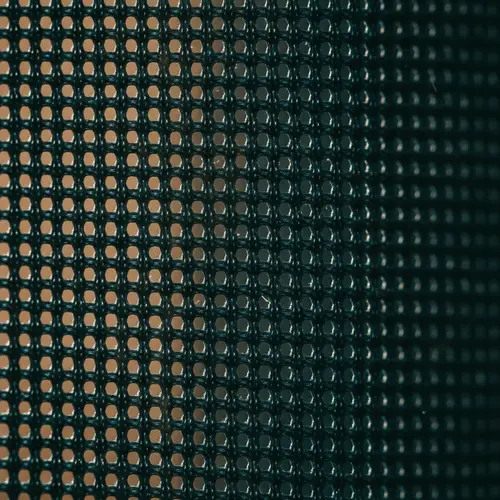
Tan-through swimwear is real: it is a genuine mesh fabric construction, and several versions are internationally patented. What is not real, at least not in any lab report we have seen in this market, is a tested UV transmission number behind most of the products sold under this name. The honest mechanism is simple — a high-density mesh has more gaps than a solid knit, so more UV light has a higher probability of passing through it. We would rather explain that plainly than sell you a number we cannot back up.
The Short Version
Question | Honest answer |
|---|---|
Is tan-through fabric real? | Yes, it's a real mesh construction, and internationally patented versions exist |
Do we have a UV transmission lab report? | No. We have not run that test ourselves |
What actually causes the effect? | High-density mesh has more physical gaps, so more UV light has a higher chance of passing through |
Does it stay opaque? | Only with the right construction: a decorative outer layer plus a separate inner lining |
Does it sell? | Yes — demand has been strong enough that multiple brands from different countries have picked up the same fabric concept in the last two years |
Where the Concept Actually Comes From
Tan-through swimwear is not a new idea. Fabrics built around this principle have been patented for years: a UK-based swimwear brand's Transol fabric uses millions of diamond-shaped micro-holes, and its own marketing claims up to 80% of UV rays pass through. A separate international patent filing describes the same underlying mechanism: a mesh-like construction reported to let up to 80% of UV light through. A Dutch textile company holds another patented version under a different name, using a similar principle. These are legitimate, documented fabric technologies, not internet rumors.
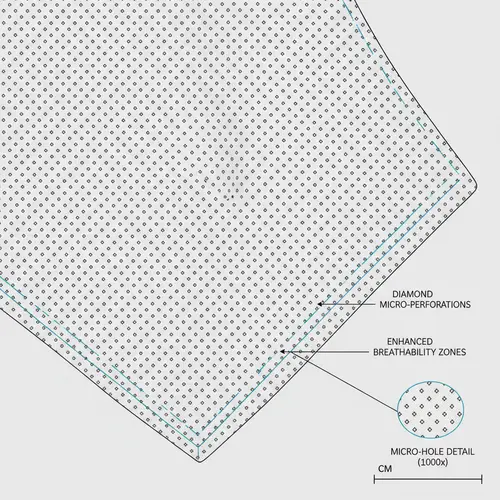
What we make is not licensed from any of these specific patents. It is our own high-density mesh construction built around the same physical principle: more open structure, more UV passing through. We think it is important to say that plainly, because a customer comparing "tan-through" products across suppliers is often comparing different fabrics built on the same general idea, not one single patented material.
The Honest Gap: No UV Transmission Test on Our Side
Here is the part most suppliers do not say out loud: we have not run an independent UV transmission test on our own fabric. What we can tell you honestly is the mechanism, not a certified percentage. A high-density mesh has more physical openings than a standard swim knit, and that structure gives UV light a higher probability of passing through the fabric than it would through a solid weave. That is a real, physical property of mesh. It is not the same thing as a lab-verified transmission rate.
In our own market, this concept is treated as exactly that: a concept, not a certified functional claim. That has not stopped it from selling. Demand for this fabric has grown enough over the last two years that brands from several different countries have picked up the same general construction, and we have supplied it at real production scale to more than one brand. Strong sales and an unverified test result can both be true at the same time, and we think a brand is better served knowing that upfront than finding out later.
If backing the claim with real data matters for your marketing, the fabric can be sent to an independent lab for UV transmission testing before you commit to a full collection. We have not run that test ourselves, but nothing stops a brand from commissioning it on the actual fabric and reporting the real result.
The Fabric: What It's Actually Made Of
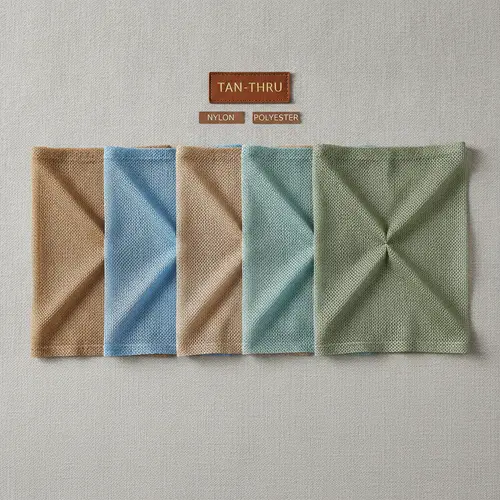
Our tan-through fabric is a 70D mesh, available in both nylon and polyester, typically 140–190 GSM depending on the specific construction and style. Between the two fiber options, we recommend nylon with DTG (direct-to-garment) printing over polyester with digital printing, for two practical reasons: nylon gives a softer handfeel and better elasticity, and polyester's dye and print process tends to run a longer lead time. For general guidance on how fiber and GSM affect handfeel and durability, see what actually wears out in nylon vs. polyester.
Solving the Real Problem: Mesh Is See-Through
A fabric open enough to let UV through is also open enough to be a real opacity risk, and this is where the actual engineering happens. Our standard construction is double-layered:
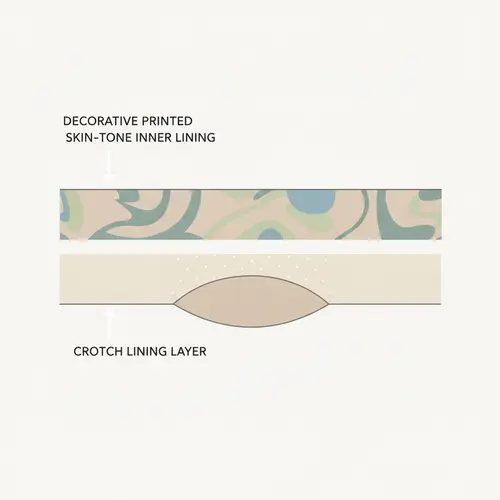
A decorative outer layer — printed pattern, or a solid color — carries the visible design.
A separate inner lining — skin-tone if the outer layer is printed, or matching the outer color if the outer layer is a solid dark shade — sits underneath to control what shows through.
An added inner layer at the crotch area on solid dark styles, for extra coverage where it matters most.
This is a mature, repeatable construction for us, not a one-off fix. It is a direct application of the same principle covered in why some swimwear turns see-through when wet: coverage comes from layering and lining, not from the base fabric's weight alone, and a mesh this open needs that lining more than most fabrics do.
Padding interacts with this construction too. Our standard tan-through bikini top ships without foam padding; nipple covers are sourced separately as the usual solution. Adding padding is possible, but whether it will show through depends on the fabric's color depth, so it gets evaluated case by case rather than added by default.
Real Pricing and Why It's Tiered
Tan-through swimwear at this factory follows the same no-MOQ logic we use elsewhere, with two real tiers:
No-MOQ / test quantity: a flat rate of about $20 per piece, for whatever quantity actually sells — even a single piece.
60+ pieces per style: the price drops to about $8–12 per piece (roughly $8–10 for a bikini set, $9–12 for a one-piece).
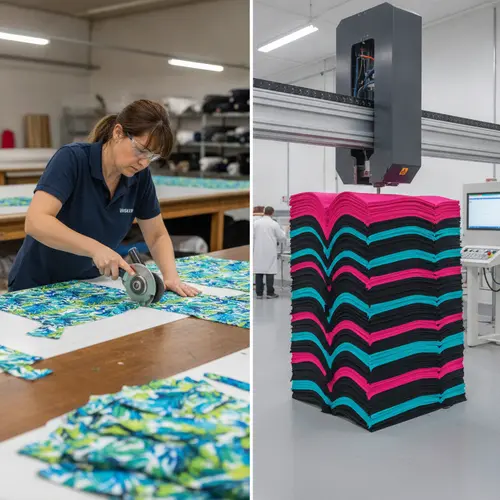
The reason for the jump is not "bulk discount" in the usual sense. At 60 or more pieces per style, the size-cutting ratio can be run through automated cutting; below that, cutting is done by hand, piece by piece, which costs more per unit and takes longer. This is the same logic behind why loose-cut fabric costs more per piece and why there's no fixed MOQ generally — the price follows what the factory floor can actually automate, not an arbitrary tier.
What This Means for Your Brand
Decide how much the UV claim matters to your marketing. If you plan to make a specific transmission-percentage claim, commission independent lab testing on your actual fabric before you publish it.
Choose nylon + DTG over polyester + digital printing unless you have a specific reason not to — better handfeel, better elasticity, shorter lead time.
Budget for the double-layer construction, not a single layer of mesh — it is what actually keeps the product wearable.
Decide on padding early, since it interacts with fabric color and the tan-through effect.
Plan your first run at test quantity, then move to 60+ pieces per style once you know which colors and cuts perform, to reach the lower per-piece price.
Ask any supplier the same honesty question we're asking ourselves here. Our own checklist for vetting a swimwear factory covers exactly this kind of gap, not just tan-through claims specifically.
You can browse mesh fabric options directly in our fabric reference database, and see the full cost structure in the budgeting guide. For a wider look at claims that don't always match real construction, see our breakdown of what real chlorine-resistant fabric actually costs and OEKO-TEX 2026's updated PFOS limits.
FAQ
Q: Does tan-through swimwear actually work?
A: The mechanism is real: a high-density mesh has more physical gaps, giving UV light a higher probability of passing through than a solid fabric would. We have not run an independent lab test to certify a specific transmission percentage, and we're upfront that this is closer to an established concept than a certified functional claim in our market.
Q: What fabric do you use for tan-through swimwear?
A: A 70D mesh, in nylon or polyester, typically 140–190 GSM depending on the style. We recommend nylon with direct-injection print-dye over polyester with standard digital printing for a softer handfeel, better elasticity, and a shorter production lead time — see the real process and how to verify it.
Q: How do you stop tan-through fabric from being see-through?
A: A double-layer construction: a decorative outer layer for the pattern or color, and a separate inner lining, skin-tone under printed designs or color-matched under solid dark fabric, with an added layer at the crotch on darker styles.
Q: Can I get a UV transmission lab report for my tan-through product?
A: We have not run that test ourselves. You can commission independent lab testing on the actual fabric or finished sample if you need certified numbers for your own marketing claims.
Q: Does tan-through swimwear come with padding?
A: Not by default. Our standard tops ship without foam padding, and nipple covers are sourced separately. Padding can be added, but whether it shows through depends on the fabric's color and is assessed case by case.
Q: Why does the price drop so much at 60 pieces per style?
A: Below 60 pieces, cutting is done by hand piece by piece. At 60 or more pieces per style, the size-cutting ratio can run through automated cutting, which is what actually brings the per-piece price down, not just order volume on its own.
Q: Is tan-through fabric patented?
A: Several tan-through fabric technologies are patented internationally by other companies, built on the same general mesh principle. What we produce is our own construction using that same physical mechanism, not a license of any specific patented fabric.
Q: Does tan-through swimwear actually sell?
A: Yes. Demand for this fabric concept has grown enough over the past two years that brands from multiple countries have adopted the same general construction, and we've supplied it at real production scale to established brands.
Want to See the Real Fabric Before You Commit?

We can send a physical sample so you can evaluate the mesh, the double-layer construction, and the handfeel yourself before finalizing your design. Start with our no-MOQ guide if you're still planning your first order.