
Hygiene Sticker vs. Gusset Lining: The Real ¥0.04 vs ¥5 Gap
Two completely different things get called "hygiene liner" in swimwear, and mixing them up is where most of the confusion comes from. One is a real, permanent, sewn-in fabric layer. The other is a temporary adhesive sticker meant to survive exactly one try-on. Most brands and buyers only ever hear about the second one — usually because a return got rejected over it — without knowing the first one exists at all. Here's what each one actually is, what can genuinely go wrong, and an honest read on how much either one really matters.
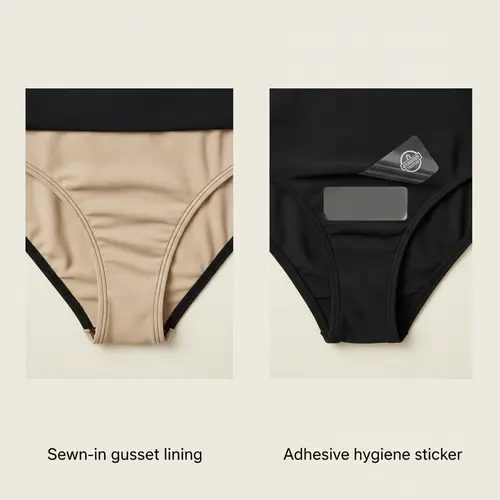
The Real Gusset Lining: A Permanent Fabric Layer
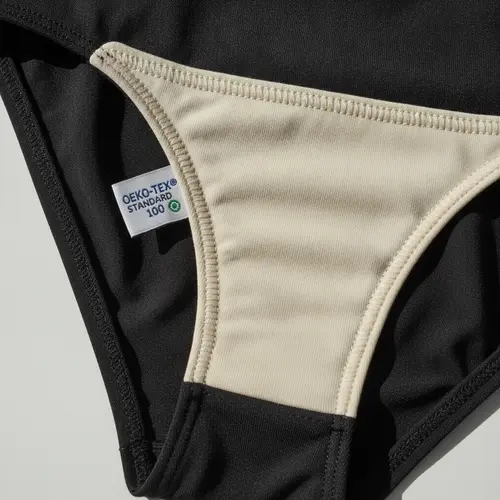
The actual structural lining sewn into a swimsuit's gusset is a separate fabric layer — commonly around 120gsm, chosen specifically for skin-friendly, antibacterial properties. This is a real, permanent construction element, sewn in during manufacturing, and it's there for the life of the garment. It's not something a customer ever removes or interacts with directly. Fabric used for direct, prolonged skin contact like this is exactly the kind of material worth verifying against a real safety standard — OEKO-TEX certification specifically tests for harmful substances in fabric that touches skin, which is a reasonable thing to ask a supplier about for this component specifically.
The Hygiene Sticker: A Temporary, Removable Add-On
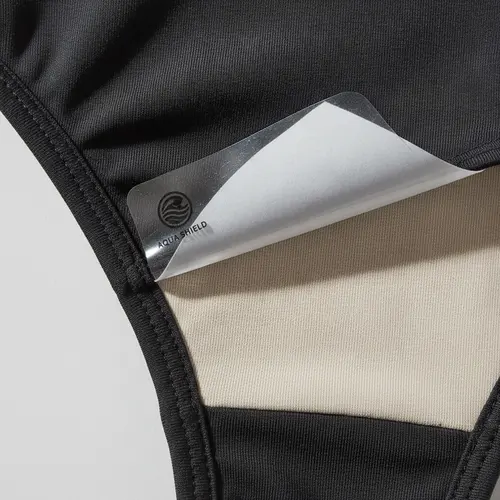
The thing most people actually mean when they say "hygiene liner" — and the thing return policies usually reference — is a separate, adhesive sticker placed on top of the real lining, meant to be peeled off before the garment is worn for real. It's typically a plastic adhesive sticker, though paper versions exist too — functionally, almost any material coated with adhesive can work for this purpose. Brands commonly customize the sticker's shape and printed logo to match their brand identity, since it's a visible touchpoint at unboxing.
Where the Two Actually Show Up — And Why It Differs by Sales Channel
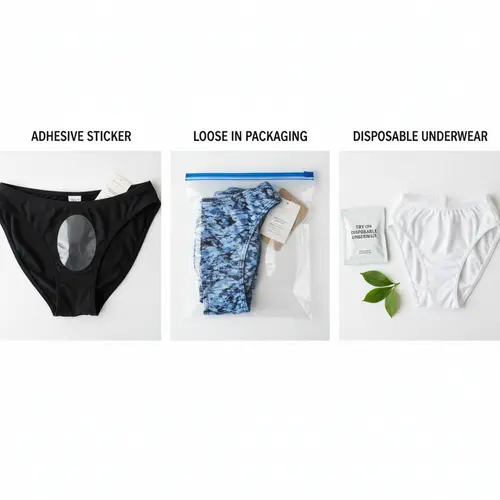
This isn't standard on every single unit, but most swimwear includes it in some form — and how it's included depends heavily on the sales channel:
Channel | Common Practice |
|---|---|
Marketplace / platform sales | Adhesive sticker applied directly onto the garment's gusset |
Independent-site (DTC) brands | Liner often placed loose in the packaging instead of stuck onto the garment |
Some DTC brands | Disposable try-on underwear provided instead of a sticker |
The cost difference is real and worth knowing if you're deciding between approaches: an adhesive sticker runs about ¥0.04 RMB per piece, while disposable try-on underwear runs closer to ¥5 RMB per pair — over 100 times the cost. That gap is exactly why the marketplace default (cheap adhesive sticker, applied directly) and the premium DTC approach (disposable underwear, or a liner left loose rather than adhered) diverge the way they do — it's a real cost-versus-experience trade-off, not an arbitrary style choice.
The Real Problem: Adhesive Failure Over Time
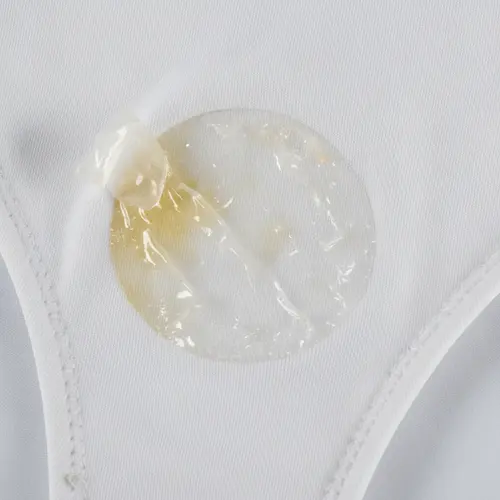
Here's a genuine quality issue worth being upfront about, the same way we think a factory should flag a real problem rather than say "no problem" to everything: the adhesive on a paper or plastic hygiene sticker can degrade over time, especially through long shipping and storage durations common in marketplace fulfillment. When that happens, the aged adhesive can transfer — what we'd describe as the glue "sagging" or bleeding — directly onto the real fabric lining underneath. The result is a garment that ends up less hygienic-feeling than if the sticker had never been there at all, which is the opposite of what it's supposed to accomplish. This is specifically a marketplace-channel risk, tied to the longer transit and warehouse dwell times that style of fulfillment typically involves, more than a risk with garments shipped and worn quickly after purchase.
An Honest Read on What This Sticker Actually Does
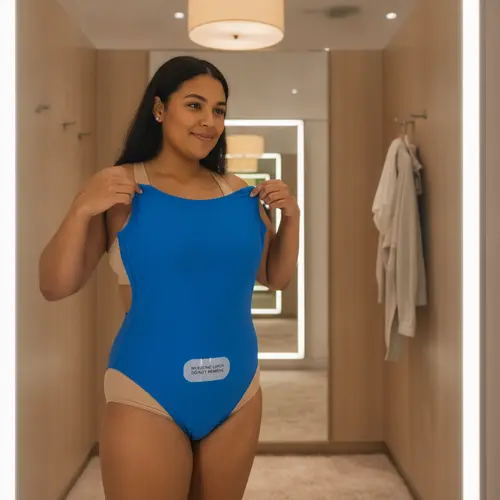
Customers generally understand what the sticker is for — confusion isn't usually the issue. The honest answer about its real function: the psychological reassurance it provides is bigger than its actual hygienic effect. This lines up with outside expert scrutiny too — a microbiologist interviewed on the subject concluded these stickers don't meaningfully function as a real bacterial barrier the way their presence implies. A customer could functionally try on a swimsuit for fit purposes wearing their own underwear underneath, and get the same practical result. Our own recommendation to brand clients, when cost allows, leans toward either packaging the liner loose rather than adhering it directly, or providing disposable try-on underwear — both avoid the adhesive-degradation risk entirely. That said, this is a real cost trade-off, not a free upgrade: it only makes sense for brands with the pricing headroom to absorb it, which is part of why we default to recommending it mainly for brand-service clients rather than treating it as a universal must-do regardless of price positioning.
This connects to a broader point about swimwear returns: a garment being rejected for a compromised hygiene sticker is a real, documented driver of return disputes in the category — worth understanding clearly rather than assuming customers are being difficult when a return gets flagged over it. Both the real lining and the hygiene sticker are exactly the kind of small, specific material choices we track in our fabric and trim library — not because either one is glamorous, but because getting these details right (or wrong) genuinely shows up in customer experience and return disputes later.
This kind of small-but-consequential construction detail is exactly what our full real construction guide organized by swimwear type is meant to surface — the visible feature is rarely the whole story.
FAQ
Q: Is the "hygiene liner" the same thing as the sewn-in gusset lining?
A: No — this is the most common confusion. The gusset lining is a permanent, sewn-in fabric layer (commonly around 120gsm, chosen for skin-friendly and antibacterial properties). The hygiene sticker is a separate, temporary, adhesive add-on meant to be removed before the garment is worn for real.
Q: Does the hygiene sticker actually prevent bacteria or infection during try-on?
A: Its real, practical value is more psychological reassurance than a genuine bacterial barrier. Functionally, trying a swimsuit on over your own underwear achieves a similar practical result for fit purposes.
Q: Why do some brands stick the liner directly onto the garment while others package it loose?
A: It's largely a channel and cost decision. Marketplace-sold swimwear commonly uses an adhesive sticker applied directly (cheaper, around ¥0.04 RMB per piece). Independent-site brands more often package the liner loose or provide disposable try-on underwear (closer to ¥5 RMB per pair) — a real cost difference that shapes which approach makes sense for a given price position.
Q: Can a hygiene sticker actually make a garment less hygienic?
A: In a specific, real scenario — yes. Adhesive can degrade over long shipping and storage periods, and the residue can transfer onto the real fabric lining underneath, leaving the garment worse off than if the sticker had never been applied. This is more of a marketplace fulfillment risk than an issue for garments shipped and worn quickly.
Q: Should every swimwear order include a hygiene sticker?
A: It's common but not universal. Whether to use an adhesive sticker, a loose-packaged liner, or disposable try-on underwear is a real cost-versus-experience decision worth making deliberately rather than defaulting to whatever's cheapest without considering your brand's price position.
Deciding how to handle hygiene protection and return policy for your swimwear line? Tell us your price position and sales channel — we'll walk through which approach (adhesive sticker, loose liner, or disposable try-on underwear) actually makes sense for your order.