
OEM vs ODM vs Private Label: Where We Actually Stand
OEM, ODM, and private label get used almost interchangeably across sourcing content, and the confusion has real consequences — a brand using the wrong term in a sourcing inquiry can end up with a quote built on the wrong assumptions entirely. Rather than give you another generic breakdown of all three terms, here's something more useful: exactly where we sit on that spectrum, what we actually offer, and — just as importantly — what we deliberately don't, and why.
The Three Terms, Briefly
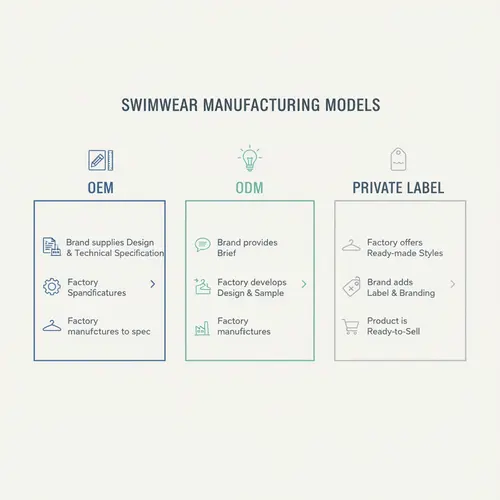
OEM (Original Equipment Manufacturer): the brand supplies the complete design and technical specification; the factory produces it.
ODM (Original Design Manufacturer): the factory's own design or engineering team develops the product based on the brand's brief, direction, or concept.
Private label: the factory has existing, ready-made styles, and the brand applies its own label, branding, and packaging to a mostly unchanged product.
Most sourcing guides present these as three options a factory offers in parallel. That's not how we actually work.
Where Almost All of Our Clients Actually Start
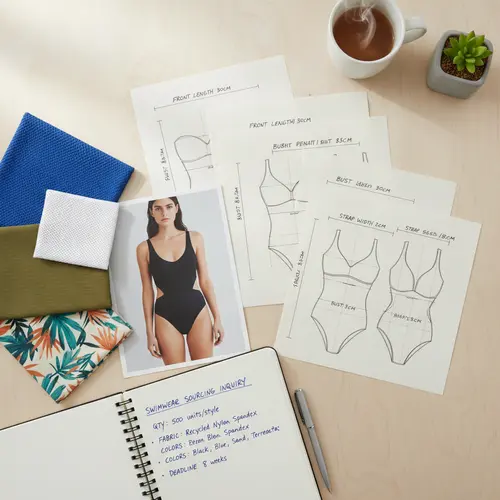
Nearly all of our inquiries come in with real intent already attached — a brand arrives with either its own technical pack, or a clearly defined concept and direction, not a vague "make me something." That's functionally OEM-leaning by default, even for brands that don't use that specific term. It doesn't mean a brand needs deep technical fluency — we've written before about why we don't actually require a full tech pack to hit an accurate first sample — but it does mean the starting point is almost always a real, specific direction from the brand, not a blank page we're filling in from scratch.
The Full-Lifecycle, ODM-Style Service — Reserved, Not Advertised
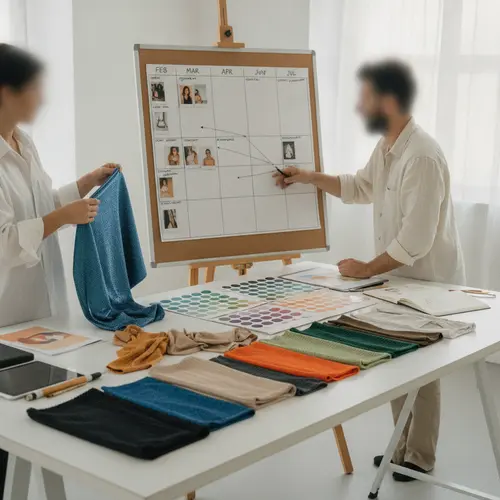
We do offer full-lifecycle service that includes real design development support — but it's reserved specifically for long-term, established clients, not something offered publicly or advertised on our site. The reason is practical, not exclusionary: with clients we've worked with over time, we plan the next season's product development together, often more than six months ahead. That level of collaborative development only works because of the mutual understanding built over repeated seasons — it's not something that translates into a one-off transaction with a brand we've never worked with before. This isn't currently marketed as a standalone offering, though a subscription-style version of this service is planned for the future.
What We Deliberately Don't Do: Ready-Made Private Label
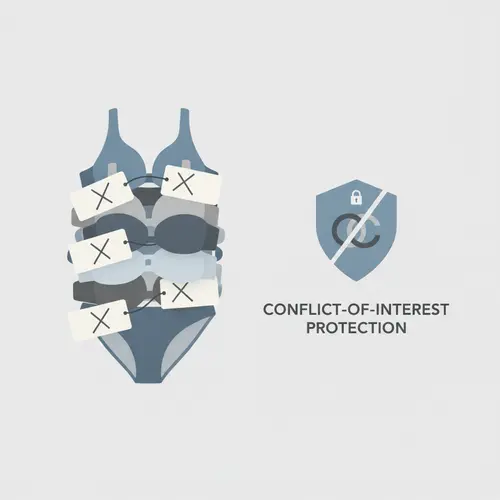
This is the part worth being direct about, because it's a real, principled decision rather than a capability gap: we don't offer off-the-shelf, ready-made styles for private labeling. We won't develop our own house styles to sell across multiple brands, for a specific reason — doing so would put us in direct competition with our own clients' market. We work with brand clients specifically, and those clients differentiate themselves through their own designs. If we also sold pre-made styles under our own development, it would create a real conflict of interest — and could reasonably make a client wonder whether we're repurposing what we learn from their business elsewhere. That's not a risk we're willing to introduce into the relationship. This same logic is part of why protecting a brand's intellectual property with an overseas manufacturing partner is worth thinking through explicitly in any sourcing relationship — USPTO's own guidance on protecting IP rights overseas makes the same point structurally: a factory's business model around design ownership is directly relevant to that question, not just the contract terms.
What Design Development Actually Costs
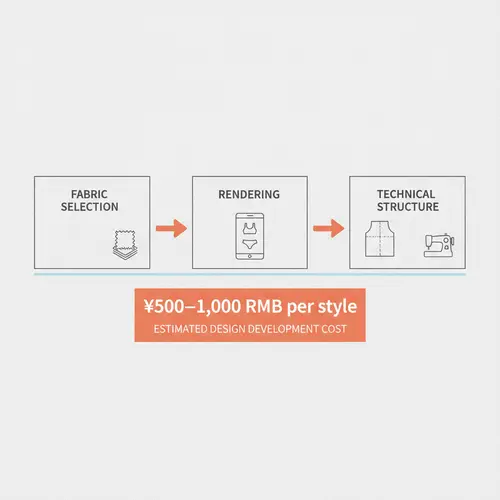
Every stage of the process carries its own separate cost — that's not really up for debate on our end. Sample production is one cost bucket. Design development is a distinct, paid project on its own, covering fabric selection, rendering, and technical structure. We haven't formally published pricing for this yet, since it isn't a publicly launched service, but the real working range is ¥500–1,000 RMB per style. We're sharing that range directly here rather than making brands guess, even though it isn't part of our standard published pricing.
Why We Don't See Much Confusion on Our End
We don't run into the "brand meant one thing, factory quoted another" problem that a lot of sourcing guides warn about — mainly because we can assess what a client actually needs from the very first contact, based on experience recognizing the pattern quickly. That's a confidence built from repetition, not a formal intake process — worth knowing if you're comparing how different factories handle this same conversation.
What This Means If You're Sourcing Right Now
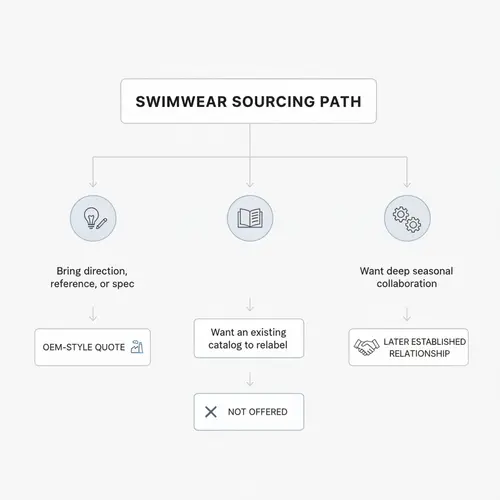
If you're a new brand without an established relationship yet, expect our default working mode to be OEM-style: bring a direction, a reference, or a spec, and we'll build from there — the same no-MOQ, any-stage model we describe elsewhere. If you're looking for a factory to hand you an existing catalog to relabel, that's a real service some factories offer — it's just not ours, deliberately. And if you're hoping for deep, collaborative seasonal design development from day one, that's realistic to plan toward as the relationship matures, not something available on a first order. Knowing which of these you're actually asking for — before the first quote request — saves a real round of back-and-forth on both sides, which is exactly the kind of manufacturing feasibility clarity we try to bring to every stage of the relationship, not just the construction itself.
FAQ
Q: Do you offer OEM, ODM, or private label swimwear manufacturing?
A: Functionally OEM by default — most clients arrive with their own tech pack or a clear direction. We offer ODM-style design collaboration, but only for established long-term clients with a real working history. We don't offer ready-made private label styles at all.
Q: Why don't you offer private label swimwear?
A: Because developing our own house styles to sell across multiple brands would put us in direct competition with our own clients' market, and could reasonably raise concerns about how we're using what we learn from a client's business. We work as a service provider to brands, not as a competing product line.
Q: How much does design development cost if I don't have my own tech pack or design?
A: Roughly ¥500–1,000 RMB per style, covering fabric selection, rendering, and technical structure. This isn't formally published pricing yet since the service isn't publicly launched, but that's the real working range.
Q: Can a new brand get full design development support right away?
A: Not typically as a standalone, publicly available service today — that level of collaborative development is currently reserved for established, long-term clients, built on a working relationship over multiple seasons. A subscription-style version for broader availability is planned.
Q: What should I bring to a first inquiry to get an accurate quote?
A: A technical pack if you have one, or at minimum a clear reference style, fabric preference, and what you want changed. That's enough for us to work from — you don't need deep technical fluency, but having some direction avoids quote mismatches from the start.
Q: Do you develop your own swimwear styles to sell independently?
A: No — deliberately. It's a business-model decision to avoid any conflict of interest with the brand clients we serve.
Not sure whether your project needs full design development or you already have enough direction for us to quote from? Send us what you have — even just a reference photo and a fabric idea — and we'll tell you honestly where you land.