
Neoprene Bikinis: The Real Construction Behind the Look
Neoprene bikinis are a real, price-premium category, not a novelty. Triangl — the brand that popularized the "scuba" bikini look — currently prices its neoprene styles at $135, a real $16 premium over its $119 standard-fabric styles in the same collection. That premium reflects a genuinely different construction, not just a different surface finish. Here's what actually goes into building one.
The Real Construction: Outer Fabric Laminated to Neoprene
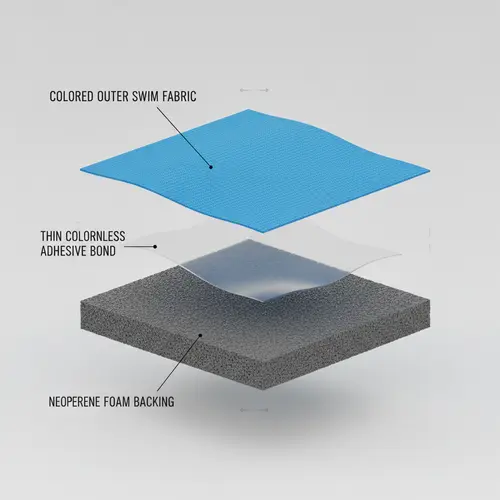
Neoprene swimwear isn't built from neoprene alone — the key layer is an outer fabric bonded onto neoprene backing at a chosen thickness, the same lamination principle behind the graduated compression construction we've covered separately. There's no single fixed thickness — it varies by design. As with any laminated swim construction, the adhesive has to be colorless and odorless, since the bonded panel sits in extended, direct skin contact.
Finishing: Binding Does Most of the Work
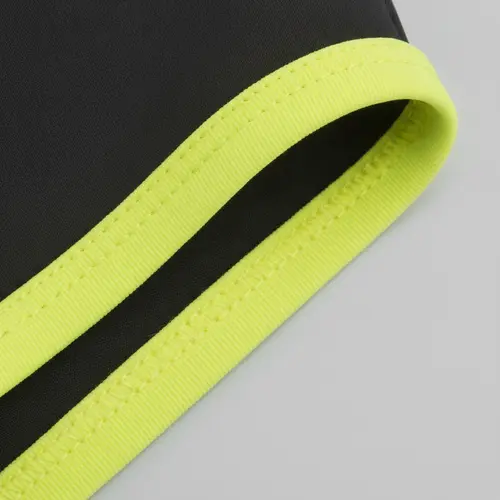
The primary construction technique for neoprene swimwear is edge binding — wrapping and securing the raw edges of the laminated panel, the same underlying technique we've covered for reinforcing a cut-out edge on stretch fabric, applied here to a stiffer, laminated material instead. Binding is what gives neoprene swimwear its recognizable clean, structured edge look.
Where the Real Design Variation Comes From
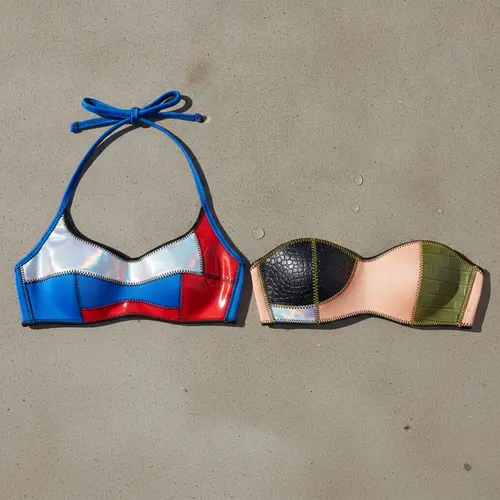
The creative differentiation in neoprene swimwear isn't a special neoprene-specific trick — it comes from which outer fabric gets laminated on, and how panels are color-blocked or spliced together. Swapping the outer fabric and combining contrast panels is what produces the range of finishes and colorways in a neoprene collection, not a change to the neoprene or lamination process itself.
A Real Simplification: Padding Is Rarely Needed
Here's a genuine, somewhat counterintuitive construction fact: neoprene swimwear rarely uses a separate foam padding insert. A single laminated fabric layer is typically enough — the neoprene backing itself already provides the structure and shape retention that a padding insert would otherwise be added to achieve in a standard fabric bikini. It's one less component in the build, not an extra one.
The Real Limitation: Laminated Fabric Doesn't Stretch Well
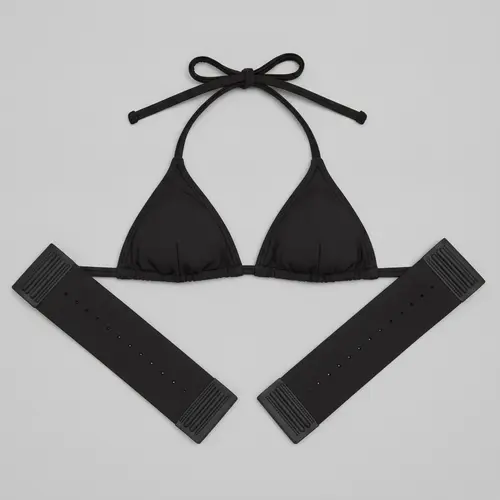
This is the construction fact that explains a pattern you can observe directly in the market: fabric loses most of its stretch once it's laminated to neoprene. That's why neoprene swimwear is built almost exclusively as bikinis with tie-side or adjustable structures, not fitted one-piece silhouettes. A one-piece needs enough stretch to pull on and conform to the body's full range of motion — exactly what laminated neoprene fabric can't reliably provide. This is a different, more specific version of the general one-piece-vs-bikini construction question: for neoprene specifically, it's not that one-piece is technically harder to build — it's that the material itself doesn't stretch enough to support that silhouette, so tie-side and adjustable bikini construction is the practical, structurally sound choice.
A Real, Underused Opportunity: Beading and Embroidery on Neoprene

One detail worth knowing if you're looking to differentiate: neoprene swimwear can be decorated with beading and hand embroidery techniques, penetrating and applied to the laminated surface — but this combination shows up rarely in the current market. It's a genuinely underused design direction, not a technical impossibility.
What This Means for Sourcing
If you're specifying a neoprene style, the real questions worth asking are which outer fabric is being laminated on, what thickness the neoprene backing is, and whether the adhesive is genuinely colorless and odorless — not whether neoprene itself is "good quality," since the fabric-lamination choice is what actually determines the finished product's look, feel, and cost. And if the design calls for a fitted, high-stretch silhouette, it's worth knowing upfront that neoprene construction is genuinely better suited to bikini and tie-side structures than to a one-piece.
This is one entry in the full real construction guide organized by swimwear type.
FAQ
Q: Is neoprene swimwear made purely from neoprene rubber?
A: No — the real construction is an outer fabric laminated onto a neoprene backing at a chosen thickness. The outer fabric choice, not the neoprene alone, is what determines much of the finished look.
Q: Why don't neoprene bikinis usually have foam padding inserts?
A: Because the neoprene backing itself already provides structure and shape retention — a single laminated fabric layer is typically enough, which removes the need for a separate padding component that standard fabric bikinis often use.
Q: Can neoprene swimwear be made as a one-piece?
A: It's uncommon, and there's a real reason: laminating fabric to neoprene significantly reduces its stretch, which makes tie-side and adjustable bikini structures a better structural fit than a fitted one-piece that needs to stretch on and conform to the body.
Q: What actually creates the variety in neoprene swimwear designs?
A: The outer fabric choice and how panels are color-blocked or spliced together — not a special process applied to the neoprene itself. Changing the laminated fabric is where most of the visual differentiation comes from.
Q: Can neoprene swimwear be decorated with beading or embroidery?
A: Yes — it's technically possible to apply beading and hand embroidery to the laminated surface, though this combination is rarely seen in the current market, making it a genuine, underused differentiation opportunity.
Q: What should I ask a supplier about neoprene swimwear construction?
A: Ask specifically about the outer fabric being laminated, the neoprene thickness, and whether the adhesive used is colorless and odorless — these determine quality and comfort far more than the neoprene itself.
Considering a neoprene or scuba-style swim line and want to know what construction actually fits your design? Send us the concept — we'll tell you honestly what's achievable and what the real cost drivers are.