
How Graduated Compression Swimwear Is Actually Built
Spanx just relaunched its swim line with three distinct compression tiers — Spanxsmooth (light), Spanxshape (medium), and Spanxsculpt (strong) — built on Italian chlorine-resistant, UPF 50+ fabric, priced from $68 for separates up to $198 for a one-piece. This is real, current confirmation of something we've written about before: compression in swimwear isn't binary. It's a spectrum, and a brand can genuinely engineer multiple distinct levels from a related construction platform. Here's how that actually gets built, based on real production experience with graduated compression pieces.
The Real Construction: Two-Layer Lamination
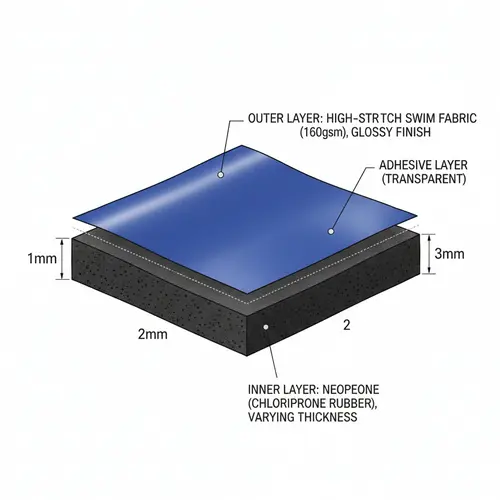
The proven approach we've built graduated-compression pieces with — bikini styles and a handful of wetsuit-adjacent pieces — is a two-layer laminated construction, not a single fabric doing all the work:
Outer layer: standard high-stretch swim fabric, typically around 160gsm, available in glossy or matte finish depending on the design direction.
Inner layer: neoprene (chloroprene rubber), in varying thickness.
The two layers are bonded together through a process the industry calls lamination ("覆合" in Chinese) — fusing the swim fabric to the neoprene backing into a single working panel rather than sewing them as two separate pieces. The neoprene thickness is the actual compression dial: a thicker neoprene layer delivers stronger compression, and a thinner layer trades some of that compression for flexibility and comfort. This is a genuinely different construction principle from the PBT-panel or high-GSM-fabric approaches we've covered previously — neoprene lamination is closer to wetsuit construction than to standard swimwear, which is exactly why it's capable of the kind of graduated compression Spanx is now selling at scale.
How Lamination Compares to Other Real Compression Methods
Method | Compression Mechanism | Best Suited For |
|---|---|---|
Neoprene lamination (this article) | Bonded neoprene layer, thickness-adjustable | Genuine graduated compression across multiple defined tiers |
PBT fabric panel | Fiber with strong shape recovery, sewn as a panel | Targeted compression at one zone (e.g., the belly) within a standard-weight garment |
High-GSM heavy fabric | Fabric density alone, no separate layer | Moderate, uniform compression without adding a second material |
Cinch-belt with adjustable closure | Mechanical tension via hook closure | Adjustable, wearer-controlled compression rather than fixed |
Lamination is the only one of these four methods that realistically supports multiple distinct, engineered compression tiers from one construction platform — which is exactly the mechanism a three-tier product line like Spanx's would need, whatever their specific proprietary formula actually is.
This same principle — that real fabric performance comes from deliberate construction choices, not marketing language — is exactly what determines whether a swimsuit turns see-through when wet. Fabric weight and lining choice do the real work there, the same way neoprene thickness does the real work here.
The Hidden Quality Variable Almost Nobody Asks About

This is the detail that separates a wearable laminated compression piece from one that gets returned: the adhesive used to bond the two layers has to be an odorless, non-irritating, transparent glue. Cheaper or lower-grade adhesives can carry a chemical smell that doesn't fully dissipate, and in a garment worn tight against skin for hours, that's a real comfort and skin-contact issue, not a minor cosmetic one. Transparency of the glue line matters too — a visible, opaque adhesive layer shows through at the seams and edges of a laminated panel in a way a well-chosen clear adhesive doesn't. This is a spec worth asking about directly when sourcing laminated compression pieces; it rarely shows up in a standard tech pack, but it's one of the first things that goes wrong if it's skipped.
Why This Is a Niche, High-Ticket Category — Not Mass Production
It's worth being direct about the production reality here: graduated compression lamination is a low-reorder-volume, high-per-unit-price category. In our own experience producing this construction, reorder quantities have stayed genuinely small, while per-piece pricing runs meaningfully higher than standard swimwear. This isn't a flaw in the product — it reflects the actual cost structure: neoprene lamination shares more in common with wetsuit manufacturing (a technically demanding, lower-volume category by nature) than with standard swim fabric cutting and sewing. A brand sourcing this construction should plan around that reality from the start rather than expecting standard swimwear order economics to apply.
This is exactly the kind of construction that only works with a sourcing partner set up to treat low-volume, high-complexity orders as a normal part of the business rather than an inconvenience to be priced out of feasibility — the same manufacturing feasibility judgment that applies to any technically demanding construction where the honest answer to "can you make this" depends heavily on the specific spec, not a blanket yes or no.
What This Means If You're Sourcing Graduated Compression
Three questions worth asking any supplier quoting a laminated compression piece: what neoprene thickness is being used for each compression tier, what adhesive is being used and whether it's odorless and transparent, and whether the quoted price and MOQ reflect the real economics of a low-volume, technically demanding construction rather than being quoted as if it were standard swimwear. A supplier who can answer the first two specifically, rather than in general terms, is a strong signal they've actually built this construction before.
Lamination isn't the only place where bonding shows up in swimwear construction — the seams themselves can be bonded too, rather than sewn; see what "seamless" actually means in real seam construction for how that compares to flatlock and coverstitch.
This same lamination principle, and the same odorless/transparent adhesive requirement, is also what neoprene-style "scuba" bikinis are built from — see the real construction behind neoprene bikinis for that category specifically.
FAQ
Q: How is a laminated compression panel different from a wetsuit, technically speaking?
A: They share the same core principle — neoprene bonded to an outer fabric layer — but a wetsuit is typically built for thermal insulation and full-body coverage in open water, while a laminated compression swim panel is engineered specifically for graduated compression in a swimwear silhouette. The lamination and adhesive considerations carry over; the panel design and thickness targets don't.
Q: Is graduated compression swimwear made from a single special fabric?
A: Not in the construction we've worked with — it's a laminated two-layer system: a standard high-stretch swim fabric outer layer bonded to a neoprene (chloroprene rubber) inner layer, not one fabric doing all the compression work by itself.
Q: What actually determines how strong the compression is?
A: Primarily the thickness of the neoprene layer. Thicker neoprene delivers stronger compression; thinner neoprene trades some compression for flexibility and comfort. Multiple compression tiers can come from varying this one variable across a shared construction platform.
Q: Why does the adhesive matter so much in this construction?
A: Because the two layers are bonded, not sewn, the adhesive is in extended contact with skin across the whole panel. A lower-grade adhesive can carry a persistent chemical odor and show as a visible, opaque line at the edges — an odorless, transparent adhesive is what separates a wearable piece from one that gets returned.
Q: Can graduated compression swimwear be produced at high volume?
A: Realistically, no — based on real production experience, this construction runs at low reorder volumes with high per-unit pricing, closer to wetsuit-category economics than standard swimwear. Brands should plan for this as a premium, lower-volume line rather than expecting mass-market order quantities.
Q: Is this the same construction Spanx uses for its three compression tiers?
A: We can't confirm another brand's proprietary construction — but the general principle Spanx's three-tier system reflects (that compression level can be engineered in graduated steps from a related construction platform) is consistent with how graduated compression is built in the category more broadly.
Considering a graduated compression piece and want to know what construction actually fits your budget and volume? Send us the concept — we'll walk you through the real lamination options and what they cost at your target quantity.