
How Cut-Out Swimwear Is Actually Reinforced at the Edge
Cut-out and asymmetric swimwear is one of the most consistently cited 2026 trends across fashion coverage — one-shoulder tops, waist cut-outs, uneven hemlines, sculptural openings that reveal skin without necessarily adding more exposure than a standard style. What most of that coverage skips: an opening cut into stretch swim fabric is a structural decision, not just a design one. Get the edge treatment wrong and it curls, stretches out of shape, or puckers within a few wears. Here's what actually goes into building one properly.

What Counts as a Cut-Out, More Broadly Than You'd Think
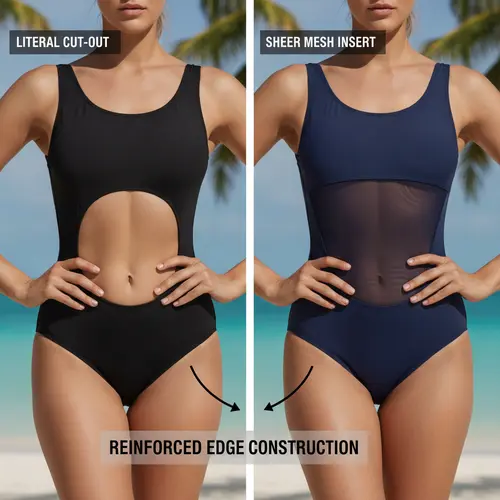
The obvious cases are side or back openings — symmetric (both sides) or asymmetric (one side only), most commonly at the waist or back. But the same structural logic extends further: any construction that shows skin through sheer mesh, lace paneling, or an area with no fabric at all is functionally a cut-out, even when there's no literal hole cut into solid fabric. A mesh insert panel has to be reinforced at its border the same way a true cut-out edge does — the engineering problem is the same even when the visual result looks different.
How the Edge Actually Gets Reinforced
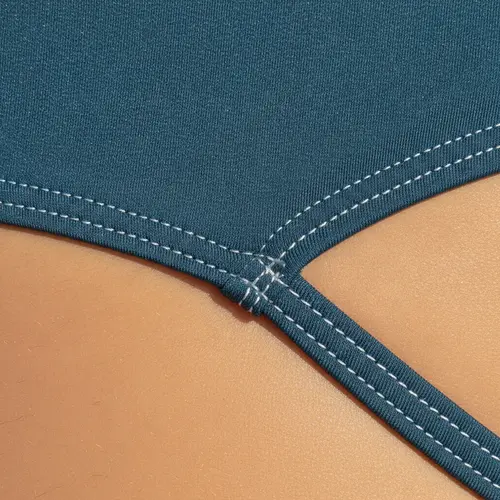
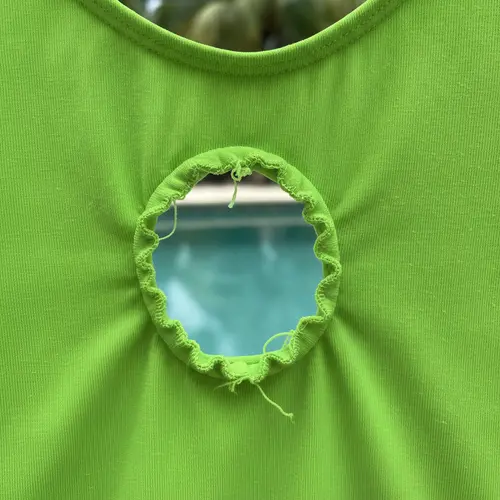
The two standard techniques are bias binding and edge wrapping — folding a strip of fabric (often self-fabric, sometimes a contrast) around the raw edge and securing it with stitching, which stabilizes the cut edge against stretch fabric's natural tendency to curl and distort at a raw edge. This is fundamentally the same seam-integrity concern covered by ASTM's standard test method for sewn seam strength and slippage — a cut-out edge is, structurally, a seam under the same kind of ongoing stress a garment seam is designed to withstand.
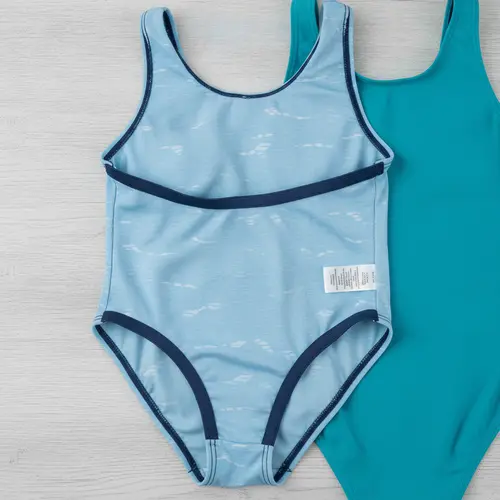
There's a less obvious technique worth knowing about too: some reversible-wear swimwear designs use no visible exterior stitching at all — the outward-facing seam is invisible — with the actual structural reinforcement built from elastic sewn on the inside of the garment instead. This keeps the exterior clean for a reversible design (wearable both ways without a visible construction seam showing on either side) while still providing real edge stability from the inside. It's a different solution to the same underlying problem — stopping a raw or open edge from distorting — using internal structure instead of a visible external binding. Reversible swimwear construction using non-sewn internal reinforcement methods is a documented approach in swimwear patent literature, not something unique to any one factory.
Does a Cut-Out Compromise Structural Support?
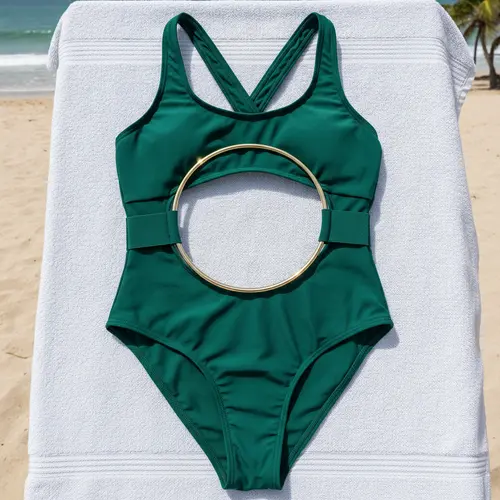
It depends entirely on location. A cut-out in a low-stress area doesn't meaningfully change how the garment supports the body. A cut-out placed closer to a structural zone — near the bust or a support seam — is a different judgment call: if the opening genuinely compromises support, the fix is adding underwire or another reinforcement component to offset what the cut-out removes, rather than either rejecting the design outright or building it without addressing the support gap. This is the same underlying principle behind what actually makes swimwear support structural rather than cosmetic — support comes from specific construction elements working together, and removing fabric in one place sometimes means adding structure somewhere else to compensate.
Keeping Cut-Out Placement Consistent Across a Bulk Order
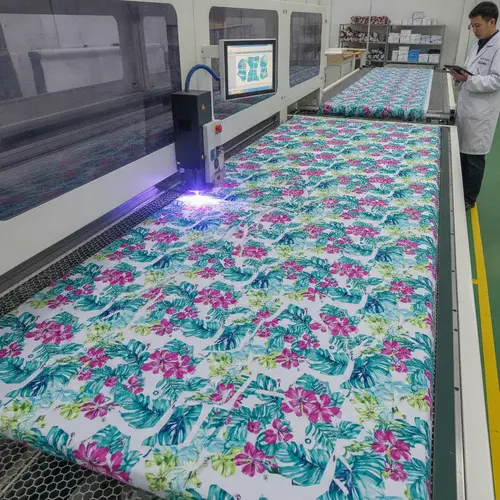
Swimwear is a genuinely non-standardized product — most construction is done by hand, by different workers, which means no two pieces in a production run are ever going to be pixel-identical to each other. That's true of swimwear generally, not something specific to cut-out styles. What actually controls consistency is having a real standard to build against: cutting is done entirely by laser cutting, which produces standardized, repeatable pattern pieces regardless of which worker sews the piece afterward. On the sewing line, the tolerance standard is within 0.5cm — a normal, achievable tolerance for this kind of construction, not a special difficulty specific to cut-out placement.
Cost: Not a Separate Line Item
Cut-out construction doesn't carry a distinct surcharge on top of a standard quote — sample pricing is based on the overall difficulty of the design as a whole, the same way any other construction complexity gets priced. A cut-out is one factor among several that goes into that overall difficulty assessment, not a feature with its own fixed price tag.
Where We'd Push Back: Cut-Outs That Are Too Small
There's a real, practical lower limit here, and it's worth being direct about it: openings that are too small create their own construction problem. Once a cut-out gets small enough, the fabric being folded and secured at the edge has nowhere to go — it bunches up, the finished edge isn't flat, and there simply isn't enough physical working space for a worker to sew it cleanly. This isn't a subjective design opinion; it's a real hands-on-the-machine constraint. If a design calls for an extremely small opening, that's worth flagging and adjusting before cutting, not something to discover after a sample comes back puckered.
This same "the trend is a fabric-and-construction decision, not a print or a shortcut" pattern shows up across other 2026 swim texture trends — see why ribbed fabric forms the way it does and why crinkle texture actually splits into two structurally different production methods. Understanding real material specs behind any trending construction detail — cut-outs included — is exactly what our fabric and trim library is built to document.
Cut-outs are one entry in our full real construction guide organized by swimwear type, alongside other trend-driven styles where the real engineering sits underneath a look that photographs simply.
A related-but-distinct question is mesh splicing — joining sheer fabric to solid fabric along a seam, rather than removing fabric entirely the way a true cut-out does.
The binding technique used to reinforce a cut-out edge is also the primary finishing method for a completely different material — see how neoprene bikinis are actually constructed for binding applied to a laminated, non-stretch-friendly fabric instead.
FAQ
Q: Does a cut-out weaken the garment structurally?
A: It depends on location. A cut-out away from a structural support zone has minimal impact. One placed near a support area may need compensating reinforcement — underwire or another structural component — to offset the support that removing fabric takes away.
Q: How do you reinforce a cut-out edge without visible stitching?
A: Some reversible-wear designs place the structural reinforcement — typically elastic — on the inside of the garment instead of using a visible external binding, keeping the exterior clean while still stabilizing the raw edge.
Q: Does cut-out placement stay consistent across a bulk production run?
A: Within a normal tolerance, yes. Cutting is done via laser cutting for standardized, repeatable pattern pieces, and sewing tolerance is held within 0.5cm — a standard, achievable target, not a special difficulty unique to cut-out styles.
Q: Does cut-out swimwear cost more to produce than a standard style?
A: Not as a separate line item — sample pricing reflects the overall difficulty of a design as a whole, with a cut-out being one factor in that assessment rather than a feature with its own fixed surcharge.
Q: Is there a minimum size for a cut-out to be manufacturable?
A: Practically, yes. Openings that are too small don't leave enough fabric or working space to fold and secure the edge cleanly — the result is bunching and an uneven finish. It's worth flagging and adjusting an overly small opening before cutting rather than after.
Q: Does "cut-out" only mean an actual hole cut into the fabric?
A: No — mesh panels, lace inserts, or any sheer/no-fabric area that shows skin functions the same way structurally. The edge of a mesh insert needs the same kind of reinforcement as a true cut-out opening.
Designing a cut-out or asymmetric style and not sure if the placement is structurally sound? Send us the design — we'll tell you honestly whether it needs added reinforcement, and where the real size limits are before you commit to a sample.