
Nylon Direct-Injection Print-Dye vs. Digital Printing: The Backside Test
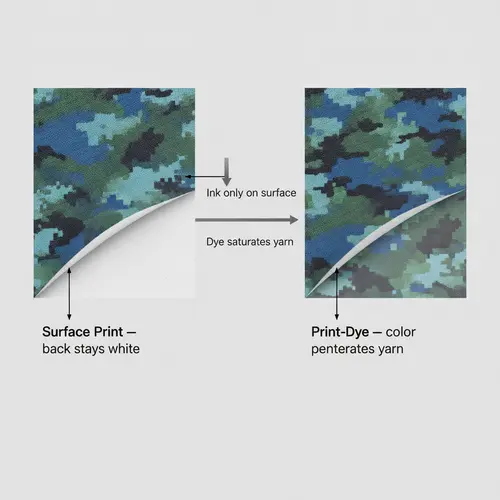
Most nylon swimwear fabric isn't printed the way people assume. The common term "digital printing" usually implies ink sitting on the surface of the fabric — and on nylon, that's not actually what happens in a real production process. What we use is direct-injection print-dye: ink is injected straight into the fabric, then the color is set and fixed through heat and a wash step, so it penetrates the yarn rather than sitting on top of it. There's a simple way to tell which one you're actually getting: turn the fabric over. If the color shows through on the back, it's penetrated the fiber. If the back is white, it's a surface print.
The Short Version
Nylon direct-injection print-dye | Standard digital printing | |
|---|---|---|
How the color is applied | Ink injected into the fabric, then fixed with heat and washed | Ink or pigment printed onto the surface |
Does color penetrate the yarn? | Yes | No |
Backside of the fabric | Shows the color | Stays white |
Process steps | Inject → high-heat dry → water wash → high-heat dry | Print → cure |
Best suited to | Nylon and nylon-spandex swim fabric | Cotton and some poly blends |
The Real Process, Step by Step
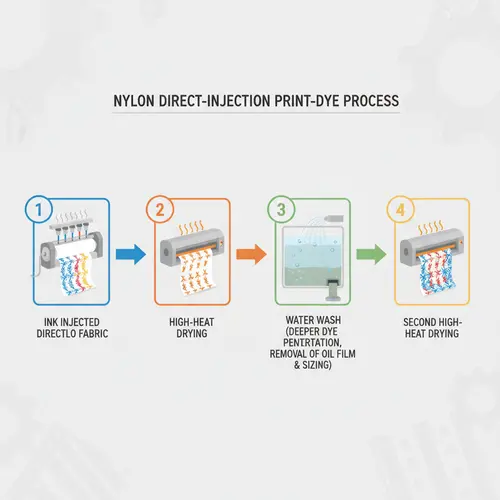
Direct-injection print-dye on nylon runs through four steps:
Ink is injected directly onto the fabric — this is the point where the pattern is actually applied.
High-heat drying sets the initial color.
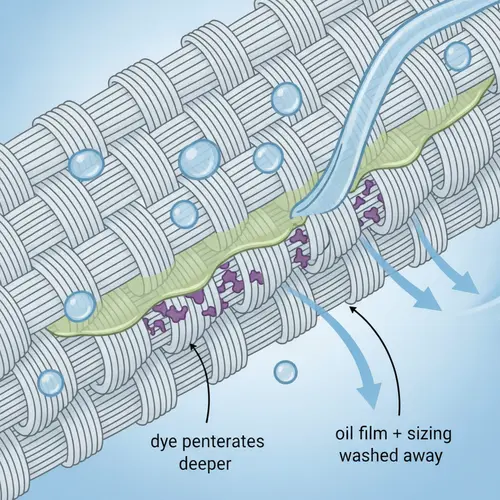
A water wash follows, and this step does two things at once: it helps the color penetrate further into the fabric's fibers, and it washes off the surface oil film and sizing agent left over from the fabric's own finishing process.
A second high-heat drying finishes the piece.
That wash step is the part most people don't expect. It's not a rinse to clean up excess ink — it's doing real chemistry, pushing dye deeper into the yarn while stripping away residue that would otherwise sit between the dye and the fiber. Skip it, and you get a print that looks fine on day one but sits closer to the surface than it should.
Why Nylon Needs a Different Dye Than Cotton or Polyester
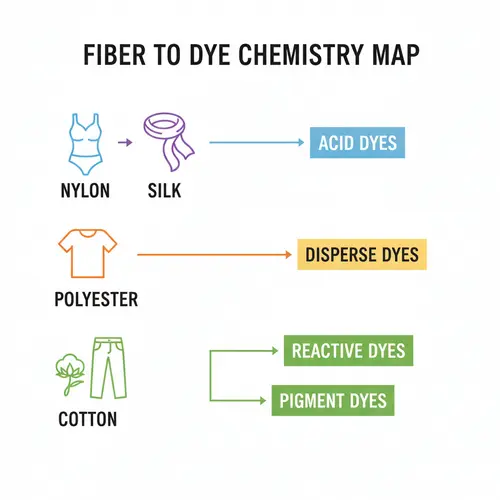
This isn't a marketing distinction — it reflects real dye chemistry. Textile printing guides are specific about which dye class works with which fiber: acid dyes are reserved for nylon and silk, disperse dyes are for polyester, and reactive and pigment dyes are most common for cotton. Nylon is a polyamide, chemically different from cotton's cellulose or polyester's polymer structure, so it needs its own dye chemistry to actually bond rather than just sit on top.
This is also why the term "DTG" (direct-to-garment) doesn't really apply here. DTG is a specific, well-known process built around cotton — ink is sprayed onto pre-treated cotton and absorbed by the fiber's natural structure. It's a different dye class and a different fiber entirely from what nylon swim fabric needs. If a supplier tells you they're using "DTG" on your nylon fabric, that's worth a follow-up question about what they actually mean.
Research on nylon inkjet printing backs up why the process needs extra steps: nylon fabric printed with acid or disperse dye inks requires pretreatment and careful control of ink penetration depth to get color that's both vibrant and durable — it's not a simple spray-and-done process the way surface printing can be.
Why the Backside Test Actually Works
The physical difference between penetration and surface printing is well documented in textile printing patents. One patent on synthetic fabric printing describes the exact failure mode of surface printing directly: disperse dyes that don't fully penetrate the yarn leave an undyed inner surface, which shows up as an unacceptable appearance once the fabric is stretched. That's the mechanism behind the backside test. If dye has actually gone through the yarn, the back of the fabric carries color. If it hasn't, the back stays white or pale, because the ink is sitting on top of the surface fibers only, not inside them.
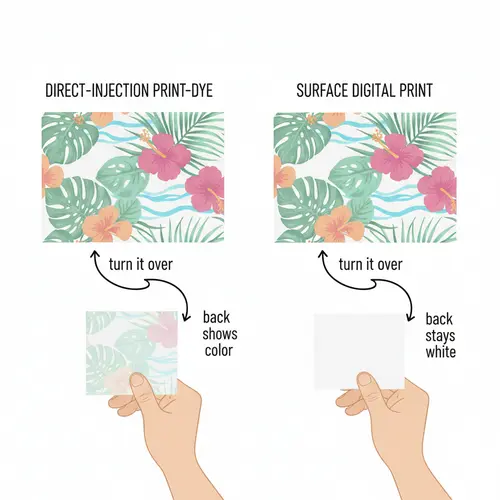
This matters beyond the honesty of the label. Fabric that's printed only on the surface is more exposed to wear: the diffused dye in a penetration process is held by weaker bonding forces than a surface pigment bound with an adhesive in some processes, and print worn at the surface is generally more exposed to fading, cracking, and crocking than dye that's actually inside the fiber — a real durability consideration for a fabric that's stretched, chlorinated, and sun-exposed constantly.
What This Means for Sourcing
Ask which fiber the process is designed for. "Digital printing" is not one process — nylon, polyester, and cotton each need a different dye class, and a supplier who can name the dye chemistry for your specific fabric is telling you something real.
Check the back of a sample before approving it. This is the single fastest way to verify penetration versus surface printing, and it costs nothing beyond looking.
Ask about the wash step specifically. If a nylon print process skips the fixing wash, ask why — it's the step that actually pushes color into the fiber rather than leaving it on top.
Recycled nylon fabric changes the calculation further. Heat sensitivity in recycled elastane content affects which printing approach is lower-risk — see why recycled fabric changes the printing method for that specific case.
For mesh and high-open-structure fabrics, this process choice interacts with other decisions too — see how it plays out in our honest breakdown of tan-through fabric. You can browse real logo and print application options in our print and heat-transfer category, and see the fuller fabric picture in our Real Fabric & Trim Library.
FAQ
Q: What's the difference between nylon direct-injection print-dye and digital printing?
A: Direct-injection print-dye pushes ink into the fabric and fixes it with heat and a wash step, so the color penetrates the yarn. Standard digital printing usually means ink or pigment printed onto the surface, without that penetration step.
Q: How can I tell which process my fabric actually used?
A: Turn the fabric over. If the color shows through on the back, the dye has penetrated the fiber. If the back is white, it's a surface print.
Q: Is "DTG" the right term for nylon swimwear printing?
A: Not really. DTG (direct-to-garment) is a process built around cotton, using a different dye class than nylon needs. If a supplier uses "DTG" for nylon fabric, ask what process they actually mean.
Q: What does the water wash step in direct-injection printing actually do?
A: Two things: it helps push the dye further into the fabric's fibers, and it washes off the surface oil film and sizing agent left over from the fabric's finishing process. It's a real chemistry step, not a rinse.
Q: Does surface printing wear out faster than penetration dyeing?
A: Generally, yes. Dye that's penetrated the fiber is more resistant to fading, cracking, and crocking than ink sitting on the surface, which matters for a fabric that's stretched, chlorinated, and sun-exposed regularly.
Q: Does this apply to polyester fabric too?
A: Polyester uses a different dye class (disperse dyes, often via sublimation transfer), not the acid-dye process nylon needs. Ask what dye chemistry a supplier is using for your specific fiber.
Want to See a Real Sample Before You Commit?
Send us your design and we'll walk you through which printing process fits your fabric, with a real sample you can check yourself, back included. Start with our no-MOQ guide if you're still planning your first order.