
Swimwear Printing: Why Recycled Fabric Changes the Method
Digital printing, sublimation, and heat transfer are the three real printing methods used on swimwear fabric today, and most sourcing content treats the choice between them as purely a matter of design complexity and budget. That's true for virgin polyester and nylon. It stops being fully true once recycled fabric enters the picture — recycled elastane and recycled polyester blends behave differently under heat than their virgin counterparts, and a printing method that's perfectly safe on one can measurably degrade the other. Here's how the three methods actually work, and why we handle recycled fabric differently once printing enters the process.
At a Glance
Method | How It Works | Heat Exposure | Best Fit | Our Cost (per our own pricing) |
|---|---|---|---|---|
Digital printing (DTG/direct-to-fabric) | Ink is printed directly onto the fabric surface, inkjet-style | Low to none | Recycled fabric, complex/photographic patterns, small runs | Free — requires high-resolution artwork |
Sublimation | Dye is heat-transferred from paper into the fiber itself, gas-phase, \~190-230°C | High, sustained | Virgin polyester, all-over prints, large runs | Priced per design complexity |
Heat transfer (vinyl/DTF) | Pre-printed design or vinyl is pressed onto the fabric surface with heat | Moderate to high, localized | Small logos, low-stretch placement, virgin fabric | $50 — one of our standard special-process fees |
How Each Method Actually Works
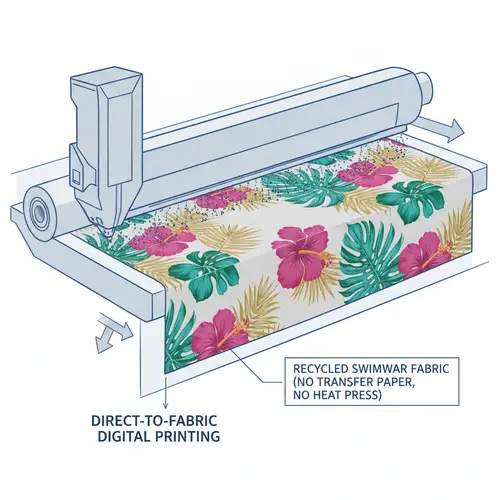
Digital printing applies ink directly to the fabric's surface using inkjet-style technology, without a separate transfer paper step and without the sustained high heat the other two methods require. This is the closest thing to a "cold" process among the three, which is exactly why it's the one we default to for recycled fabric.
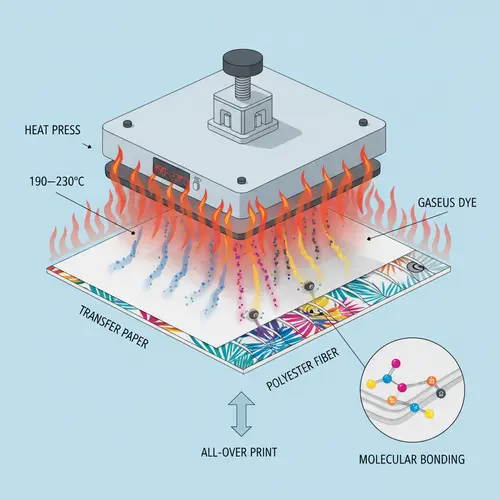
Sublimation works by converting solid dye into a gas under heat and pressure — typically in the 190–230°C range — so the color bonds at a molecular level with polyester fiber. It produces vivid, durable, all-over prints and is genuinely excellent on virgin polyester. The catch is the sustained, high temperature involved, which is also precisely the mechanism that concerns us on certain recycled blends.
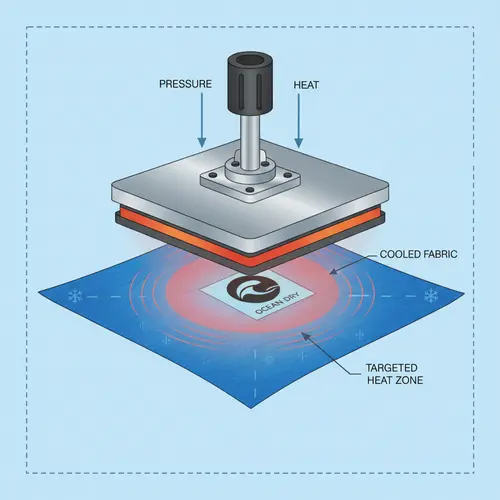
Heat transfer (including heat transfer vinyl and direct-to-film transfers) presses a pre-made design onto the fabric's surface using heat and pressure, without necessarily reaching sublimation's temperature range, but still involving real, localized thermal exposure to the fabric underneath the transfer.
Why This Isn't Just a "Spandex Is Heat-Sensitive" Story
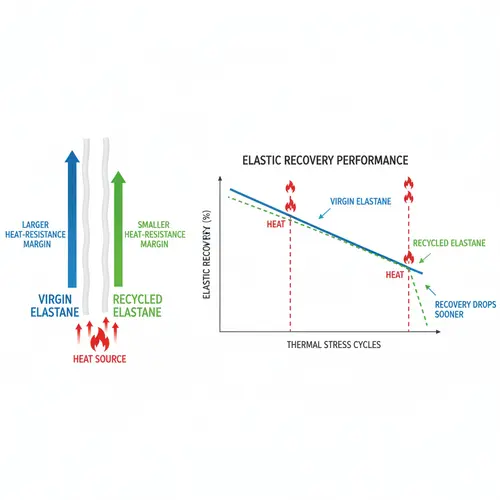
It's well established in the printing industry that high heat can damage spandex/elastane's elasticity — this isn't a claim specific to us or to recycled fabric. What's less discussed is why recycled elastane in particular deserves extra caution, and the reason traces back to how it gets recycled in the first place. Elastane is difficult to separate from the other fibers it's blended with — even a small percentage of elastane in a blend complicates recycling the rest of the fabric — and one practical response the recycling industry has landed on is using heat specifically to degrade the elastane out of a blend when it's not the fiber being recovered. In other words, heat-based elastane breakdown isn't an edge-case risk for recycled material; it's a process some recyclers actively rely on for a different purpose entirely, which is exactly why applying more heat back onto a finished recycled-elastane fabric — via printing — deserves more caution, not less, than the same step on virgin fiber.
This connects directly to something we've written about separately: high-temperature digital printing measurably damages elastane's recovery performance in general, confirmed by peer-reviewed research on thermal degradation of elastane's elastic structure. Recycled elastane doesn't get a pass from that mechanism — if anything, fiber that's already been through one processing cycle has less margin to absorb a second thermal stress event before its recovery performance measurably drops.
A Real Example: When the Symptom and the Cause Weren't the Same Layer
We worked with a brand that sources exclusively recycled fabric (Carvico Vita and Repreve-family materials) for a print-driven collection where the pattern, not the color, is the core design asset each season. Partway through the relationship, the brand flagged that a children's-line sample they'd sent us as a quality reference had lost noticeable elasticity — visibly baggier and less snappy than it should have been for its age and use.
The fabric itself wasn't necessarily the problem. Based on what we could observe, the most likely explanation was the printing or dyeing process the sample had gone through, not a defect in the base recycled fiber. That distinction matters for anyone sourcing recycled fabric: a garment that's lost its stretch doesn't automatically mean the recycled fiber was low quality — it can just as easily mean a printing method applied unnecessary thermal stress on fiber that had less tolerance for it to begin with. We flagged this directly to the brand as an observation, not a confirmed root cause, since we hadn't tested that specific sample ourselves — but it was enough to steer their next production run toward digital printing instead of a heat-intensive method, precisely to remove that variable.
What We Actually Recommend, By Fabric Type
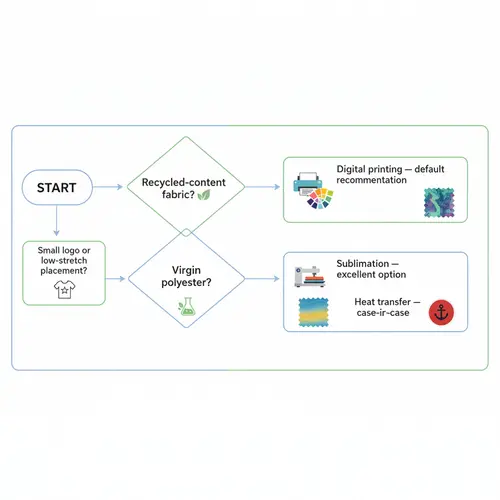
For recycled-content fabric, digital printing is our default recommendation, specifically because it avoids the sustained heat exposure that sublimation and heat transfer both involve. This isn't a hard rule for every recycled blend at every print size — a small, localized logo is a different risk profile than an all-over pattern — but it's the right starting assumption rather than defaulting to whichever method happens to be cheapest or fastest for a given order.
For virgin polyester, sublimation remains an excellent, durable option with no elasticity trade-off worth worrying about — this is genuinely where sublimation performs best, and there's no reason to avoid it on non-recycled fabric.
For small logos or low-stretch placement areas on either fabric type, heat transfer can still make sense — the risk scales with how much of the garment is exposed to heat and for how long, not just which method is used in the abstract.
Real Cost Context
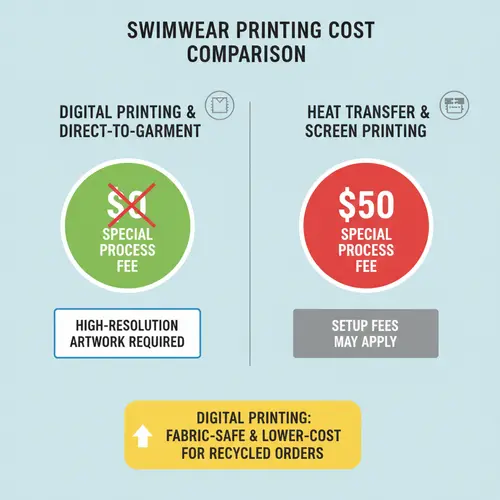
Since printing choice is as much a budget question as a technical one, here's what these methods actually cost in our own pricing structure: digital printing and direct-to-garment printing carry no special fee beyond requiring high-resolution artwork from the client, while heat transfer, embroidery, and screen printing are grouped under a $50 special-process fee. That means the fabric-protective choice (digital) and the lower-cost choice are, in our case, the same choice for recycled orders — there's no cost trade-off pushing a brand toward the riskier method here, which isn't something we can say about every production decision.
For brands weighing this alongside broader fiber-sourcing decisions — bio-based versus recycled elastane, or whether a branded fiber is worth the premium — this sits alongside our other real elastane sourcing breakdowns as one more variable worth factoring in before committing to a print-heavy, recycled-fabric collection.
If you want to browse the actual print and logo-application options we work with, our logo application techniques library is browsable directly, organized by real technique category. This is one entry in our broader fabric and trim library, where every printing and fiber spec we work with is documented with real numbers, not generic descriptions.
For standard (non-recycled) nylon fabric, the default process is different again — see nylon direct-injection print-dye vs. digital printing for the real 4-step process and how to verify it.
FAQ
Q: Is heat transfer printing safe to use on any swimwear fabric?
A: Not universally. It's a real, workable method, but it involves localized heat exposure that can affect elastane's elasticity, especially on fabric that's already been through a recycling process. Virgin polyester tolerates it better than recycled blends generally do.
Q: Why is recycled elastane more heat-sensitive than virgin elastane?
A: Elastane is difficult to separate from other fibers during recycling, and heat is one of the methods the recycling industry uses specifically to break elastane down when it isn't the fiber being recovered. Fiber that's already been through processing has less margin left to absorb additional thermal stress from a printing step.
Q: Does digital printing sacrifice print quality compared to sublimation or heat transfer?
A: Not meaningfully for most swimwear designs, including complex or photographic patterns — it's a genuinely capable method, not just a "safe but lower-quality" fallback. The main trade-off is more about production speed and per-unit cost at very large run sizes, not visual quality.
Q: If my finished garment loses elasticity, is that always the fabric's fault?
A: No — this is a common and reasonable assumption, but it's not always accurate. A printing or dyeing process that applied more heat than the fiber could tolerate can produce the same symptom (reduced elasticity) as a genuinely low-quality base fabric. It's worth asking which stage introduced the heat before concluding the fabric itself was defective.
Q: Should I avoid sublimation entirely if I want to use recycled fabric?
A: Not necessarily for every case, but it's worth treating as a real risk factor rather than assuming recycled fabric behaves identically to virgin fabric under the same heat exposure. Digital printing is the lower-risk default we recommend for recycled-content orders.
Q: Does the printing method choice affect cost for a recycled-fabric order?
A: In our pricing, no — digital printing carries no special fee beyond requiring high-resolution artwork, while heat transfer and similar methods are priced under a $50 special-process fee. The fabric-safer choice and the lower-cost choice are the same one for recycled orders.
Q: Can a small logo use heat transfer even on recycled fabric?
A: The risk scales with exposure — a small, localized placement carries less thermal risk to the garment overall than an all-over print using the same method. It's a reasonable case-by-case judgment rather than an absolute rule.
Q: How would I know if my recycled fabric supplier's material is more heat-sensitive than average?
A: There's no universal number to check against; this comes down to communicating clearly with your manufacturer about the printing method planned and asking them to flag the risk before production, the same way you'd verify a fabric certificate rather than assume it covers everything.
Sourcing a recycled-fabric collection and not sure which printing method fits your design? Tell us your fabric composition and pattern complexity — we'll recommend the method that won't cost you elasticity down the line.