
Swimwear and Matching Resortwear: Can One Factory Do Both?
A manufacturer may be able to make your swimwear, cover-ups and resort dresses together. At OYOYI, these pieces can usually be made in one garment factory, and we can also make casual beach and multi-occasion shirts. Formal shirts require a separate capability assessment. But making a coordinated collection depends on more than where the garments are sewn: the print must be developed and approved on each fabric.
Our approach starts with one customer-approved printed fabric as the reference. We then use that physical fabric to guide adjustments on the other materials, obtain customer approval, and move into garment sampling. Bulk production is allocated according to the styles involved, factory availability and the customer's timing.
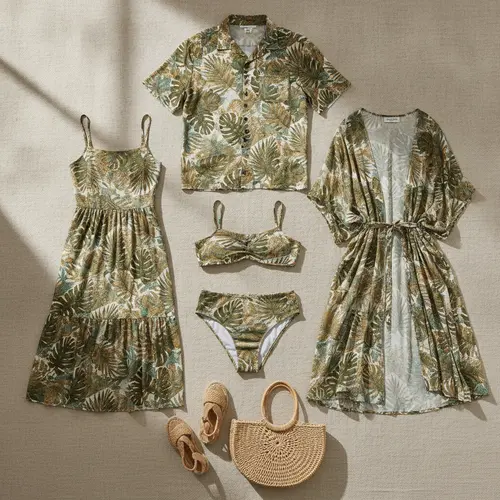
Can one factory make swimwear and matching resortwear?
Often, yes, within an appropriate product range. In our work, swimwear, cover-ups and dresses can usually share a garment factory. A casual shirt intended for the beach or several relaxed settings can also fit our scope. We distinguish that from a formal shirt rather than treating every garment called a “shirt” as the same production task.
There are also two separate questions to ask: who will print the fabrics, and who will make the garments? One sewing factory does not mean that every fabric should go through one printing specialist.
Decision | OYOYI's approach | What to clarify in the brief |
|---|---|---|
Swimwear, cover-ups and dresses | Usually possible within one garment factory | The actual styles, construction and intended use |
Casual beach or multi-occasion shirts | Within our making scope, subject to style review | Whether the requirement is a relaxed shirt or a formal shirt |
Printing across different fabrics | Coordinate specialists using one approved physical reference | Each fabric and the collection's acceptable visual relationship |
Bulk garment production | Use our own factory or a factory suited to the styles | Required timing, capacity and the approved sample requirements |
Assess the collection as a group of production tasks. Our manufacturing feasibility guide explains why a convincing design still needs a practical construction review.
Why the same print needs adjustment on different fabrics
In our cross-fabric printing work, color differences are something we expect and work through. Sending the same artwork for a swimsuit and its matching cover-up does not, by itself, establish an acceptable match. We adjust the printing and dyeing through further trials rather than assuming the first results will coordinate.
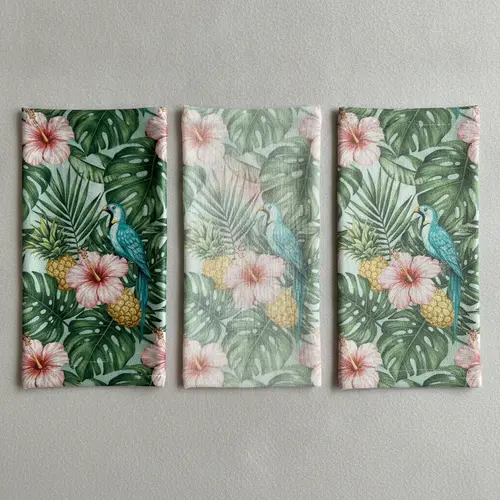
There is a technical reason to assess the actual materials. Datacolor's guidance on measuring textile color samples identifies texture, opacity, backing and sample presentation among the factors that affect reliable color assessment. A multi-color print also needs a different assessment approach from a uniform solid-color sample.
Lighting matters too. Konica Minolta explains metamerism and common color-matching issues: two colors can appear matched under one light source and different under another. A useful buyer check is therefore to compare the physical fabrics together under agreed viewing conditions.
The goal is a collection the customer accepts as coordinated. We do not promise that different materials will look mathematically identical in every setting. For the separate question of which process suits a swim fabric, see our swimwear fabric printing guide.
How OYOYI develops matching prints across the collection
1. Establish the first approved fabric
We begin with a printing factory that is strong in the relevant work and can efficiently establish the intended print. That factory adjusts the result until the customer is satisfied. The first approved printed fabric becomes a concrete reference for the rest of the collection.
This sequence gives the other printers something physical to work toward. It avoids asking several factories to interpret the artwork independently without an agreed fabric result.
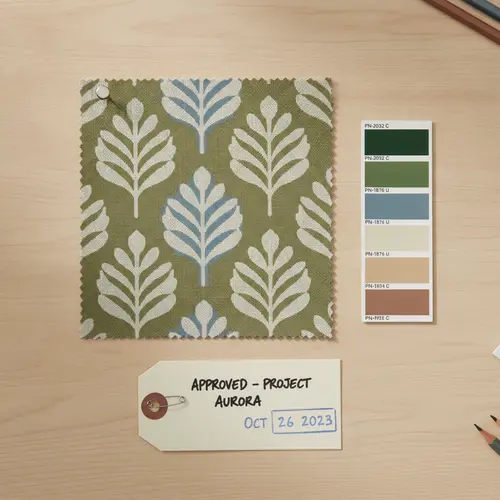
2. Send that reference to specialists for the other materials
We send the reference fabric to printing factories experienced with the other materials required by the order. Those may be fabrics for beach shorts, cover-ups or other coordinating pieces. They adjust their own results against the established reference, with further printing and dyeing adjustments where needed.
Starting with one approved result makes the remaining comparisons clearer. It does not mean copying the same production settings onto every material, or assuming that a specialist in one fabric is automatically the best choice for another.
3. Obtain customer approval before garment sampling
After the customer has confirmed the fabric results across the collection, we purchase the fabrics for garment sample making. This separates approval of the printed materials from assessment of the finished garments.
A matching print is only part of sample approval. The buyer still needs to assess whether each garment's fit, shape and construction work for its intended use. A coordinated swimsuit and cover-up remain two different products.
4. Keep sample making under headquarters control
OYOYI's headquarters controls sample making through our established workflow and requirements. This is where the collection moves from approved fabrics into physical garments, with a common development process guiding the work.
Headquarters control does not mean that every production task must happen in the same building. It means the sample-development requirements are managed centrally rather than leaving each participating factory to define the project independently.
5. Match bulk production to style capability and timing
For the bulk order, we match factory availability with the customer's timing and choose our own factory or a factory suited to the relevant styles. We designate the printing factory and have the garment-making factory contact that printer directly.
That direct factory-to-printer contact operates within the coordinated order. It does not remove the need for customer approvals or the sample requirements established during development. When discussing a supplier's scope, our swimwear factory due-diligence checklist can help structure the questions.
Does a matching print create another MOQ or artwork rule?
For the order approach described here, we do not impose a separate fixed motif-scale rule or an additional print-specific minimum beyond meeting the MOQ agreed for the project. That is an account of how we handle these orders, not a universal rule for textile printers.
It also does not mean every combination of quantity, material and process is interchangeable. Confirm the actual assortment and the applicable MOQ in the quotation. Our explanation of MOQ by style, color and size helps identify what a quoted minimum covers.
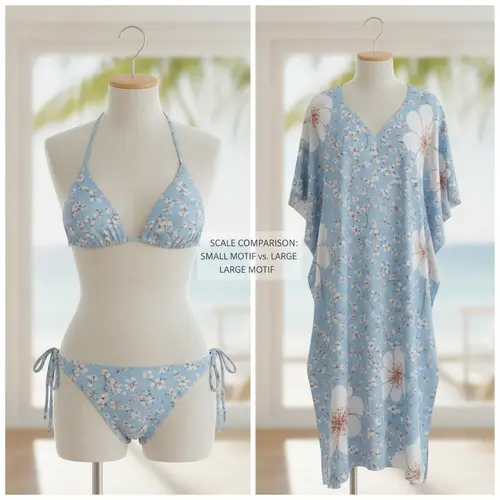
For the artwork, show the intended motif scale and placement for each garment. You may want the same repeat across the range, or a different visual scale on a larger cover-up. Those are design decisions to communicate, not reasons to assume a new mandatory minimum.
What to send with a coordinated collection brief
To make the first discussion useful, send the items together rather than submitting each as an unrelated request:
The garment list and reference images, including whether any shirt is casual or formal.
The intended fabric for each item, or the material choices you need help resolving.
The print artwork and intended scale or placement on each garment.
Any existing physical fabric that should serve as the color reference.
The quantity breakdown and required timing for the collection.
Who will approve the fabric results and the garment samples.
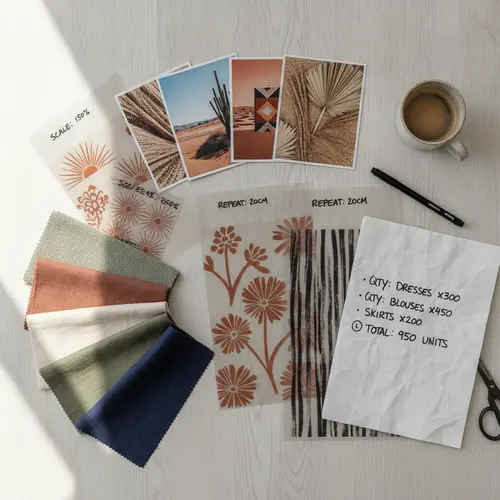
We can then review the making scope, printing sequence and production allocation. The practical starting point is one agreed reference and a clear approval path for every material in the collection.
Frequently asked questions
Can OYOYI make matching swimwear and casual beach shirts?
Yes, casual beach and multi-occasion shirts are within our making scope, subject to review of the actual style. We distinguish these from formal shirts.
Will the same artwork produce identical colors on every fabric?
We expect to adjust cross-fabric print results. Our process uses an approved physical fabric to guide the other materials and seeks customer approval of the coordinated results, rather than promising zero difference under all conditions.
How many rounds of print adjustment are included?
There is no fixed number stated in this workflow. Confirm the adjustment scope, any charges and timing for the specific order before development begins.
Are garment samples made before the fabrics are approved?
In the process described here, the customer confirms the fabric results first. We then purchase fabric for sample making, which is controlled by our headquarters.
Will one factory make the entire bulk order?
That depends on the styles, factory availability and the customer's timing. Swimwear, cover-ups and dresses can usually share a garment factory, while the order may involve specialist printers for different fabrics.