
Kids' Swimwear Compliance: Drawstrings, UPF, and CPC Costs
Byoyoyi.ai— written with AI-assisted research, reviewed and fact-checked in-house.
Here's a regulatory detail that surprises a lot of buyers: the U.S. federal drawstring ban (16 CFR Part 1120, built on ASTM F1816) technically exempts swimwear — it applies specifically to children's upper outerwear like jackets and hoodies, and the rule explicitly excludes underwear, inner layers, shorts, swimwear, dresses, and belts. But that federal exemption isn't the end of the story: some state and local regulations extend drawstring restrictions to these excluded categories anyway, which means "technically exempt federally" doesn't always mean "safe to ignore." Getting kids' swimwear compliance right involves more real, specific detail than most sourcing guides cover — here's what it actually looks like in practice.
Children's swimwear is a small but real slice of the category — B2B wholesale data from JOOR puts it at roughly 4% of total swimwear sales volume — small enough that compliance guidance for it often gets treated as an afterthought bolted onto adult swimwear processes, which is exactly where the real risk sits.
Drawstrings: What's Actually Allowed, and What We Do Instead
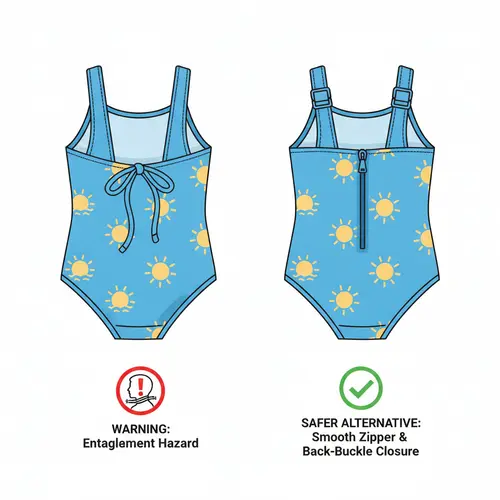
Even where drawstrings on kids' swimwear aren't federally banned, length restrictions still apply, and the safer default is avoiding them entirely. In our own production, the more common approach is replacing back-tie drawstring closures with zippers or back-buckle closures instead — this sidesteps the entanglement risk drawstrings are regulated for in the first place, without the ambiguity of "is this length technically compliant in every jurisdiction we might ship to." It's worth noting the EU takes a broader approach here: EN 14682:2007 covers cords and drawstrings across children's clothing generally, not just upper outerwear the way the U.S. rule does — a real regulatory gap between the two markets worth knowing if you're selling into both.
The Fabric Question: Organic Cotton + Spandex
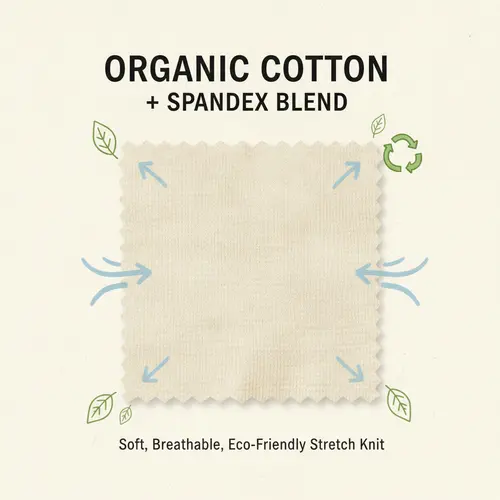
One real compliance-driven fabric request we've encountered recently: organic cotton blended with spandex. This is a genuinely uncommon combination in the market right now — we don't have large-volume production experience with it yet, only two European clients who've gone through sample development with this blend so far. We're noting this honestly rather than overselling it: it's a real, current request tied to compliance and sustainability positioning, but it's early-stage from a supply-chain maturity standpoint, not yet a fabric with a long production track record behind it.
UPF Protection: What We Know, and What We Haven't Independently Tested
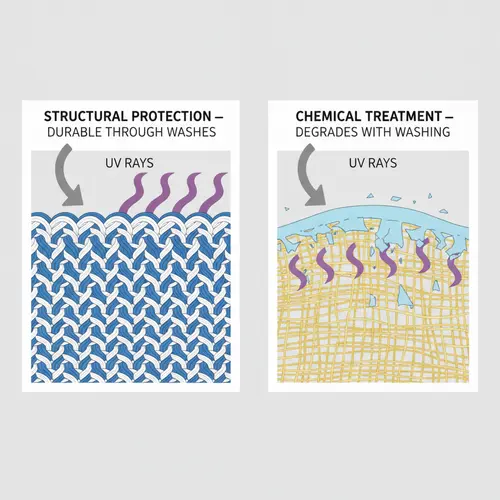
Most kids' swimwear brands target UPF 50+, blocking a very high percentage of UVA/UVB exposure, and the common industry question is whether that protection holds up after repeated washing. We want to be straightforward here: we haven't run independent wash-durability testing ourselves. What we can speak to is the underlying textile principle: when UV protection comes from a fabric's physical density and coverage — a tightly constructed knit blocking light structurally — rather than from a topical chemical UV-absorbing treatment, that protection is inherently more durable over repeated washing, because there's no coating to wear off. That's a reasonable textile fundamental, not a substitute for an actual wash-cycle test report, and buyers who need a verified number should request the lab result specifically rather than accepting "UPF 50+" as a self-evident, permanent claim. It's also worth remembering that sun protection isn't the only requirement — skin-contact comfort and softness matter just as much for a garment kids wear for hours at a time.
The Real Certification Costs: CPC vs. GCC
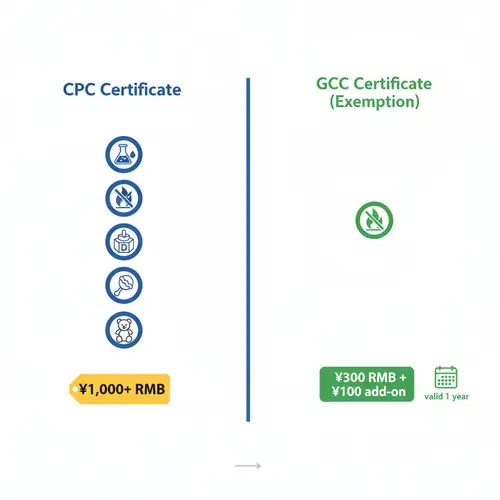
This is the part with the least public information, so it's worth laying out plainly, based on our own current compliance process:
Certificate | What It Covers | Real Cost |
|---|---|---|
**CPC (Children's Product Certificate)** | Full battery of children's product safety testing — mandatory for children's items | Roughly **¥1,000+ RMB**, with pricing varying noticeably depending on how many test items are required |
**GCC (General Certificate of Conformity), under exemption** | In our current process, reduced to a single flammability report | **¥300 RMB per report**, valid for **1 year**; a **¥100 RMB add-on** allows the report to cover multiple buyers if a brand is selling through several channels |
It's part of a broader pattern in 2026 regulatory compliance — see how we handle PFAS-related sourcing questions, another case where knowing exactly what a regulation does and doesn't cover matters more than reacting to headlines
The price spread on CPC testing specifically is worth flagging to any brand budgeting for a kids' line — it isn't a fixed number, it scales with how many individual safety tests a specific garment design requires, so a simple design and a more complex one (say, with trims or embellishments that need their own testing) won't cost the same to certify. This is the same discipline behind verifying any other fabric certificate rather than taking a general claim at face value — a CPC or GCC report is only as useful as knowing exactly what it covers and how current it is, and a 1-year validity window on a GCC flammability report means it needs active tracking, not a one-time filing you forget about.
This kind of manufacturing feasibility question — what's actually required, what it actually costs, and where the real risk sits — is exactly the category of information that's hardest to find from a general sourcing guide and easiest to get wrong by assuming your adult swimwear compliance process automatically covers a kids' line. It generally doesn't.
The Deadline Worth Knowing About
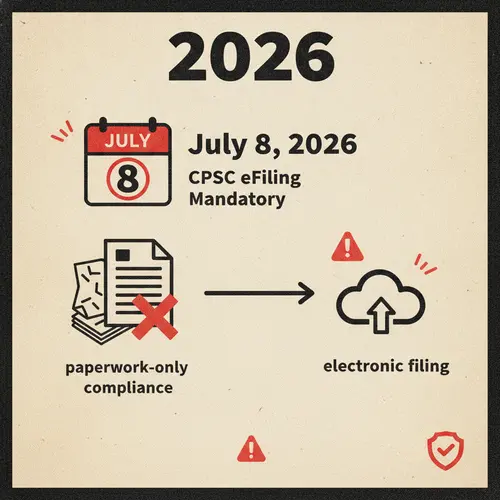
Separately from cost, there's a timing element: mandatory eFiling for children's clothing compliance data through the CPSC's electronic filing portal is being enforced starting July 8, 2026 — meaning that requirement is essentially active as of this writing. Any brand still relying on older paperwork-only compliance processes for a kids' swim line needs to confirm their certification workflow accounts for this.
Worth separating clearly, though: that eFiling requirement is an import-transmission detail, not a new certification mandate — and whether you need the underlying certificate at all still depends heavily on where you sell. We've laid out the real difference between marketplace and independent-site requirements, along with what certification actually costs in extra samples and lead time, in a dedicated breakdown here.
FAQ
Q: Are drawstrings actually illegal on children's swimwear?
A: Not federally — U.S. federal drawstring regulation specifically excludes swimwear from its scope. However, some state or local rules can extend similar restrictions to swimwear anyway, and even where a length restriction rather than a full ban applies, avoiding drawstrings entirely is the simpler, lower-risk default.
Q: What's typically used instead of a drawstring on kids' swimwear?
A: In our production, zippers and back-buckle closures are the common substitute for a back-tie drawstring — they achieve a secure, adjustable fit without the entanglement risk a drawstring carries.
Q: Is organic cotton + spandex a proven fabric choice for kids' swimwear?
A: It's a real, current request we've fulfilled at sample scale for two European clients, but it's not yet a fabric with a long, large-volume production track record — worth knowing if you're considering it for a full collection rather than a smaller first run.
Q: Does UPF 50+ protection stay effective after many washes?
A: We haven't run independent wash-durability testing ourselves. The general textile principle is that UV protection from a fabric's physical density and coverage tends to be more wash-durable than protection from a topical chemical treatment, since there's no coating to wear away — but a brand that needs a verified number should request the specific lab test result rather than treating "UPF 50+" as an unchanging guarantee.
Q: What does it actually cost to certify a children's swimwear line?
A: In our current process, CPC testing (required for children's products) runs roughly ¥1,000+ RMB depending on how many specific tests the design requires, while a GCC route under exemption — reduced to a flammability report in our process — runs about ¥300 RMB per report, valid one year, with a ¥100 RMB add-on for multi-channel/multi-buyer coverage.
Planning a kids' swimwear line and want to understand which certification path and fabric choices actually fit your budget and timeline? Send us your design concept — we'll walk through the real compliance steps before you commit to a spec.