
Swimwear Stretch Recovery: What 85% Actually Means
"85% stretch recovery" shows up constantly in swimwear fabric sourcing content, usually presented as a single, simple benchmark. It isn't simple, and treating it as one number hides most of what actually matters. There are two separate questions buried in it — fabric recovery versus finished garment recovery — and within fabric recovery alone, the number depends heavily on when you measure it. Here's the real picture, and what actually determines whether a suit keeps its shape.
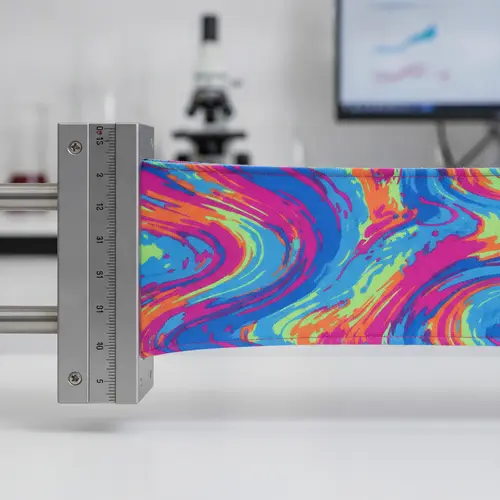
Fabric Recovery Is Not One Number — It Depends on Timing
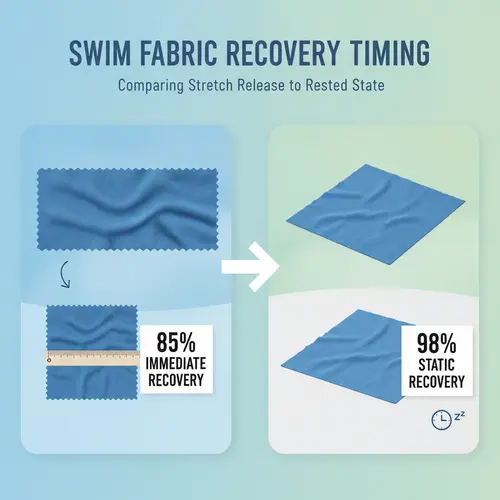
Fabric-level stretch recovery is usually well above 85% — that figure typically describes immediate recovery, measured right after the stretching force is released. Let the fabric rest instead of measuring instantly, and static (rest) recovery commonly reaches 98% or even close to 100%, short of destructive stretching that actually damages the elastane filament itself — which is genuinely uncommon in normal handling. In other words, "85%" isn't a ceiling or a quality threshold on its own; it's specifically the immediate-recovery number, and a fabric that tests at 85% immediately can still be excellent once it's had time to fully relax back into shape. The actual number of test stretch cycles and the specific tension applied follows established lab methodology — ASTM D3107 covers stretch, growth, and recovery testing for stretch-yarn fabrics specifically, and is worth referencing directly if you need a formal test report from a supplier rather than a general claim.
What Actually Determines Recovery — And What Doesn't
Based on real production experience, one factor dominates: elastane (spandex) content is the primary driver of recovery performance. Fabric weight (GSM) is a common but incomplete explanation — a heavier GSM mainly affects stretch power (how much force it takes to stretch the fabric, and how firm it feels), not recovery itself. A lighter fabric with good elastane content can recover just as well as a heavier one; it just won't feel as "held in."
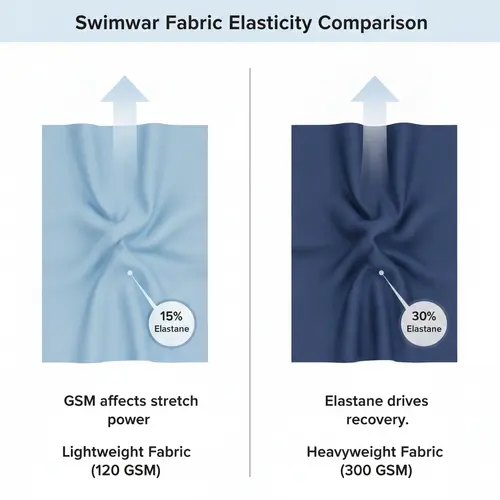
This holds true regardless of whether the elastane is a generic yarn or a branded fiber like Lycra — recovery is a percentage-and-construction question, not a brand question. See our breakdown of where the Lycra premium actually goes if you're deciding whether the branded fiber is worth sourcing for your order.
The same principle extends to components beyond the main body fabric — a strap built around a dedicated elastic core recovers better than a fabric-only tube strap relying solely on the swim fabric's own stretch, for exactly the same reason: a purpose-built elastic component outperforms fabric stretch alone. See elastic-core vs. fabric-only tube strap construction for when that trade-off is actually worth making.
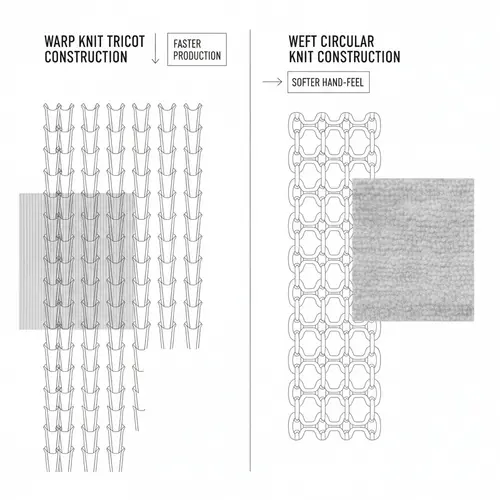
Knit structure is a secondary factor, and mostly affects manufacturing choice rather than recovery quality directly: most swim fabric uses warp knitting (tricot-style construction), with a smaller share using weft (circular) knitting instead. Weft knitting is slower to produce than warp knitting, but the resulting fabric has a noticeably softer hand-feel — a real trade-off between production speed and finished texture, not a recovery-performance difference on its own.
Why Cheap Fabric Actually Fails
The gap between cheap fabric and properly sourced fabric isn't usually about the type of fiber used — it's about two specific, verifiable things: the real elastane percentage versus what's claimed, and the quality of the spun yarn the elastane filament is made from. A fabric labeled with a certain elastane content doesn't always deliver it in practice, and yarn quality varies meaningfully even at the same nominal percentage.
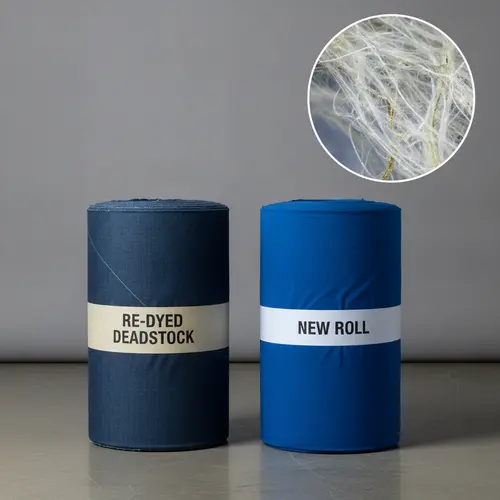
There's a less obvious risk worth naming directly: some low-cost fabric in the market is old inventory (deadstock) that's been re-dyed and resold as new material. Elastane degrades with age and storage conditions regardless of how it's dyed, so a re-dyed deadstock roll can look fresh while performing well below what a genuinely new roll of the same nominal spec would.
The Cause Almost Nobody Mentions: High-Heat Printing Damages Recovery
Here's a specific, real, and under-discussed cause of poor recovery: high-temperature digital printing measurably damages elastane's recovery performance. The heat involved in the printing process affects the elastane filament's elastic structure directly — this isn't a hypothetical concern; peer-reviewed research on elastane degradation confirms that thermal exposure disrupts elastane's elastic recovery at a fiber level, with measurable dimensional and recovery changes as a result. If a printed swim fabric is losing recovery faster than an equivalent solid-color fabric in the same construction, the printing process itself — not the base fabric — is a real, checkable suspect.
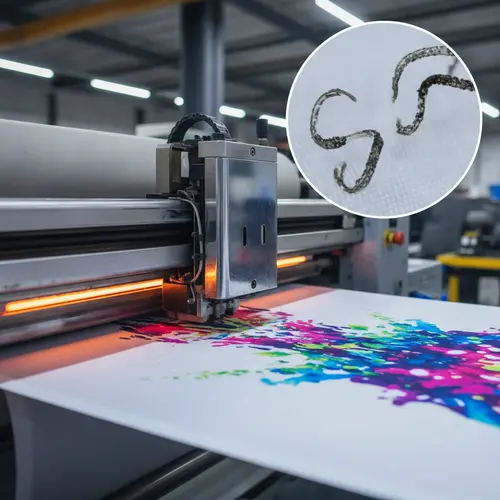
This risk isn't distributed evenly across all fabric, either — recycled elastane has less margin to absorb that thermal stress than virgin fiber does, since it's often already been through one processing cycle. See why recycled fabric changes which printing method actually makes sense, including a real case where a printing-related heat issue was initially mistaken for a fabric-quality problem.
It's Not Always the Fabric — The Finished Garment Has Its Own Failure Points
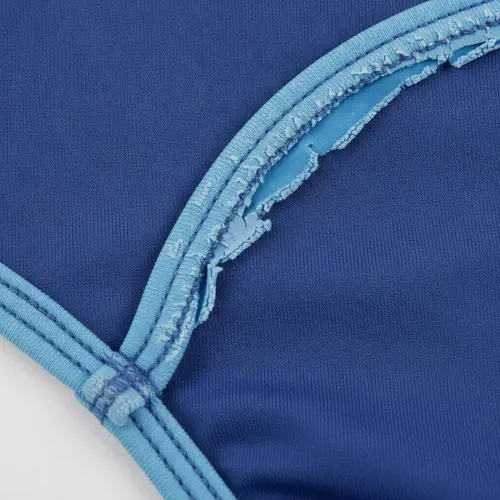
This is worth being direct about, because it's easy to blame the fabric for a problem that actually sits somewhere else in the garment: components added during construction — binding, edge trim, and any leather or leather-like accent material — can age and degrade over long storage periods independently of the fabric itself. A garment can use genuinely excellent fabric and still develop real wear problems because a trim material wasn't matched to the same durability standard. This is exactly the kind of root-cause question we've written about with colorfastness and fading — the visible symptom and the real cause aren't always the same layer of the garment, and figuring out which one is actually failing is what separates a real fix from guessing.
 The seams themselves are another place this shows up: a coverstitch seam sewn with the wrong thread type can resist the fabric's own stretch and recovery, creating a weak point right at the seam line regardless of how well the fabric itself performs; see what actually differentiates flatlock, coverstitch, and bonded seam construction for that layer of the picture.
Recovery, opacity, and colorfastness are three separate fabric-performance questions that get lumped together in generic sourcing content — see our breakdown of what actually determines opacity and lining thresholds for the same kind of real-spec clarity applied to a different failure mode. All of this is exactly the kind of verifiable spec data we track in our fabric and trim library, rather than relying on a single marketing-friendly percentage.
There's a related, less obvious risk worth flagging separately from fiber content: stretch fabric can also behave differently when cut at bulk-production volume than it does in a single hand-cut sample, even using the identical roll and pattern. See why an approved sample doesn't guarantee mass-production consistency for how cutting-tension consistency at scale is a separate risk from the fabric spec itself.
Chlorine resistance is a fourth question in that same category — a fabric can recover, resist fading, and stay opaque, and still not be genuinely chlorine-resistant if the elastane and knit structure weren't built for it; see what actually makes swimwear fabric chlorine-resistant for that piece of the picture.
Stretch recovery is one entry among several fabric-performance questions covered in the full real construction guide organized by swimwear type.
FAQ
Q: Is 85% stretch recovery good or bad for swimwear?
A: It depends what's being measured. As an immediate-recovery figure (tested right after the stretch is released), 85%+ is a normal, solid result. Given time to rest, the same fabric will typically recover much further — often 98% or more — so 85% alone isn't a red flag.
Q: Does a heavier fabric (higher GSM) recover better than a lighter one?
A: Not necessarily. GSM mainly affects stretch power — how firm or held-in the fabric feels — rather than recovery itself. A lighter fabric with good elastane content can recover just as fully as a heavier one.
Q: Why does printed swim fabric sometimes lose its shape faster than solid-color fabric?
A: High-temperature digital printing can measurably damage elastane's elastic recovery at a fiber level. If printed fabric is underperforming compared to an equivalent solid fabric, the printing process itself is a real, checkable cause.
Q: How can I tell if cheap fabric will have worse recovery?
A: The real risk factors are the actual elastane percentage (versus what's claimed) and the quality of the spun elastane yarn — not necessarily the fiber type itself. Requesting a real, current test report rather than accepting a general spec claim is the practical way to check.
Q: If the fabric recovers well in testing, why might the finished garment still lose its shape?
A: Because recovery testing on fabric doesn't account for other construction materials — binding, edge trim, or leather-like accents — which can age and degrade independently of the fabric, especially over long storage periods. A garment's real durability depends on every material in it aging consistently, not just the base fabric.
Q: What's the difference between warp knit and weft knit swim fabric?
A: Warp knitting (tricot-style) is faster to produce and is the more common construction for swim fabric. Weft (circular) knitting is slower but produces a noticeably softer hand-feel — a production and texture trade-off rather than a recovery-performance difference.
Sourcing fabric and want a real stretch recovery test rather than a general claim? Send us your target GSM and elastane range — we'll walk through what a real ASTM D3107 report should show before you commit to a roll.