
Swimwear Hardware: Why Plating Method Matters Most
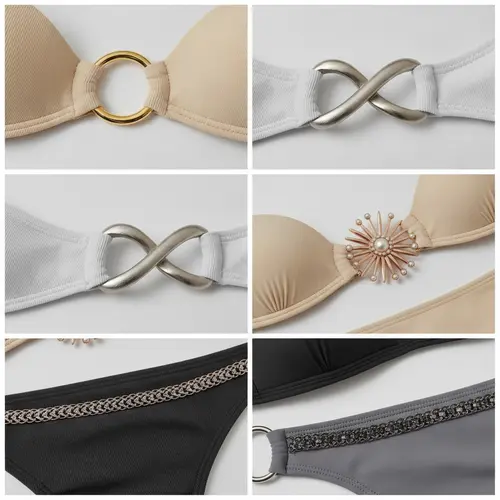
Swimwear hardware is shifting from purely functional to genuinely decorative — gold O-rings, sculptural clasps, and jewelry-grade metalwork are showing up as deliberate design details rather than hidden adjusters, according to multiple 2026 trend reports. What those trend pieces don't cover is the part that actually determines whether that hardware survives past the first few wears: the plating process, the base material, and the testing behind it. Here's what that actually looks like in production.
The Plating Method Is Not a Minor Detail
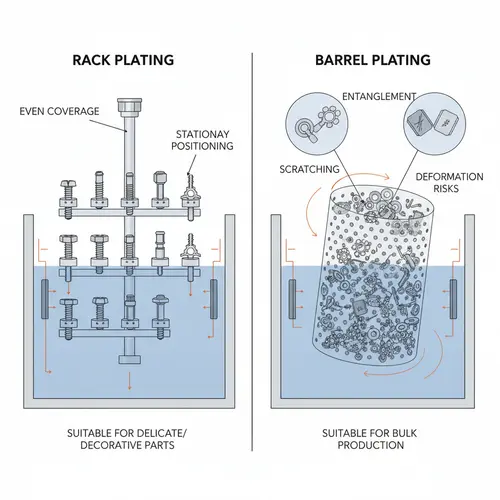
There are two fundamentally different ways to electroplate small metal hardware, and the choice between them has real, visible consequences for swimwear specifically:
Rack (hang) plating: each individual piece is mounted on a fixture and plated on its own, giving controlled, even coverage — the right choice for delicate or decorative parts.
Barrel (tumble) plating: hundreds of small parts are loaded into a rotating drum and plated together — cheaper and faster, but the parts tumble against each other during the process.
For swimwear hardware specifically — rings, clasps, connectors, often with protruding edges or decorative shapes — rack plating is our default, with barrel plating reserved for the smallest parts only. Barrel-plated small decorative parts are prone to entanglement, scratching, and deformation from tumbling against each other during the process, which shows up as inconsistent finish and premature wear once the piece is actually in use. The exception is pieces small enough that tumbling risk is minimal — for those, we use barrel plating; everything else on a swimwear piece goes through rack plating.
The exception is pieces small enough that tumbling risk is minimal — for those, we use barrel plating; everything else on a swimwear piece goes through rack plating.
This tracks with how the electroplating industry describes the two methods generally: rack plating is favored specifically where appearance and finish quality are non-negotiable, while barrel plating is built for scale on simple, durable parts like fasteners — not decorative swimwear hardware meant to be seen.
The one exception is very small pieces, where we use barrel plating instead.
Factor | Rack Plating | Barrel Plating |
|---|---|---|
How it works | Each part individually mounted and plated | Many parts tumbled together in a rotating drum |
Finish consistency | Precise, even coverage | Variable — depends on tumbling exposure |
Risk to decorative parts | Low — parts stay stationary | Higher — entanglement, scratching, deformation |
Cost | Higher — more labor, specialized fixtures | Lower — bulk processing |
Right for swimwear hardware | Yes | Generally no, for visible decorative pieces |
 This is part of what we track in our real fabric and trims library — plating method and testing protocol tied to a specific hardware entry, not a general "gold-plated" description that doesn't actually specify how.
The Real Testing Behind Durable Hardware
Beyond plating method, swimwear hardware needs to survive two things standard hardware doesn't: constant tension and constant chlorine exposure. That means two specific tests, not a general quality check: a 48-hour chlorine resistance test, which every plated piece goes through, and pull-strength (tensile) testing, which we apply specifically to connector pieces — the parts under real load, like clasps and rings that bear tension — rather than to every piece across the board. A supplier that can't speak to these two tests specifically is likely applying general hardware QC to a product that needs swim-specific validation.
Why Zinc Alloy Wins on Real Production Economics
Stainless steel is the material buyers often assume is "better," but in practice, it's rarely the right choice for swimwear hardware specifically: stainless steel carries a significantly higher mold/tooling cost, a longer production lead time, and a higher MOQ than the alternative. There's also a broader color problem worth knowing, not just a rose-gold edge case: plating generally adheres poorly to a stainless steel base, so colored finishes on stainless steel rarely come out looking right. In our experience, if a client wants stainless steel, its natural, unplated color is the reliable choice — we do make stainless steel hardware, but we don't recommend plating gold or other colors onto it, for exactly this reason.
Zinc alloy is the practical choice on overall cost once mold cost, lead time, MOQ, and color-finish reliability are all weighed together — not because it's cheaper on paper alone, but because it's the material that actually works across the full range of finishes a swimwear hardware program typically needs, at a cost and timeline that fits how swimwear brands actually order. Alongside zinc alloy, we also work with resin for swimwear hardware, depending on the piece.
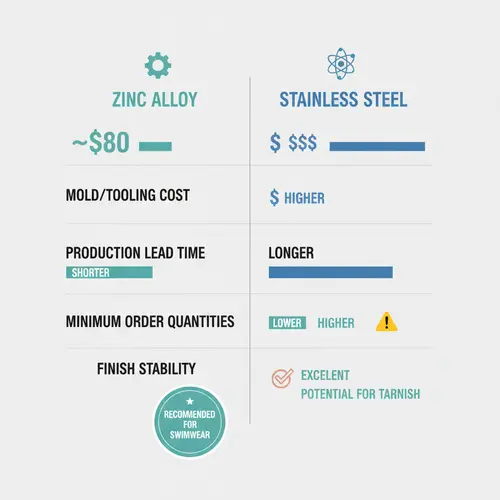
A real reference point: our own hardware mold/tooling fee runs around $80 USD — worth comparing directly against the roughly $50 mold fee for a custom hang tag we've written about separately, since hardware tooling is a distinct cost line from trim tooling, not an extension of it.
That $80 figure is a one-time tooling cost, not a per-piece charge — which is exactly why fully custom hardware doesn't carry a fixed minimum order quantity the way a full garment run does. See the real mold-development process and pricing logic behind custom swimwear hardware for how that plays out, including a real case where we pushed back on a client's own design for safety reasons.
Prototype Mold vs. Production Mold — Not the Same Thing
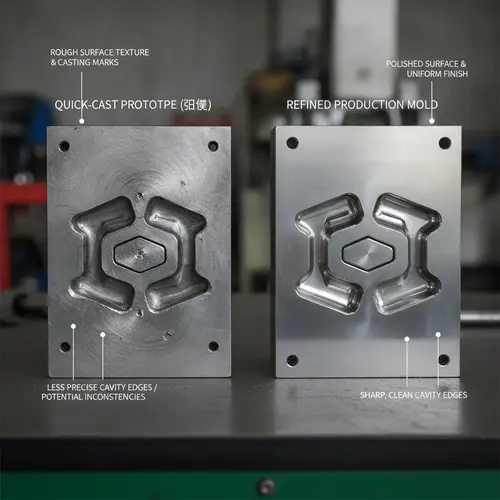
There's a faster, lower-cost mold-making method used specifically for early prototyping — sometimes called "spin" or "quick-cast" tooling in Chinese manufacturing (甩模) — that's genuinely useful for confirming what a physical piece looks and feels like before committing further. But it's a prototyping tool, not a production one: bulk orders require a properly refined, optimized production mold, not the quick-cast version. Treating the fast prototype mold as production-ready is a common, avoidable mistake that shows up later as inconsistent parts across a bulk run.
What This Means for Sourcing Swimwear Hardware
If a supplier's hardware quote doesn't specify plating method, material, and testing protocol, it's worth asking directly — "gold-plated" alone doesn't tell you whether it's rack or barrel plated, doesn't confirm chlorine resistance, and doesn't confirm the base material. As with fabric, nickel- and lead-free, OEKO-aligned hardware standards matter here too, since hardware sits in the same extended skin contact as the rest of the garment.
The same "the component itself isn't where the real quality gap sits" principle applies to underwire specifically. See why underwire poke-through is almost never actually a wire-quality problem, and what actually causes it.
The same rack-plating and chlorine-testing requirements apply to a different piece of hardware entirely — the metal sliders used on side-adjuster bikini bottoms; see how bikini bottom types actually differ in construction and cost for that breakdown.
FAQ
Q: Does "gold-plated" hardware automatically mean it's good quality?
A: No — "gold-plated" describes a finish color, not the process behind it. The same description can cover rack-plated hardware that holds up for years or barrel-plated hardware that scratches and wears within months. Ask specifically about plating method, base material, and testing rather than accepting the finish description alone.
Q: Why does barrel-plated hardware sometimes look inconsistent or scratched?
A: Barrel plating tumbles many small parts together during the process, which can cause entanglement, scratching, and deformation — especially for decorative pieces with protruding edges or complex shapes, which describes most swimwear hardware.
Q: Is stainless steel a better choice than zinc alloy for swimwear hardware?
A: Not usually, once you account for the full picture — stainless steel typically carries a higher mold cost, longer lead time, and higher MOQ, and certain finishes like rose gold aren't stable on a stainless steel base without real gold plating. Zinc alloy is generally the more practical choice across cost, timeline, and finish reliability.
Q: What tests should swimwear hardware actually pass before production?
A: At minimum, tensile (stretch) testing and a 48-hour chlorine resistance test — general hardware QC isn't sufficient for a product that will face constant tension and chlorine exposure.
Q: How much does custom swimwear hardware tooling typically cost?
A: In our production, hardware mold/tooling fees run around $80 USD — a separate cost line from trim tooling like hang tags, which runs closer to $50.
Q: Can I use a quick prototype mold for my bulk hardware order?
A: Not for the final production run. Quick-cast prototype molds are useful for confirming design and fit early, but bulk orders need a properly refined, optimized production mold to ensure consistency across the full run.
Q: Does hardware need its own consistency checks across a bulk run, separate from initial sampling?
A: Yes — rack-plated hardware can vary subtly between production batches even when the initial sample tested fine. See why an approved sample doesn't guarantee mass-production consistency for the broader principle, including two other places (stretch fabric cutting and molded cups) where the same gap shows up in swimwear specifically.
Q: Is barrel plating ever used on swimwear hardware?
A: Rack plating is our main method. Barrel plating is used only for very small pieces.
Q: Can I get gold or colored plating on stainless steel swimwear hardware?
A: We don't recommend it. Plating generally adheres poorly to a stainless steel base, so the color result is unreliable — not just for rose gold, but for plated colors generally. If you want stainless steel, its natural color is the reliable choice; for gold or other colors, zinc alloy with rack plating is the better option.
Designing a hardware detail for your next collection and want to know if the quote you're comparing actually specifies plating method and testing? Send it over — we'll tell you what's missing before you commit.