
Recycled Elastane Is Real Now — What Sourcing It Looks Like
Byoyoyi.ai— written with AI-assisted research, reviewed and fact-checked in-house.
Recycled elastane has quietly moved from a sustainability talking point to an actual shipping product. Hyosung's regen™ elastane — RCS-certified, made from reclaimed waste in its own manufacturing process — is already in named 2026 collections from Speedo, Panache, Yamamay, Curvy Kate, and Hanna Andersson, including Speedo's fully recycled four-way-stretch board short line. This isn't a prototype or a pilot; it's product on shelves. That makes it worth understanding now, before every supplier claims to have it, because the real sourcing picture is a lot narrower and pricier than the marketing language suggests.
What's Actually Available — And What Isn't
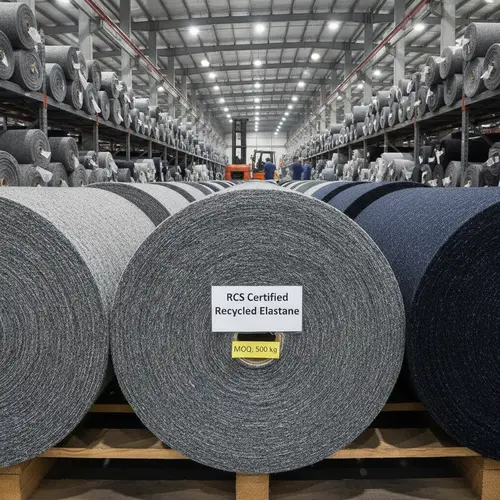
Recycled elastane's growth is real, but the market underneath it is thin. We've sourced this material directly, and the on-the-ground picture is very different from how it's described in trend reports:
Minimum order quantities are steep. Recycled fabric supply is genuinely scarce right now, and the realistic MOQ we've encountered is around 1 metric ton — though within that single order, you can typically get it dyed across 4-6 colors, which softens the commitment somewhat if you're planning a small multi-color capsule rather than one huge single-color run.
Price scales directly with recycled elastane content. The higher the recycled elastane percentage in the blend, the higher the price. A recycled fabric at 25% elastane content runs around $8 USD/kg in our own sourcing — that's a concrete anchor point, not a vague "costs more" statement, and it's worth asking any supplier quoting recycled fabric to specify the exact elastane percentage before comparing prices, since two "recycled" quotes at different elastane content aren't actually comparable.
The Gap Almost Nobody Talks About: Polyester vs. Nylon
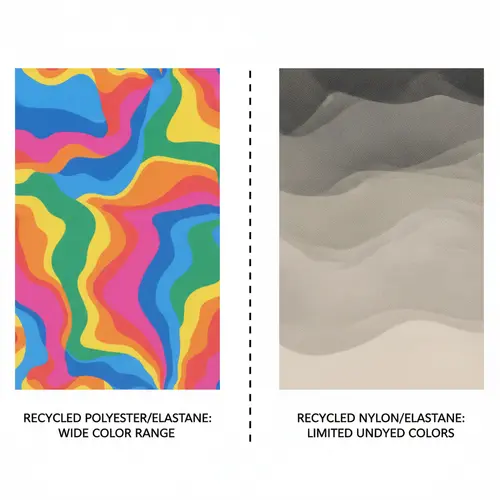
Here's the detail that doesn't show up in sustainability trend coverage, and it matters if you're specifying fabric for a swim-specific application: genuine recycled elastane-blend fabric is overwhelmingly recycled polyester + elastane, not recycled nylon + elastane. Based on direct inquiries across multiple suppliers, true recycled-nylon-plus-elastane blends are rare in the market right now — recycled nylon manufacturing is a harder, less mature process to pair reliably with recycled elastane at scale than recycled polyester is.
There's one narrow exception: some factories, including our own, keep undyed (greige) recycled nylon-blend stock on hand specifically to manage this. But even then, we don't generally recommend recycled-nylon-plus-elastane fabric for most projects — the risk profile (consistency, dye uptake, available color range) is meaningfully higher than the recycled-polyester-plus-elastane alternative. What we do stock reliably is recycled polyester + elastane fabric in over 30 colorways, which covers the vast majority of what a swim collection actually needs.
Factor | Recycled Polyester + Elastane | Recycled Nylon + Elastane |
|---|---|---|
Market availability | Widely available, mature supply | Genuinely rare — few suppliers offer a true recycled-nylon-plus-elastane blend |
Color range | 30+ colorways realistic | Limited — typically undyed/greige stock only, held by select factories |
Recommended for most projects | Yes | Generally not recommended, higher risk profile |
Consistency across batches | More established, more predictable | Less mature process, more variability |
Typical use case | Most swim capsule and full-collection sourcing | Narrow, specific projects where nylon's properties are non-negotiable |
This distinction matters because "recycled fabric" as a category gets talked about as though it's one thing. In practice, asking "recycled polyester or recycled nylon?" is one of the fastest ways to find out whether a supplier actually understands what they're offering, or is using "recycled" as a general marketing label without being specific about the base fiber.
Why the Color and MOQ Numbers Matter More Than They Look
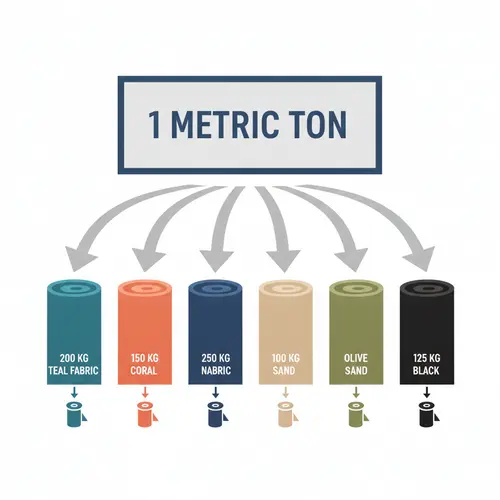
The 1-ton MOQ with 4-6 color flexibility isn't just a logistics detail — it changes how a brand should plan a recycled capsule. Ordering 1 ton in a single color is a very different commitment than the same ton split across 4-6 colorways, and most brands considering a "sustainable capsule" are better served by the latter: it lets you test market response across a small color range before committing further, rather than betting the entire volume on one shade guessed in advance. This is worth raising directly with a supplier before quoting — the color-split flexibility isn't always advertised upfront, and it's the detail that makes a 1-ton minimum actually workable for a brand that isn't already operating at that scale.
Why This Connects to the Certification Question
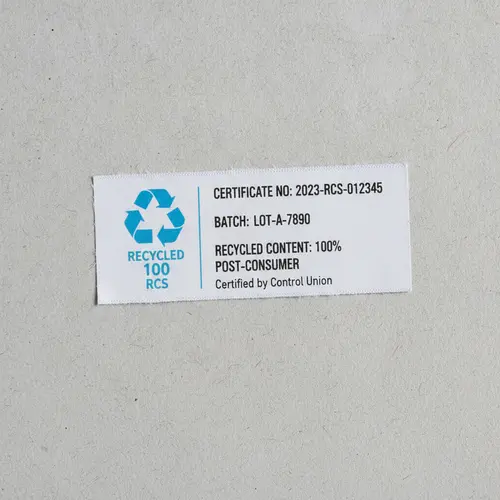
Recycled elastane claims deserve the same scrutiny we've written about with fabric certificates generally: RCS (Recycled Claim Standard) is a real, checkable certification, the same category as GRS — which means it's also a real certification that can be claimed without actually applying to the specific batch you're sent, the same gap we've seen with other recycled-content claims. If a supplier quotes recycled elastane content, the same verification logic applies: ask for the specific certificate number, confirm what batch and what percentage it actually covers, and don't treat a general sustainability claim as equivalent to a checkable one.
The same verification gap shows up with recycled ocean plastic claims — the raw-material recycling technology is real, but whether a finished garment ever actually gets recycled again is a much less certain question, and one worth asking about directly rather than assuming from marketing language alone.
What This Means for Sourcing Decisions Right Now
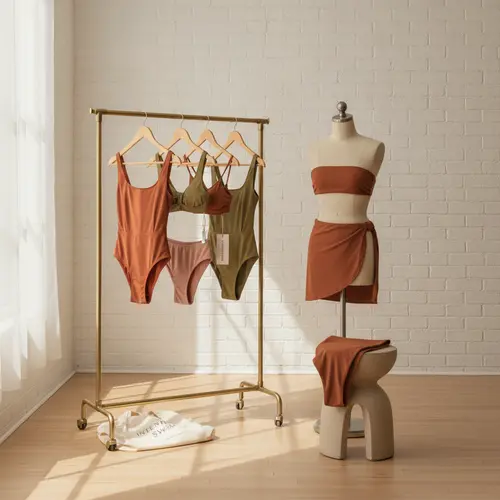
The realistic path into recycled elastane today isn't "switch your whole line" — it's a capsule approach: given the roughly 1-ton MOQ with 4-6 color flexibility, a limited-color recycled capsule collection is the practical entry point rather than converting an entire size and color range at once. This is one piece of the broader shifts currently reshaping swimwear sourcing — expect to pay a real premium tied directly to elastane percentage, expect the fabric to be polyester-based rather than nylon-based in almost every case, and verify certification the same way you would for any other material in our fabric library.
One more variable worth planning for at the capsule stage: if your recycled collection is print-driven rather than solid-color, the printing method you choose matters more than it would on virgin fabric — recycled elastane has less tolerance for the sustained heat some printing methods involve. See why recycled fabric changes which printing method actually makes sense before locking in your production plan.
FAQ
Q: Is recycled elastane actually shipping in real products, or still mostly a pilot technology?
A: It's shipping now — Hyosung's regen™ elastane is already in named 2026 collections from brands including Speedo and Panache, including a fully recycled four-way-stretch product line, not a limited pilot run.
Q: What's a realistic minimum order quantity for recycled elastane-blend fabric?
A: Around 1 metric ton in our direct sourcing experience, though that can typically be split across 4-6 colors within the same order rather than committing to one solid color at that volume.
Q: Why does recycled fabric pricing vary so much between suppliers?
A: Price scales with recycled elastane percentage in the blend — a higher elastane content costs more. As a concrete reference, a 25% elastane recycled blend runs around $8 USD/kg in our sourcing. Always confirm the exact elastane percentage before comparing quotes, since "recycled" alone doesn't specify enough to compare prices meaningfully.
Q: Should I look for recycled nylon or recycled polyester blends for swimwear?
A: Recycled polyester plus elastane is far more available and more consistent right now — true recycled-nylon-plus-elastane blends are genuinely rare in the market. Some suppliers keep undyed recycled-nylon stock for specific cases, but it generally carries more risk (consistency, color range) than the recycled-polyester option.
Q: Does it make sense to launch a full collection in recycled elastane right away?
A: For most brands, no — the 1-ton MOQ makes a small, multi-color capsule collection the more realistic starting point than converting an entire range at once. It lets you validate demand across a handful of colorways before committing to a larger volume in any single shade.
Q: How do I verify a supplier's recycled elastane claim is real?
A: The same way you'd verify any recycled-content certification — ask for the specific RCS or GRS certificate number, confirm what batch and percentage it actually covers, and don't accept a general sustainability claim as a substitute for a checkable one.
Considering a recycled-elastane capsule for your next collection? Send us your target colors and volume — we'll tell you honestly what's realistic at your order size right now.