
Underwire Poke-Through: The Real Cause Isn't the Wire
Underwire poking through a swimsuit is one of the most-cited quality complaints in supportive swimwear, and the usual assumption is that it comes down to buying cheap wire. Based on real production and quality control experience, that assumption is mostly wrong. Genuine stainless steel underwire barely varies in price between suppliers — the real cause of poke-through is almost always something in the construction, not the wire itself.
The Wire Itself: Less of a Variable Than Most Buyers Assume
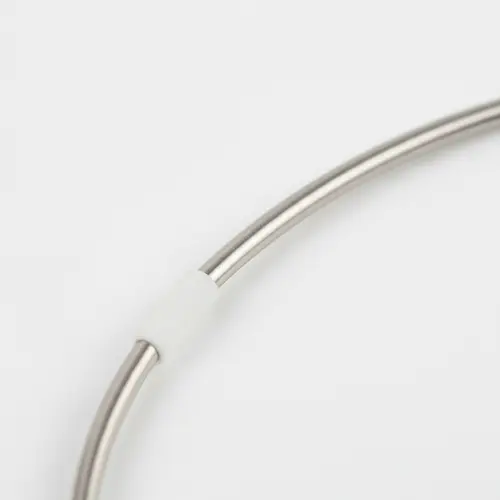
Underwire used in swimwear is stainless steel, with both ends sealed (capped with a protective coating) specifically so that even if the tip does protrude, it won't pierce skin — and because it's stainless steel, it won't rust. Genuine spring wire of this type is manufactured to established metallurgical specifications — ASTM A313 covers stainless steel spring wire requirements, including the chromium content that gives it real corrosion resistance rather than a coating alone. Here's the detail that surprises most buyers: there isn't really a "good" or "bad" version of genuine stainless steel underwire. The price difference between suppliers is typically around ¥1 RMB per wire — not a meaningful enough gap to explain a real poke-through problem. If a factory is telling you an underwire failure was caused by using cheaper wire, that explanation doesn't hold up against the real economics of the component.
How the Ends Actually Get Reinforced
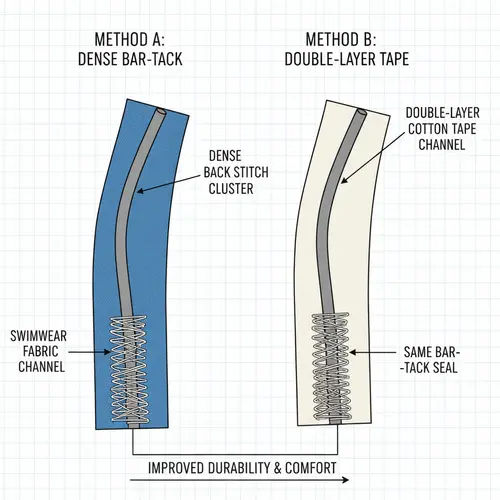
There are two real construction approaches used to keep the wire's ends secured inside the channel:
Bar-tacking — a dedicated bar-tack machine creates a high-density stitch cluster that seals the end of the channel, physically blocking the wire from working its way out over time.
Double-layer cotton strip plus sealing — the channel itself is constructed from a doubled cotton tape, with the same end-sealing process applied on top.
Both are legitimate, commonly used solutions. Neither is inherently superior — the choice is more about which fits the overall garment construction than one being a shortcut version of the other.
The Failure Mode Most Buyers Never Hear About: Poke-Through From the Side
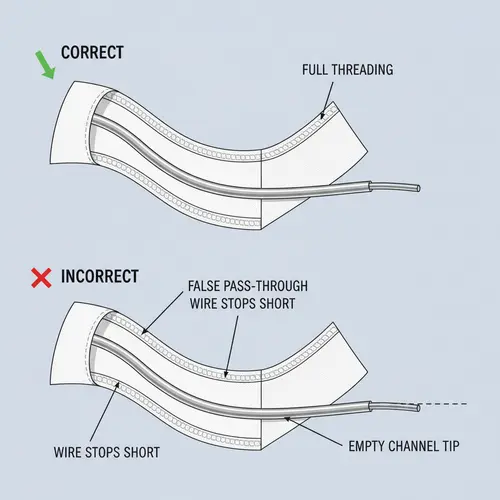
This is the part that doesn't get discussed nearly enough, and it's arguably the more common real cause: wire showing through from the side of the channel, not just the tip. The reason is a specific quality issue — the underwire was never actually threaded all the way through the cotton channel tube. It looks correctly installed from the outside, but it's what we'd call a false pass-through: the wire appears seated, but it hasn't actually traveled the full length of the channel.
This isn't something you can catch by looking at the finished garment. The real quality control standard is tactile: a QC inspector runs a hand along the channel, and if the wire can be clearly felt through the fabric at any point, that's a defect. The fix is a genuine rework — re-threading the wire through the channel properly, not a cosmetic patch. This kind of hands-on defect check sits alongside standard statistical sampling protocols like ANSI/ASQ Z1.4, the widely used acceptance sampling standard for inspecting a percentage of a production batch rather than every single unit — worth knowing if you're setting quality expectations with a factory. If you're auditing a supplier's QC process for supportive swimwear, ask specifically whether underwire channels get a hand-check for full seating, not just a visual pass.
What Actually Causes Poke-Through, Ranked by How Often We See It
Cause | What's Actually Happening |
|---|---|
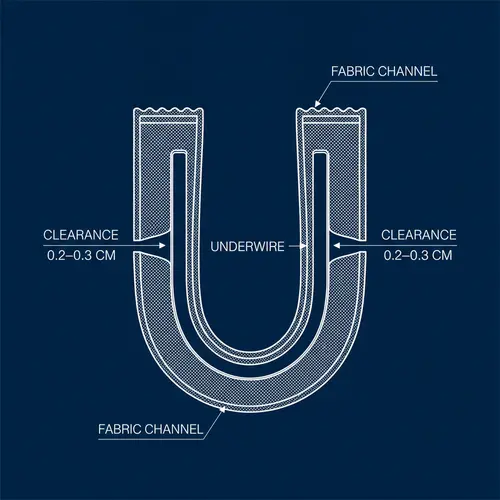
Wire-to-channel size mismatch | The real standard is leaving 0.2–0.3cm of clearance in the channel — too tight (wire crammed in with no give) is a real risk, and so, less obviously, is too loose |
False pass-through | Wire wasn't threaded the full length of the channel during construction — a workmanship issue caught only by tactile QC, not a visual check |
End-seal or bar-tack failure | The reinforcement at the channel end wasn't done correctly, letting the wire migrate outward over time |
Excessive force during washing | Aggressive handling can work a wire loose over time — this is a real, if less common, cause; deliberate damage or misuse is a separate question entirely |
What This Means If You're Sourcing Supportive Swimwear
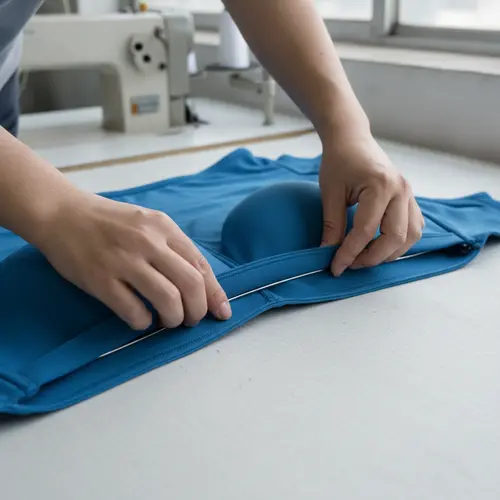
Since the wire material itself isn't the real lever — genuine stainless steel wire is essentially commoditized — the meaningful question to ask a factory isn't "what grade of wire do you use," it's how the channel is constructed and how it's quality-checked. Ask specifically: is there a hand-check for full wire seating, not just a visual inspection? What's the clearance tolerance in the channel? How is the end secured — bar-tack or double-layer cotton with sealing? Those answers tell you far more about whether you'll see poke-through complaints than any claim about wire quality.
This is the same pattern we've seen elsewhere with swimwear hardware: the raw component is rarely where the real quality gap sits — see why plating method matters more than the underlying hardware material itself for the same principle applied to rings, sliders, and clasps. Underwire is one of six real construction elements that determine whether swimwear support is genuine — and it's exactly the kind of detail we track as part of our fabric and trim library, because a component that "should" be simple is often where real defects hide.
A poke-through complaint after a customer has already worn and returned a garment is also a real, specific driver behind broader swimwear return-rate data — worth catching at the QC stage rather than at the return desk.
Underwire construction is one entry among many in the full real construction guide organized by swimwear type — the same "the visible component usually isn't where the real problem sits" pattern shows up across other support and hardware categories too.
This is also the specific, real reason underwire tops are the priciest bikini top style to produce — the components and QC steps covered above don't come free; see what actually drives cost across bikini top types for the full comparison.
FAQ
Q: Does paying more for "premium" underwire actually prevent poke-through?
A: Not reliably. Genuine stainless steel underwire varies in price by roughly ¥1 RMB between suppliers — not enough to explain a real poke-through problem. The wire material is rarely the actual issue.
Q: What's the real quality control check for underwire seating?
A: A tactile check — an inspector runs a hand along the channel to confirm the wire is fully seated its entire length. This catches "false pass-through" defects that look fine visually but aren't actually threaded correctly.
Q: How much clearance should there be between the wire and the channel?
A: Roughly 0.2–0.3cm. Too tight is a known risk, but too loose is also a problem — the wire needs enough room to sit correctly without excess play that lets it migrate.
Q: What are the two main ways underwire channel ends get reinforced?
A: Bar-tacking (a dedicated machine creates a high-density stitch seal at the channel end) and a double-layer cotton strip construction with the same end-sealing process. Both are legitimate, commonly used approaches.
Q: Can normal washing cause underwire to poke through?
A: Excessive force during washing can be a real contributing factor over time, though it's less common than construction-related causes. This is separate from deliberate damage or clear misuse.
Q: If underwire pokes through, does that always mean the wire itself rusted?
A: Not with genuine stainless steel wire with sealed ends — it won't rust, and the sealed tip means it shouldn't pierce skin even if it does protrude. A poke-through issue points to a construction or fit problem in the channel, not wire corrosion.
Sourcing supportive swimwear and want to know how a factory actually quality-checks underwire seating? Ask us directly — we'll walk through our tactile QC process and channel construction before you commit to an order.