
Why Swimwear Turns See-Through When Wet (Even Dark Colors)
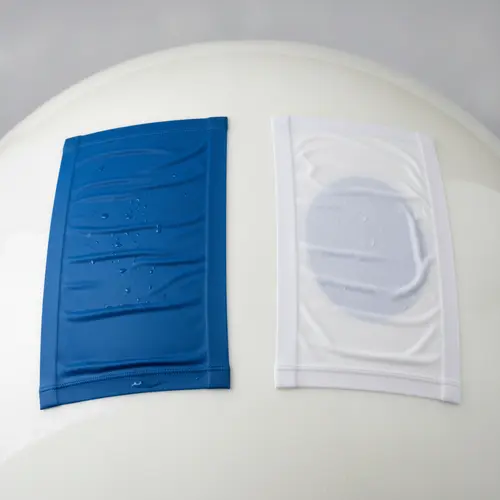
"See-through when wet" is one of the most common quality complaints in swimwear reviews right now, and the explanation usually offered — pick a darker color — only solves half the problem. Dark color masks transparency visually; it doesn't change whether the fabric is physically thin enough to let light through once it's wet and stretched. Those are two different mechanisms, and confusing them is exactly how a brand ends up with a "safe" dark-colored style that still fails an actual opacity check.
Color hides the problem. Weight and lining actually solve it.
A dark-colored fabric at a low GSM (grams per square meter) can look completely opaque dry, on a hanger, under normal light — and still turn sheer once it's wet, stretched across a body, and photographed. The color isn't lying exactly, but it's covering up a structural weakness rather than fixing it. Industry GSM guidance for swimwear generally lands in the 190–250+ range depending on garment type, with the shared principle that opacity has to be tested wet and stretched, not dry and flat, because that's the actual condition the fabric fails under.
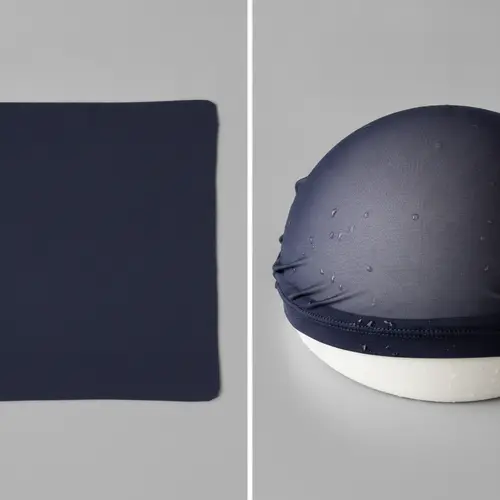
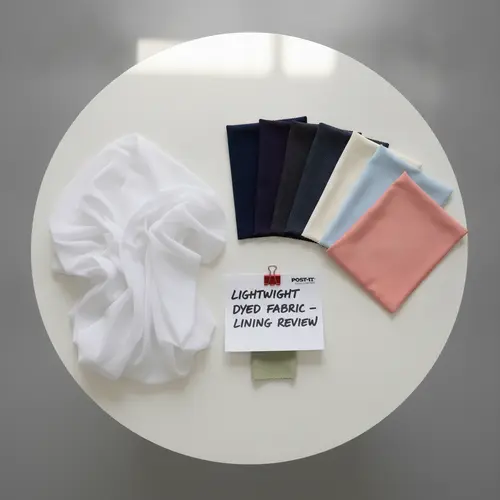
In our own production, 200g is the real threshold: standard solid-color swim fabric runs around 200g, but there's also a lighter roughly 190g option used for printed or dyed fabric — and that lighter weight is where transparency risk actually starts to show up, regardless of how dark the printed color is.
Below 200g, we line the fabric — even in dark colors
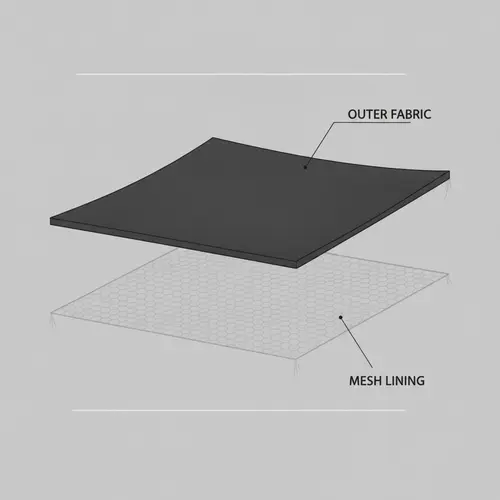
Our standing practice: any fabric under 200g gets lined, and that's true even for dark colors that already look opaque. The reason isn't purely about hiding see-through — it's about comfort. A lining makes the fabric softer and more pleasant against skin, which matters regardless of whether transparency would otherwise be visible in that particular color. This lines up with what fabric suppliers generally document about swim lining: most swimwear benefits from a lining for how it sits against the body and feels against skin, not solely as an opacity fix.
The same lining principle applies to an even more open fabric: tan-through mesh is built to let more light through by design, so it needs a separate inner lining even more than a standard swim knit does. See the honest fabric science behind tan-through swimwear for how that construction actually works.
The standard lining choice is a mesh, high-stretch, low-weight fabric — light enough to add minimal bulk while still contributing structure and a softer hand-feel against the skin.
For light colors, some brands double the face fabric instead of lining
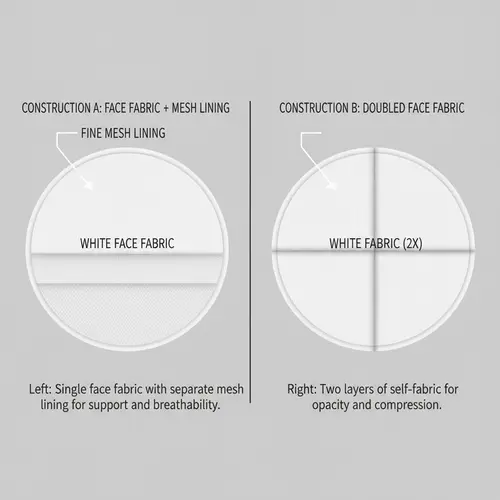
White and pale colorways carry the highest real transparency risk, since there's no color to mask a structural shortfall the way dark shades can. One real alternative to a separate lining layer, used on some light-colored fabrics, is double-layering the face fabric itself — two layers of the same outer fabric rather than one outer layer plus a separate lining fabric. Fabric suppliers document the same trade-off: lining a moderate-weight fabric can achieve opacity as reliably as switching to a much heavier single layer, often with better comfort and flexibility than just adding weight.
What we actually tell clients upfront
We disclose the construction and material choice — and the real risk points that come with it — before production starts, not after a complaint comes in. That means telling a client plainly when a requested fabric weight or color combination is going to need lining or double-layering to hold up wet, rather than letting them find out from a customer review. It's the same standing principle behind how we handle any construction trade-off — say what's actually true about a design choice before it becomes an expensive problem downstream, not after. This kind of real, specific material data — GSM thresholds, lining fabric choice, when double-layering beats lining — is exactly what we try to keep documented in our real fabric and trim library, rather than leaving brands to guess.
Color vs. weight: the real distinction
Dark/saturated color | Light/white color | |
|---|---|---|
Masks visual transparency? | Yes, effectively | No — nothing hides a thin fabric |
Still needs lining under 200g? | Yes, in our standard practice — for comfort, not just opacity | Yes — for both opacity and comfort |
Real fix if fabric is too thin | Lining (mesh, high-stretch, low-weight) | Lining, or double-layering the face fabric |
Risk of skipping the fix | Fabric may look fine but feel worse against skin | Visible, photographable see-through — the highest-risk case |
Where this same honesty applies to other fabric claims
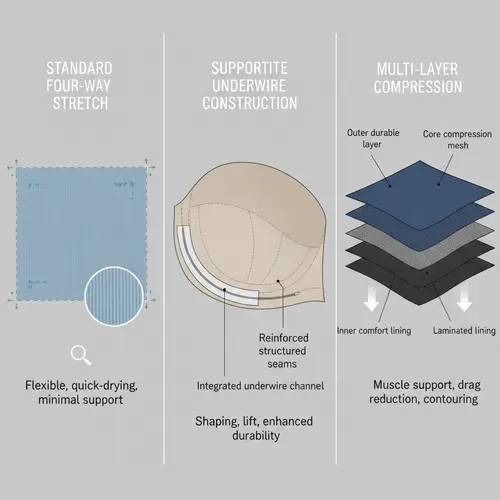
The same distinction — what a claim visually suggests versus what the construction actually delivers — shows up in two other common swimwear claims worth naming plainly. "Support" is largely a fabric-thickness and structure question: real support typically needs fabric closer to 250g or heavier, sometimes specialized PBT fabric, combined with structural elements and external components rather than the fabric alone — the same real construction principles behind genuine bust support. "Shaping" is a term worth even more scrutiny: in our honest assessment, very few ordinary swimwear pieces actually achieve a genuine shaping effect, and the biggest reason is structural — swimwear needs four-way stretch fabric to fit and move correctly, and that same stretch requirement works against the kind of engineered, directional compression that real shaping needs. Where shaping is genuinely achieved, it typically requires the kind of purpose-built multi-layer lamination construction used in dedicated compression swimwear lines — not something present in most swimwear marketed with the word "shaping" on the label.
Tan-through" is a third claim worth the same honesty. The fabric is a real, high-density mesh, and the physical mechanism behind the claim is genuine, but we don't have an independently lab-verified UV transmission number for it — a gap we'd rather name than paper over with a percentage we haven't tested. That same mesh, being more open than a standard swim knit, needs the lining principle above even more than a typical fabric does. See the full honest breakdown for the construction that keeps it wearable.
Opacity and stretch recovery are two separate fabric-performance questions that often get lumped together in generic sourcing content. See what actually determines swimwear stretch recovery, including why "85% recovery" isn't the simple benchmark it's usually presented as.
FAQ
Q: If I choose a dark color, can I skip lining altogether? A: Not in our standard practice. Dark color masks visible see-through, but fabric under 200g still gets lined for comfort against skin — lining isn't purely an opacity fix.
Q: What GSM should I ask for if opacity is my main concern? A: 200g is our real threshold for standard solid-color fabric. There's also a lighter roughly 190g option for printed or dyed fabric, and that's specifically where transparency risk increases — worth flagging if your design uses a print or dye technique at that lighter weight.
Q: What's the actual lining fabric used? A: A mesh, high-stretch, low-weight fabric — chosen to add opacity and structure without adding noticeable bulk or stiffness.
Q: Is double-layering the same as lining? A: Not quite. Lining adds a separate, typically lighter fabric layer underneath. Double-layering uses two layers of the same face fabric instead. Both can solve opacity; the right choice depends on the specific fabric and design.
Q: Does this only matter for white swimwear? A: White and light colors carry the highest visible risk since there's no color to mask a thin fabric. But the underlying weight and lining decision applies to every color — dark fabric under 200g still gets lined in our process, just primarily for comfort rather than visible opacity risk.
Q: How do you actually test for this before bulk production? A: The real test is wet and stretched, not dry and flat — a fabric that looks fully opaque on a flat, dry sample can still fail once it's wet and under tension on a body, which is the actual condition it needs to perform under.
Q: Does a heavier fabric automatically mean better support or shaping too? A: Not automatically, and it's worth separating the claims. Opacity mainly needs weight and lining. Real support needs thicker fabric (often 250g+) plus structural components. Genuine shaping needs purpose-built construction like multi-layer lamination — plain fabric weight alone, even at a high GSM, doesn't deliver a true shaping effect on its own.
Not sure whether your fabric and color combination needs lining, double-layering, or neither? Send us your design and target colorway — we'll flag the real construction risk before you commit to a sample.