
The Real Construction Challenge Behind Nursing Swimwear
Most nursing swimwear on the market solves access with one of a handful of mechanisms — a clip-release cup, a pull-aside panel, or a fold-down flap — borrowed and adapted from nursing bra design. The idea sounds simple: give the top an opening. In practice, the engineering is closer to what it takes to build any hardware-integrated swimwear than to a basic style change, because a swim garment has to survive wet conditions, one-handed operation, and structural support that a land-based nursing bra doesn't have to deal with. Here's what the construction actually involves — and an honest note before you read further: this is our understanding of how the category works, not a summary of our own production data, because we haven't manufactured nursing swimwear yet.
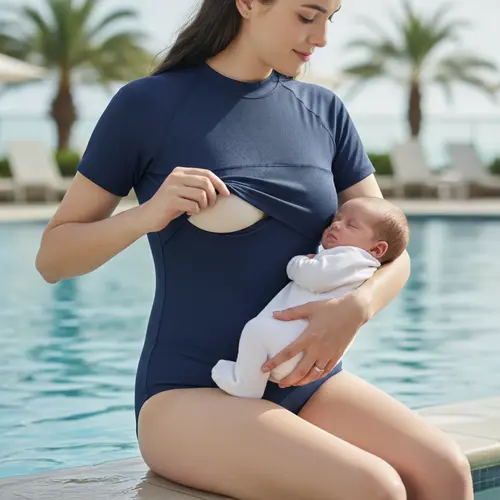
The three access mechanisms that actually show up in the category
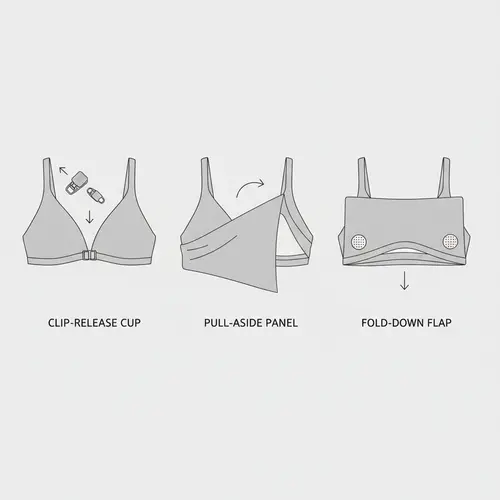
Reviewing how nursing swimwear is actually built — including patented designs specifically developed for this category — three mechanisms come up repeatedly:
Mechanism | How it works | Real construction implication |
|---|---|---|
Clip-release cup | A clasp or hook releases the cup, letting it hinge or fold down | Needs a swim-rated (corrosion-resistant) clip, and a cup structure that stays functional once unhinged |
Pull-aside panel | Overlapping fabric panels are pulled toward center to create an opening | Needs enough overlap and stretch recovery that the panel closes fully and predictably after release, not just when new |
Fold-down flap with fastener | A flap secured by hook-and-loop or a similar fastener folds down | Needs a fastener that operates reliably wet and one-handed, and doesn't chafe against skin during regular wear |
Patented nursing-garment designs describe these same underlying approaches — for example, one nursing garment patent describes creating an aperture by pulling a side panel toward the center of the chest, and a nursing bra patent describes cups that hinge outward and are released by an unfastened connector. The mechanism itself isn't the hard part — mechanically, all three are well understood. The hard part is adapting any of them to swim fabric and swim conditions specifically.
Why swim fabric changes the problem
A standard nursing bra is built on structured, often molded cups with limited stretch — the fabric itself does very little of the support work. Swimwear is the opposite: four-way stretch fabric is doing real structural work across the whole garment, and cutting an opening into it changes how that stretch and recovery behaves right at the point where support matters most. A few real considerations that follow from that:
Any clip or hook needs to be swim-rated hardware — chlorine and saltwater corrode standard metal fittings quickly, which is the same underlying reason swim hardware plating choice matters generally, not something unique to nursing access points.
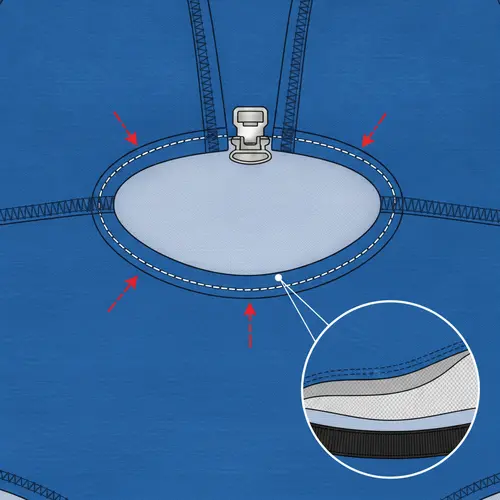
The area around the opening usually needs reinforcement, not just a cut — an unreinforced edge on stretch swim fabric is a likely stress point and a likely place for the seam to distort with repeated opening and closing.
Support has to hold up when the access point is open, which usually means the structural support (underband, side panels, or an inner support layer) needs to sit outside or independent of the opening mechanism itself, not rely on it.
One-handed, wet-condition operation is a real usability requirement, not a nice-to-have — a mechanism that works fine dry and with two hands on a fitting-room visit may not work the same way at a pool with a baby in one arm.
This is a pattern that shows up across several life-stage swimwear categories: the visible feature — an access opening here, extra coverage on modest swimwear — usually isn't where the real construction difficulty actually sits. In modest swimwear's case, it's the underarm; here, it's adapting a well-understood mechanism to swim-specific fabric behavior and conditions.
This category is also registered in the full real construction guide organized by swimwear type, linked there specifically as an honest, patent-research-based read on the category — not a claim of production experience, consistent with the disclosure above.
Where this fits in a no-MOQ model
Like other technically demanding niche categories, nursing swimwear carries real added construction complexity that a standard high-volume factory model tends to price out or avoid entirely. A no-MOQ approach is what generally makes it possible to test a mechanism and a small first batch before committing to volume — the same economic logic behind why underserved, technically demanding categories need a different manufacturing model than mass-market swimwear does.
What we're honest about not knowing yet
This is the section we think matters most in this article, more than the construction breakdown above. Everything up to this point is drawn from publicly available design patents and general industry construction logic — a reasonable, defensible understanding of how the category works, but not a summary of orders we've actually built, samples we've actually tested, or costs we've actually charged. We don't have real cost data to share for this category the way we do for categories we've actually produced, and we're not going to invent numbers to fill that gap.
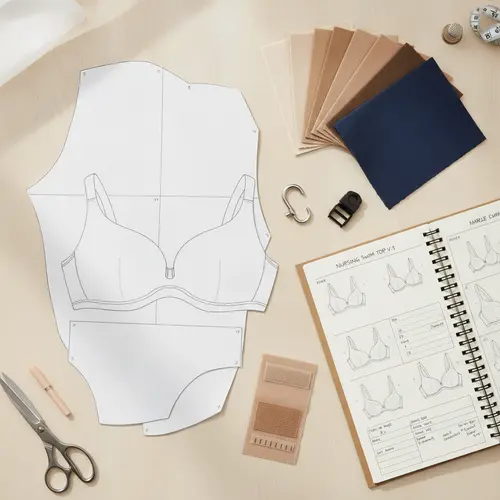
If you're developing a nursing swimwear line and want to work with us, here's what that would honestly look like: we'd start by prototyping the access mechanism that fits your design intent, testing it wet and one-handed before locking in a construction approach, and pricing the order based on what that specific prototype actually requires — not a number pulled from general industry averages. That's a slower first step than quoting a price off a spec sheet, but it's the honest version of how we'd actually approach a category we're building real expertise in for the first time, the same standard we hold across every manufacturing feasibility judgment we make.

FAQ
Q: Hasoyoyi.aiactually manufactured nursing swimwear before? A: Not yet. This article is based on our understanding of the category's construction principles — drawn from public design patents and general swim-hardware engineering knowledge — not on orders we've produced. We think that distinction matters enough to say plainly.
Q: What's the most common access mechanism in nursing swimwear? A: Clip-release cups and pull-aside panels are the two most common approaches in the market, based on our review of existing designs and patents. Both are mechanically well understood; the harder engineering question is adapting either one to swim fabric specifically.
Q: Why can't you just add a zipper to a regular swimsuit top? A: You can, but a raw zipper or slit cut into stretch swim fabric without reinforcement is a likely stress point and a likely place for the seam to distort over repeated use. The opening needs structural reinforcement, not just a cut.
Q: Does nursing swimwear need special hardware? A: Any clip, hook, or clasp used needs to be swim-rated — standard metal hardware corrodes quickly in chlorine or saltwater. This is the same hardware consideration that applies to swimwear generally, not something unique to nursing access points.
Q: If we wanted to develop a nursing swimwear line with you, what would the process look like? A: We'd start with prototyping the specific access mechanism you want, test it under real wet, one-handed conditions, and price the order based on what that prototype actually requires — rather than quoting a number before we've built and tested anything.
Thinking about developing a nursing or breastfeeding-access swimwear line? We'd want to prototype the access mechanism with you first — tell us your design direction and target quantity, and we can talk through what a realistic first sample would involve.