
Spandex vs. Lycra in Swimwear: Where the Premium Comes From
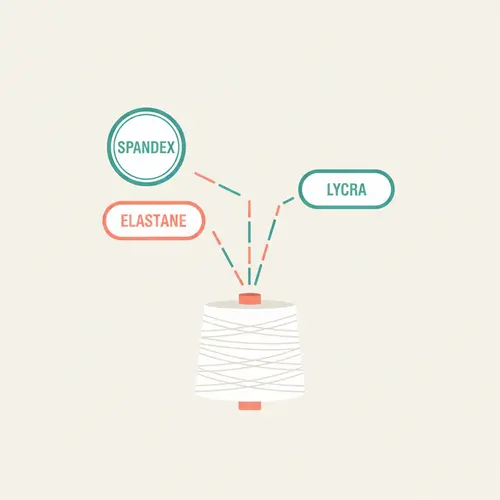
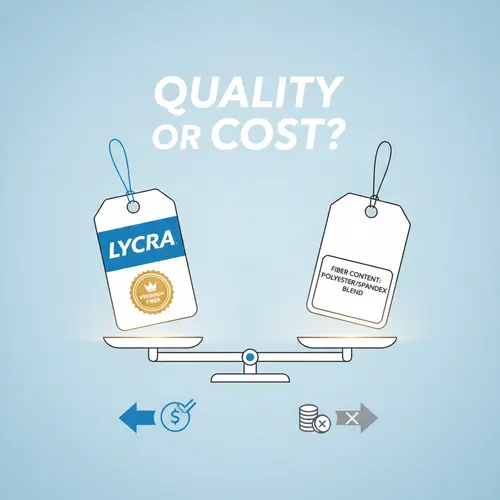
Spandex, elastane, and Lycra are chemically the same fiber — a stretch-and-recover polyurethane yarn. Lycra is simply a branded, quality-controlled version of it, made by The LYCRA Company. In our own sourcing, the real difference for most swim orders isn't performance — it's price and paperwork. Branded Lycra typically runs ¥30-50 more per kilogram than the generic elastane we use by default, and unless a client specifically asks for it and is prepared to cover that cost, we don't source it. Here's what that premium actually buys, and when it's worth paying.
At a Glance
Generic elastane (default) | Branded Lycra | |
|---|---|---|
Fiber chemistry | Same polyurethane-polyurea yarn | Same fiber, brand-licensed production |
Sourced how | Domestic Chinese mills, no import step | Increasingly also made in China — see below |
Price vs. generic | Baseline | +¥30-50/kg |
Our default | Yes, for all standard orders | Only if client specifies and covers the cost |
Content verification | Certificate + contract; lab test on request | Same process, same rigor |
Makes sense for | Small-batch, market-testing, most swim functions | Brand marketing claims, contractual buyer specs, large runs |
Why we don't default to branded Lycra
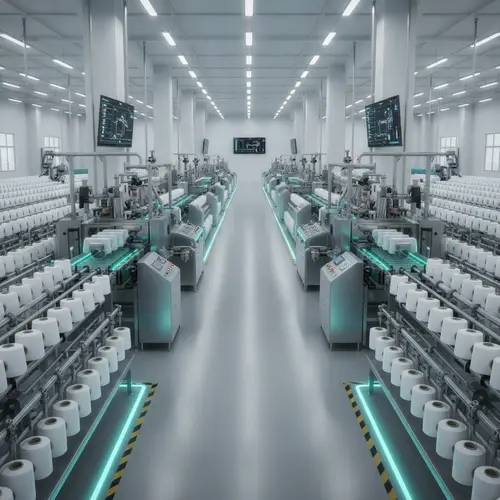
We work with direct fabric manufacturers, not trading companies, and the fabric they produce performs the same functions a client needs — stretch, recovery, chlorine resistance — without needing to import fiber from another country. That's not a corner we cut to save money; it reflects where the industry actually is. China's domestic spandex production capacity has been expanding fast enough that production reached roughly 939,000 tons in 2023, a 19.5% year-over-year increase, and China is projected to hold around 40.5% of the Asia-Pacific spandex market share in 2026, backed by the world's largest textile manufacturing base. There's no scarcity forcing an import step for a low-MOQ swim order.
If a client specifically wants branded fiber — usually because their own packaging or marketing will say "Lycra" — we can source it, but we walk them through the added cost line by line rather than folding it invisibly into the quote. For a small validation batch, that ¥30-50/kg differential rarely changes the outcome of the garment; it mostly changes the price. That's the same logic we laid out in our piece on what low MOQ actually costs — a small order has to justify every added cost line, and brand-fiber premiums are one of the first things worth questioning before you commit to them.
Even when you buy branded Lycra, the composition label in the US generally has to use the generic fiber name; see the label rules in swimwear care labels: heat transfer vs. sewn.
The content-accuracy nuance nobody mentions
Most articles on this topic warn about mills exaggerating elastane content to inflate a fabric's perceived quality. In our own experience, the more common issue runs the other way: declared content on a spec sheet is sometimes conservatively lower than what's actually in the fabric, not higher. It's not usually deception — mills tend to round down rather than risk a claim they can't defend under testing.
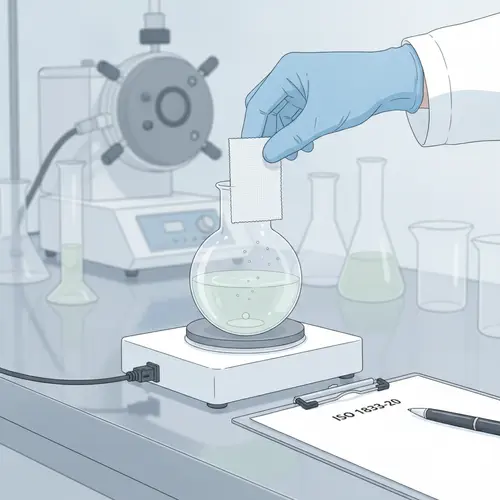
Either direction, the fix is the same and doesn't depend on whether the fiber is generic or branded: get the certificate, put the content percentage in the contract, and if a client needs a specific certification for their own compliance file, we mail swatches out for independent lab testing rather than relying on the mill's declared number. The actual test used to settle a disputed elastane percentage is a real, standardized one — ISO 1833-20 specifies a method using dimethylacetamide to determine the mass percentage of elastane in a blended fabric, which is what a lab runs if a buyer wants the declared content independently confirmed. For more on why a certificate alone isn't the finish line, see our breakdown of what a fabric certificate does and doesn't prove.
Even "Lycra" isn't really an import story anymore
Part of what made "generic vs. Lycra" feel like a domestic-vs-imported decision is now out of date. In November 2025, The LYCRA Company opened its largest global spandex production facility — the LYCRA fiber plant in Yinchuan, Ningxia Province, China — its second production site in the country, adding 30,000 tons of initial capacity with plans to scale to 120,000 tons annually. Branded fiber made in China is now a real supply option, not a hypothetical. That means the price gap we quote clients isn't a shipping or customs cost — it's licensing and quality-control standards attached to the brand name, which is worth knowing before assuming the premium buys you a "more authentic" or "more imported" fabric.

When the premium is actually worth paying
Worth it:
Your own retail packaging or marketing copy will use the word "Lycra" as a claim — using the name without the licensed fiber is a real problem, not just an ethics one
A downstream buyer or retailer requires traceable batch documentation tied to the brand
The order is large enough that ¥30-50/kg is a rounding error against your total unit economics
Usually not worth it:
You're running a small validation batch to test market response before committing to a full production run
Your garment's actual functional need (stretch recovery, chlorine resistance, opacity) is met by standard elastane content — see our explanation of what an "85% recovery" spec actually means, since recovery performance is driven by fiber percentage and knit construction, not brand
You haven't yet decided your fabric sourcing strategy long-term — similar to the sourcing trade-offs we cover in recycled and bio-based elastane sourcing, fiber choice is easier to lock in once your production volume is more predictable
If you want to browse real fabric specs directly rather than take our word for it, our fabric reference library is filterable by elasticity, so you can compare stretch grades side by side.
FAQ
Q: Is Lycra a different material from spandex or elastane?
A: No. All three refer to the same polyurethane-based stretch fiber. "Spandex" is the term used in North America, "elastane" is used in Europe and most international trade documentation, and "Lycra" is a specific manufacturer's brand name for the fiber — not a different chemical composition. Whichever term you use internally, the composition label on the finished garment generally has to use the generic fiber name rather than the brand name — see the label rules in swimwear care labels: heat transfer vs. sewn.
Q: If it's the same fiber, why does branded Lycra cost more? A: The premium covers brand licensing, the manufacturer's own quality-control standards, and batch traceability — not a performance difference in most swimwear applications. In our sourcing, that premium runs about ¥30-50 more per kilogram than generic elastane.
Q: Do I need to specify Lycra for my swimwear order? A: Only if your own marketing, packaging, or a retail partner's requirements specifically call for the branded name. If your priority is stretch and recovery performance rather than the brand claim, generic elastane typically performs the same function.
Q: How do I know the elastane content listed on a fabric spec sheet is accurate? A: Ask for the certificate, put the declared content percentage into the purchase contract, and request independent lab testing on a mailed swatch if the order depends on hitting a specific number. The chemical test used to verify elastane content in a blend is a standardized one (ISO 1833-20).This kind of specific verification question is exactly what separates a real answer from a reassurance — see [the full checklist for vetting a swimwear factory.
Q: Is imported fiber automatically higher quality than fiber made in China? A: Not necessarily anymore. The LYCRA Company itself now operates spandex production in China, including a large facility that opened in late 2025. Branded fiber made domestically is a real option, not a compromise.
Q: Does choosing generic elastane over Lycra affect stretch recovery? A: Recovery performance depends primarily on elastane percentage and knit construction, not the brand name on the yarn. If recovery is your specific concern, that's a fiber-percentage and construction question, not a brand question.
Q: At what order size does sourcing branded Lycra start to make financial sense? A: There's no fixed threshold, but the logic mirrors low-MOQ cost economics generally: the smaller the batch, the more a flat per-kg premium affects your unit cost, so it's worth confirming the marketing/compliance need is real before adding it to a small first order.
Q: Can you provide fiber documentation either way? A: Yes. Certificates and contract terms covering fiber content apply the same way regardless of whether the order uses generic elastane or branded Lycra.
Want to know exactly what's in the fabric before you commit to a run?Get in touchand we'll walk you through the real cost and certification options for your specific order.