
Swimwear Care Labels: Heat Transfer vs. Sewn, Real Costs
A heat-transfer care label has no minimum order and costs about $0.5 per label, plus roughly $0.1 in pressing labor. At 10,000 pieces or more, the label price falls to about $0.1. A sewn care label starts at around 2,000 pieces, costs $0.1–0.5 depending on the process and weave, and adds about $0.15 in sewing labor. Most of our orders use heat transfer, because there is no minimum.
The Short Version
Heat-transfer label | Sewn-in label | |
|---|---|---|
Minimum order | None | About 2,000 pieces |
Label price | About $0.5 each, down to about $0.1 at 10,000+ | $0.1–0.5, depending on process and weave |
Labor per piece | About $0.1 for pressing | About $0.15 for sewing |
Adds up to about | $0.6 on small runs, $0.2 at 10,000+ | $0.25–0.65 |
Fits | Small runs and any quantity | Runs of about 2,000 and up, where its lower label price helps |
The "adds up to" row is simply the label price plus the labor for that method.
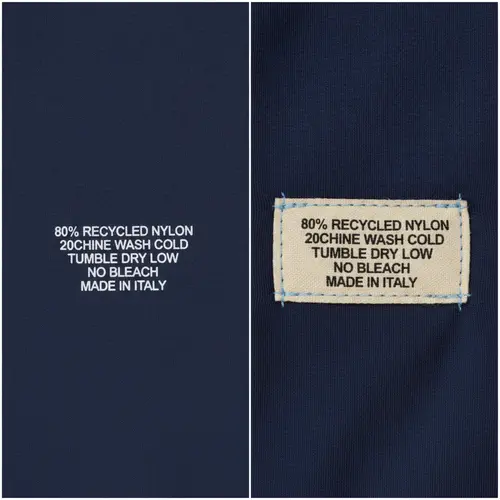
What the Label Has to Do
Before choosing a method, know what the label is for. This section covers US rules at a high level. It is a production guide, not legal advice, and the label content is your responsibility, so confirm details with a compliance advisor. If you sell in the EU, that market has its own textile labeling rules.
In the US, federal law requires most textile products to carry a label listing fiber content, country of origin, and the identity of the manufacturer or another responsible business. Care instructions come from a separate rule. Under the FTC's Care Labeling Rule, care labels must be attached permanently and securely and must stay legible for the useful life of the product.
Two points matter especially for swimwear:
Sets. The FTC says a garment with two or more parts sold as a unit needs only one care label if the care instructions are the same for all parts, attached to the major piece. That covers a bikini sold as a set. The wording is about parts sold as a unit, so if you sell tops and bottoms separately, check with your advisor whether each piece needs its own label. Our article on why swim brands sell sets, not separates covers the production side.
Fiber names. One US label-compliance guide points out that the label must use the FTC's generic fiber name and not a trade name, so "Lycra" cannot stand in for "spandex". Our breakdown of where the Lycra premium comes from explains the material side. Fibers are also generally listed in descending order by weight, so confirm your exact fabric composition with your mill before printing anything.
Heat-Transfer Labels: No MOQ
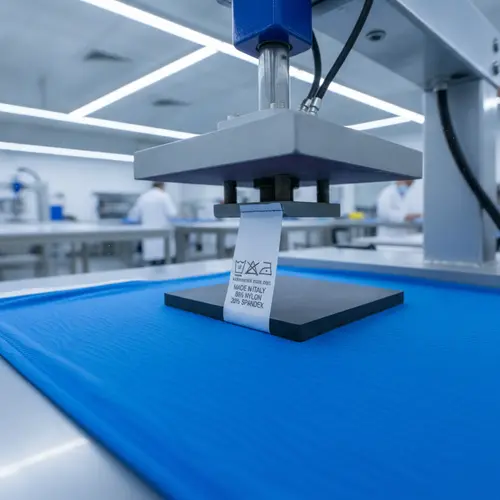
Heat transfer is our main method, and the reason is simple: there is no minimum. A brand testing a small run gets the same option as one ordering thousands.
Label price: about $0.5 each on small runs, falling as quantity rises to about $0.1 at 10,000 pieces or more.
Labor: about $0.1 per piece for pressing the label on.
Total: about $0.6 per piece on a small run, about $0.2 at 10,000+.
At about $0.6 per piece, a 300-piece order adds roughly $180 for labels and application. That is a planning estimate from the two figures above, not a quote.
Sewn Labels: Cheaper Label, But an MOQ
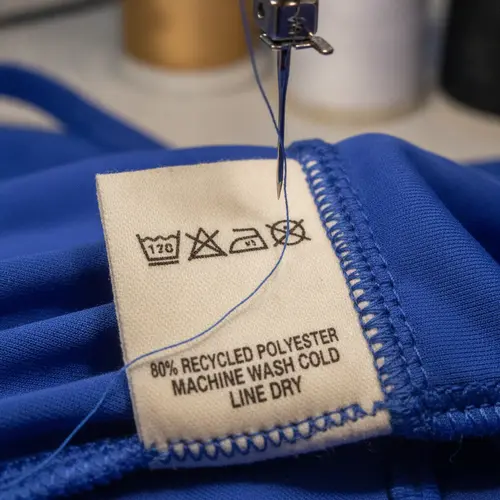
A sewn-in label is attached with stitching, and it comes with a minimum of about 2,000 pieces.
Label price: $0.1–0.5, depending on the process and the weave.
Labor: about $0.15 per piece for sewing it in.
Total: about $0.25–0.65 per piece.
The draw is the lower label price at volume. The catch is the minimum, which puts sewn labels out of reach for most first collections.
Which One Should You Use?
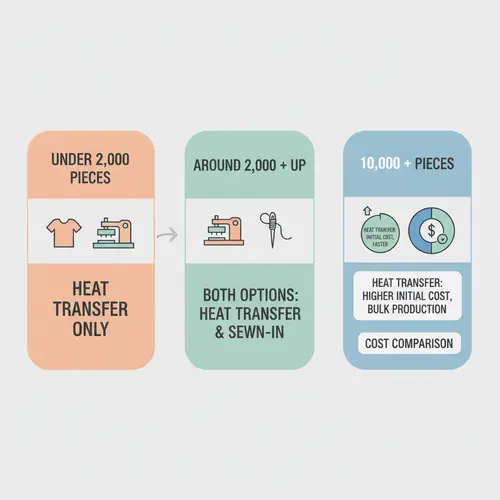
Under about 2,000 pieces: heat transfer is the only realistic choice, because sewn labels have a minimum.
Around 2,000 and up: both work. Compare the label price you are quoted for your process and weave against heat transfer.
At 10,000+: heat transfer at about $0.2 all-in undercuts the sewn range of $0.25–0.65, so do not assume sewn is cheaper at scale without checking.
Whichever you pick, the standard is durability, not the method itself. Because care labels must stay legible for the useful life of the garment, and swimwear is washed and soaked often, ask any supplier how the label holds up to repeated washing before you approve it. Some guides list heat-applied labels among the accepted permanent methods, but what counts is that the label survives.
What to Prepare Before You Order Labels
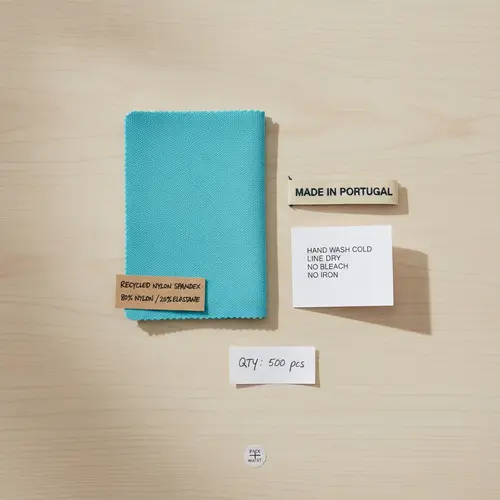
Exact fiber content from your fabric supplier, as percentages, using generic fiber names.
Country of origin and the manufacturer or responsible-business identity for the main label.
Care instructions you have confirmed for the actual fabric and trims.
Your quantity, because it decides which method is available.
The label position on the garment, so it can be planned into the sample.
You can browse real options in our care and composition labels category and our heat transfer and logo category. For the rest of your branding costs, see what custom hang tags actually cost and the budgeting guide. If you are also selling kids' swimwear, labeling is only one part of the compliance picture, and for shipping to Europe see the new EU packaging rules.
Why There Is No One Answer
Like MOQ, label cost depends on your quantity and your choices, not on a single fixed price. That is the same logic as why low MOQ has real trade-offs, and it is why we quote your specific order. Our no-MOQ guide explains how we approach it, and the Real Fabric & Trim Library shows what each spec means.
Labeling is one of several line items worth asking any supplier about specifically, not just accepting a bundled quote for — see [our full factory due-diligence checklist.
FAQ
Q: How much does a swimwear care label cost?
A: A heat-transfer label is about $0.5 each on small runs, falling to about $0.1 at 10,000 pieces or more, plus about $0.1 for pressing. A sewn label is $0.1–0.5, plus about $0.15 for sewing.
Q: Is there a minimum order for care labels?
A: Not for heat transfer. Sewn labels have a minimum of about 2,000 pieces.
Q: Why do most of your orders use heat transfer?
A: Because it has no MOQ, so it works for small runs as well as large ones.
Q: Are sewn labels cheaper than heat-transfer labels?
A: The label itself can be cheaper, at $0.1–0.5, but you add about $0.15 for sewing. At 10,000+ pieces, heat transfer works out to about $0.2 in total, which is below the sewn range of $0.25–0.65.
Q: Does a bikini set need two care labels?
A: Under the FTC's Care Labeling Rule, a garment with two or more parts sold as a unit needs only one care label if the care instructions are the same for all parts, attached to the major piece. If you sell the pieces separately, confirm with a compliance advisor.
Q: Can I put "Lycra" on my composition label?
A: US guidance says the label must use the generic fiber name, such as spandex, and not a trade name.
Q: Does a heat-transfer label last?
A: The standard is that the label stays legible for the useful life of the garment. Ask any supplier how their label holds up to repeated washing before you approve it.
Q: Is this legal advice?
A: No. It is a production guide. Label content is your responsibility, so check it with a compliance advisor for the markets you sell in.
Ready to Plan Your Labels?
Tell us your quantity and style, and we will quote the label method that fits your order. Start with our no-MOQ guide if you are still planning your first run.