
How to Start a Swimwear Brand: Low MOQ & AI Tech Pack Guide
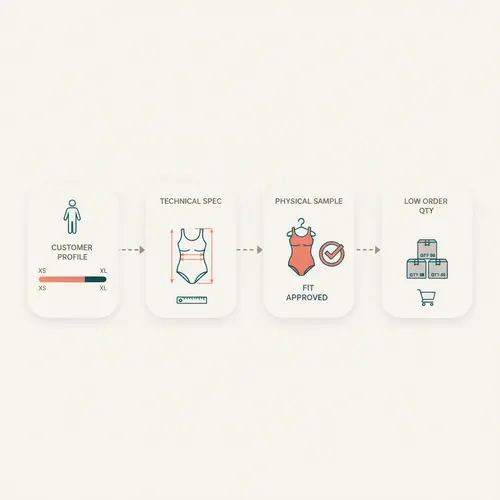
To start a swimwear brand, you need a defined customer, a product specification a factory can work from, an approved physical sample, and an order size your business can support. AI tech packs and low-MOQ swimwear manufacturing can make those steps more accessible, but neither removes the need to check fit, materials, production costs, and compliance before selling.
For an independent designer or first-time founder, the practical goal is not to launch the largest collection possible. It is to develop a focused range that fits consistently, performs in water, and gives you useful sales feedback without committing too much cash to inventory.
Whether you are building a direct-to-consumer label or sourcing for an Amazon FBA business, the strongest starting point is a clear brief—not a request for the cheapest swimsuit.
Define the Customer Before You Choose the Collection
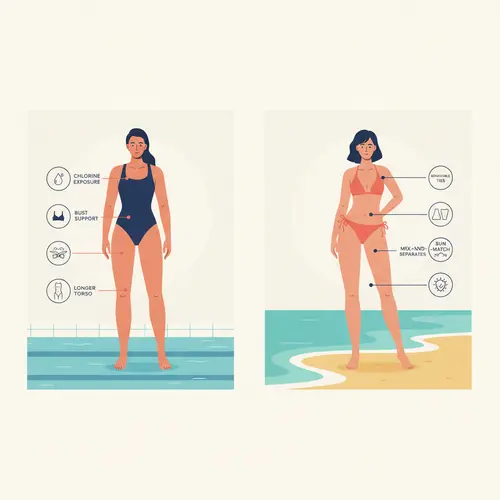
“Women's swimwear” is a category, not a product brief. A customer looking for supportive lap-swimming suits has different priorities from someone buying minimal bikinis for a resort holiday. Those differences affect fabric selection, coverage, construction, and the information you need to communicate to a manufacturer.
Describe the intended wearer, use case, target retail price, size range, and sales market. Then identify the fit problem or design preference your first product will address. That might be adjustable support, more torso length in a one-piece, or bikini separates that let customers choose different top and bottom sizes.
A focused first collection also makes development easier to control. Related styles may be able to share an approved fabric, lining, or trim, subject to the manufacturer's assessment. Each additional color, print, or construction detail creates another sourcing and approval decision.
For DTC founders, product differentiation and fit feedback may justify developing an original design. For white-label sellers testing a category, an existing design may be a more practical starting point. Choose the route that answers your current business question.
Choose Between Custom Swimwear, Private Label, and Ready Stock
A custom swimwear project gives you more control over silhouette, coverage, materials, and construction. It also requires development work: patterns, samples, revisions, and confirmation that the design can be produced consistently.
OEM generally refers to manufacturing against a buyer's design and specifications. ODM usually involves a supplier-developed design that the buyer selects or adapts. Private label describes selling a product under your own brand; it can overlap with either arrangement. Suppliers use these terms differently, so confirm the actual scope rather than relying on the label alone.
For example, ask whether you can change the pattern or only select colors and add branding. Clarify design ownership, exclusivity, permitted modifications, and whether development charges include access to any pattern files.
A ready-stock catalog serves a different purpose. Existing inventory may help you test an assortment without waiting for a new production run, but available sizes, quantities, and replenishment options need checking. Ready stock does not automatically mean relabeling or private-label customization is available.
OYOYI supports these different sourcing conversations through custom sampling and small-batch production, OEM/ODM and private-label services, and a ready-stock catalog. The appropriate route depends on how much product control you need and how much development you are ready to manage.
Build an AI Swimwear Tech Pack That Supports Real Sampling
A swimwear tech pack is the working specification that connects your design intent to the factory's development process. A mood board can explain the look, but it cannot reliably communicate how a leg opening should be finished or where a strap should attach.
An AI swimwear tech pack can help organize an initial brief. Its value is in making requirements visible and easier to discuss—not in making unverified specifications production-ready.
Before sampling, work with the manufacturer or a technical designer to confirm that the pack covers:
Front and back technical views, including coverage and key construction details.
A bill of materials identifying the shell fabric, lining, elastic, hardware, labels, and other components.
Base-size garment measurements, measurement methods, and agreed tolerances.
Construction instructions for seams, openings, straps, cups, and fastening points.
Color references, print placement, label artwork, and packaging requirements.
A revision history showing which specifications and sample comments are current.
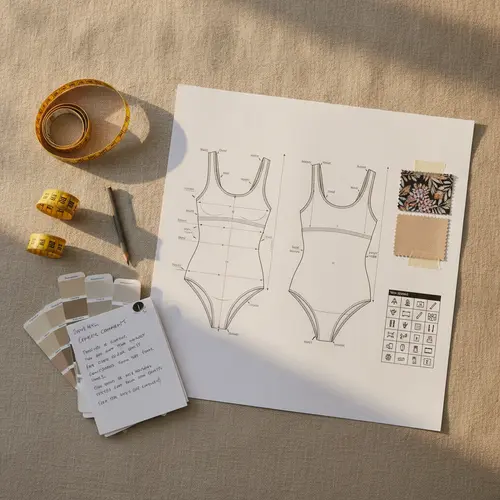
Swimwear requires particular care with measurements. Body measurements are not the same as finished garment measurements. Stretch styles often use negative ease, meaning the garment is smaller than the corresponding body dimension, but the appropriate amount depends on the fabric, construction, support, and intended fit. Applying one reduction percentage to every style is not a sound substitute for pattern development.
Size grading also needs review. Simply enlarging every dimension by the same amount can create problems with bust support, torso length, and coverage across the range.
OYOYI's free AI Tech Pack tool offers an entry point for founders who need to turn an idea into a structured development brief. Have the resulting specifications reviewed before treating them as instructions for bulk production. AI cannot confirm fit on a body, feel elastic tension, or establish legal compliance.
Select Fabric and Lining as a Working Combination
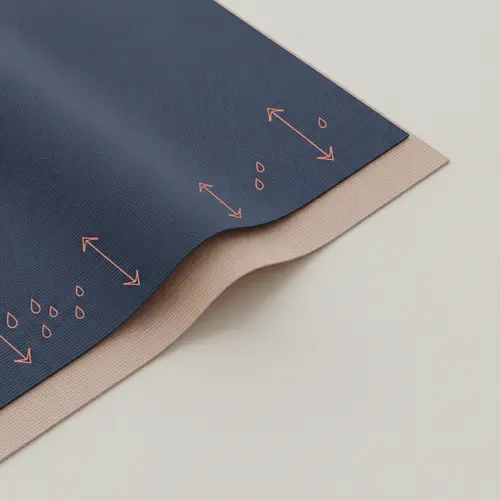
Fabric composition is useful information, but it does not tell you everything about a swimsuit. Two fabrics with the same fiber percentages can behave differently because of yarn choice, knit construction, finishing, and elastic-fiber performance.
Nylon/elastane and polyester/elastane blends are common options for stretch swimwear. Rather than choosing on composition alone, request swatches and discuss the product's actual use. A pool-focused style needs particular attention to chlorine exposure, while every style still needs suitable stretch, recovery, opacity, and comfort.
Fabric weight, usually expressed in grams per square meter, is another specification—not a guarantee of quality. A heavier fabric does not automatically provide the best support, and a lightweight fabric is not automatically unsuitable. Evaluate the complete garment.
Lining deserves the same attention as the outer fabric. A shell fabric may stretch comfortably while an incompatible lining restricts movement or changes the fit. Light colors should be assessed when wet and under realistic stretch, not only as dry swatches on a desk.
Ask the supplier what evidence supports claims such as chlorine resistance or UV protection. An elastane percentage does not prove chlorine durability, and an ordinary fabric description does not substantiate a UPF claim. Match any performance testing to the material, intended claim, and destination market.
For a first low-MOQ order, available stock fabrics and standard trims may reduce sourcing complexity. Confirm whether those materials can be reordered; a successful first batch is harder to repeat if its fabric is no longer available.
Understand What a Low MOQ Actually Applies To
MOQ means minimum order quantity. In swimwear manufacturing, the important question is what that minimum covers.
A quoted MOQ may apply per style, per color, or to a particular size assortment. Bikini tops and bottoms might count as separate pieces rather than sets. Fabric suppliers, printers, and trim vendors may also have minimums that differ from the sewing factory's requirement.
Before accepting a quote, confirm the production minimum alongside any material or customization minimums. Ask whether sizes can be mixed, whether colors can be combined, and what happens if your order uses less than the required fabric quantity. Clarify who pays for and owns any leftover material.
Low-MOQ swimwear manufacturing reduces the quantity you must commit to; it does not automatically produce the lowest unit price. Pattern development, setup, and other fixed work still need to be covered. A smaller batch can nevertheless be the more sensible commercial decision if it limits unsold inventory while you test demand.
Compare quotes using the same tech pack and material assumptions. A lower price may reflect a different lining, simpler construction, fewer labels, or excluded packaging rather than a more efficient production process.
Budget beyond the garment price. Sampling, revisions, testing, inspection, freight, duties, and fulfillment can affect the cash required to launch. For Amazon FBA sellers, include marketplace fees and the applicable product-preparation requirements when evaluating margin.
Use Sampling to Resolve Fit and Construction Problems
A sample is not only a preview for photography. It is an opportunity to find problems before they are repeated across a production run.
Agree on the approval stages with your supplier. A project may involve an initial development sample, fit revisions, a size-set review, and a pre-production sample made with the intended bulk materials. Some suppliers combine stages, so confirm what each sample is meant to validate and what changes cost extra.
Evaluate the swimsuit on an appropriate fit model or wearer, not only on a hanger. Check movement, coverage, strap pressure, and whether the garment stays in place. For a one-piece, torso length can be as important as bust and hip measurements. For a bikini top, support depends on more than the cup shape: the band, lining, straps, and construction all contribute.
Check seam performance under stretch. A neat-looking seam may still restrict extension or break when the garment is put on. Thread, stitch formation, and fabric need to work together.
Write sample comments as specific, measurable instructions. “The leg opening feels tight at the front” gives the development team a problem to investigate. “Make it better” does not. Once a correction is approved, update the tech pack so that the factory is not choosing between conflicting messages.
Before bulk production, confirm the approved reference sample, current specifications, materials, size quantities, and label artwork in writing. A fabric substitution after fit approval may require another assessment.
Plan QC and Compliance Before Production Starts
Quality control, or QC, checks whether production matches agreed requirements. It is more useful when those requirements are defined before sewing begins.
For swimwear, an inspection plan can cover measurements, symmetry, seam defects, elastic application, color consistency, label placement, and packing accuracy. Agree on how defects will be classified, what inspection coverage is expected, and how unacceptable goods will be handled. An inspection of selected units should not be mistaken for a check of every garment.
OYOYI's QC service can form part of that production-control process. Confirm the inspection scope for your order rather than assuming that QC includes every performance test or regulatory assessment.
Laboratory testing and visual inspection answer different questions. Inspectors can identify workmanship problems, but appearance alone cannot verify fiber composition, restricted-substance compliance, or a UV-protection claim.
Label requirements also depend on where you sell. For US sales, plan the required fiber-content, country-of-origin, and responsible-business disclosures, together with permanent care instructions. A qualifying business name can meet the business-identification requirement; an FTC Registered Identification Number is not compulsory.
For EU sales, fiber-composition labeling uses permitted fiber names and the required destination-country languages. Do not assume that one English-only label covers every market. Have label content, placement, and attachment reviewed before ordering printed labels.
These labeling steps are not a complete compliance checklist. Confirm the applicable apparel-safety, chemical, testing, and documentation requirements for the exact product and market. If you add children's swimwear, arrange a separate review of the relevant testing, certification, and tracking-label obligations.
Make the First Order Useful for the Second
A first production run should generate information as well as revenue. Track which sizes sell, why customers return products, and whether complaints point to fit, coverage, material performance, or inconsistent production.
DTC brands can use that feedback to improve product descriptions and future development. Amazon sellers should reconcile the received assortment with their listings and current fulfillment requirements. Neither channel benefits from ordering more units of an unresolved fit problem.
Before reordering, check whether the original fabric and trims are still available and whether substitutions require approval. Keep the approved sample, specifications, and revision records accessible so that the next order has a reliable starting point.
Set the launch schedule around confirmed milestones. Material availability, sample revisions, testing, production capacity, and shipping all affect delivery. A low MOQ does not, by itself, guarantee a short lead time.
OYOYI offers membership tiers at $0, $39, and $79. When comparing them, check the current billing terms and included benefits separately from the sampling and production quote. Membership pricing alone does not establish the cost or scope of a manufacturing project.
Take the Next Step With a Clear Product Brief
If you are preparing your first swimwear range, start with the decision you need to resolve next. Use OYOYI's free AI Tech Pack tool to structure your concept, then discuss sampling and small-batch customization once the design is ready for technical review. If an existing design better suits your launch, explore OEM/ODM or private-label cooperation, or browse the ready-stock catalog. Bringing a target market, size range, fabric preference, and realistic order plan will make that conversation more productive—whether you are an independent designer, a DTC founder, or an Amazon seller.
Frequently Asked Questions
What is the minimum order quantity to start a swimwear brand?
There is no universal minimum. The MOQ depends on the supplier, style, color, materials, and customization involved. Ask whether the quoted quantity applies to each style or color, whether sizes can be mixed, and whether bikini tops and bottoms count separately. A stock fabric or existing design may offer a different starting quantity from a fully custom development.
Can I use an AI tech pack to manufacture custom swimwear?
An AI tech pack can help organize a design brief for a manufacturer, but its contents need technical review. Confirm measurements, fabric and lining specifications, construction details, and size grading before sampling. Physical samples are still necessary to evaluate fit and performance; AI output is not production approval.
How should I choose fabric for my first swimwear collection?
Start with the intended use and evaluate swatches alongside the proposed lining. Check stretch and recovery, wet opacity, comfort, and the evidence supporting any durability or protection claims. Do not choose solely by fiber percentages or fabric weight. Ask about availability for both the first order and likely reorders.
Is private-label swimwear better than custom OEM manufacturing for a startup?
It depends on what you need to validate. An existing private-label design may reduce development work when you are testing a sales channel or assortment. Custom OEM manufacturing is more suitable when your differentiation depends on an original fit, silhouette, or construction. Confirm the supplier's definitions, customization limits, and design-ownership terms before choosing.
What should I prepare before contacting OYOYI about sampling or production?
Prepare your design references or AI tech pack, intended customer and sales market, size range, preferred materials, estimated quantities, and target launch window. State whether you want custom development, an OEM/ODM or private-label arrangement, or ready-stock products. You can then clarify sample stages, MOQ, QC scope, labeling needs, and the full quotation before committing to an order.