
Swimwear Construction Glossary: The Parts Buyers Actually Ask About
Most swimwear construction terms get used loosely — "lining," "gusset," "seamless" — without buyers or even some suppliers agreeing on what they actually mean or why they matter. This glossary defines the terms that come up most often in real swimwear sourcing conversations, with the real construction risk behind each one and a link to the full data where we've broken it down.
The Short Version
Term | What it actually is | Real risk if done wrong |
|---|---|---|
Gusset | The crotch lining panel | Wrong material choice affects hygiene and comfort, not just looks |
Strap | The connector between front and back panels | Construction method changes whether it can be trimmed to length |
Underwire | The rigid support band under the cup | Poke-through is usually a construction issue, not a wire-quality one |
Bust support | Structural elements beyond padding alone | Padding alone isn't structural support |
Hardware | Rings, clasps, sliders, connectors | Plating method affects durability more than the metal choice does |
Seam | The stitched or bonded join between panels | "Seamless" rarely means literally no seams |
Cut-out edge | An open or raw edge in the garment | Needs specific reinforcement or it curls and distorts |
Lining | The inner layer under the face fabric | Solves opacity and comfort, not just modesty |
Gusset
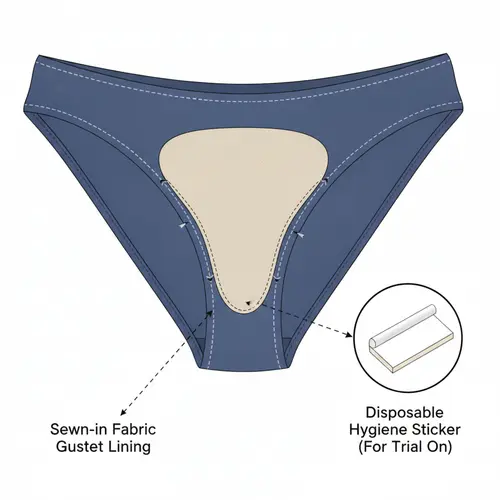
The gusset is the lining panel sewn into the crotch area of a swimsuit, separate from the main outer fabric — the same general construction principle used across intimate apparel broadly to ease movement and add a functional layer between skin and outer fabric, adapted here to swimwear's specific hygiene and wet-fabric needs. It's easy to confuse with a hygiene sticker, which is a different, disposable solution to a related problem. The real difference between a gusset lining and a hygiene sticker comes down to cost and function — a sticker is a one-time, disposable adhesive layer; a gusset is a permanent, sewn-in fabric lining, and the two solve different problems rather than being interchangeable options for the same one.
Strap
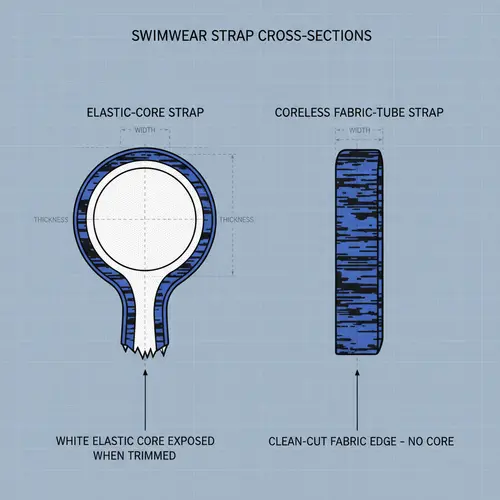
A strap connects the front and back panels of a swimsuit, and how it's built changes what you can do with it after the fact. Elastic-core straps and coreless fabric-tube straps are the two main construction methods, and they have a real, opposite trade-off: an elastic-core strap exposes its white core if trimmed to a shorter length, while a coreless fabric-tube strap can be cut down by the customer without that problem — but each has its own reason to be the right choice depending on the garment.
Underwire
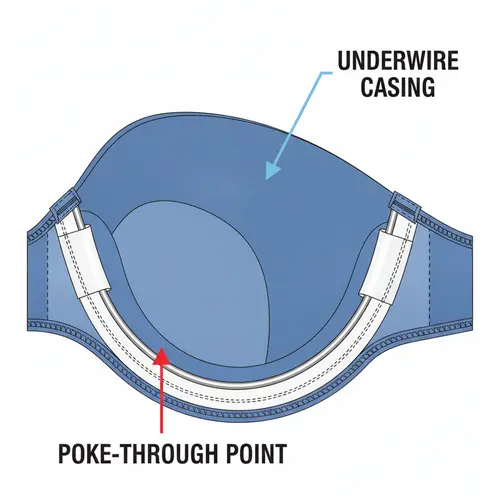
The underwire is the rigid support band sewn into the cup base of a structured swimsuit top, and it's frequently blamed unfairly. Underwire poke-through is almost never actually a wire-quality problem — genuine stainless steel underwire barely varies in price between suppliers, so when poke-through happens, the real cause is almost always in the surrounding construction and QC, not the wire itself.
Bust Support
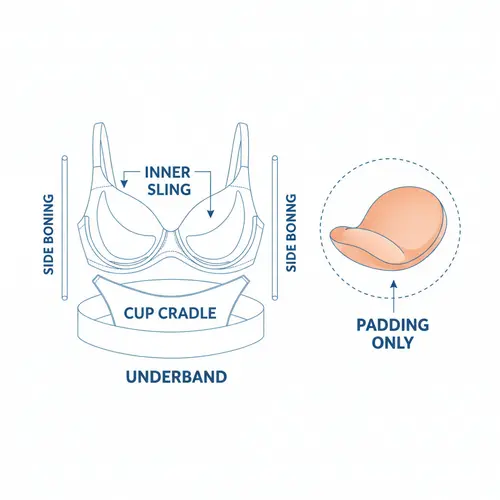
"Support" is one of the most overused claims in swimwear marketing, and it's worth separating from padding entirely. Real structural bust support comes from six specific construction elements working together, not from foam alone — a padded shelf bra can look supportive without actually providing structural support, which is exactly the distinction worth checking for before you assume a "supportive" claim means what it sounds like.
Hardware
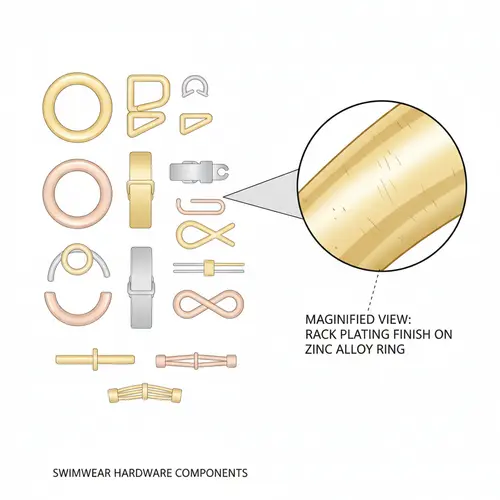
Hardware covers rings, clasps, sliders, and connectors — anything metal or resin used for adjustability or closure. The plating method matters more than the base metal choice: rack plating is the default for swimwear-specific hardware, with barrel plating reserved for the smallest parts, and zinc alloy generally beats stainless steel on real production economics once mold cost, lead time, and finish reliability are weighed together.
Seam
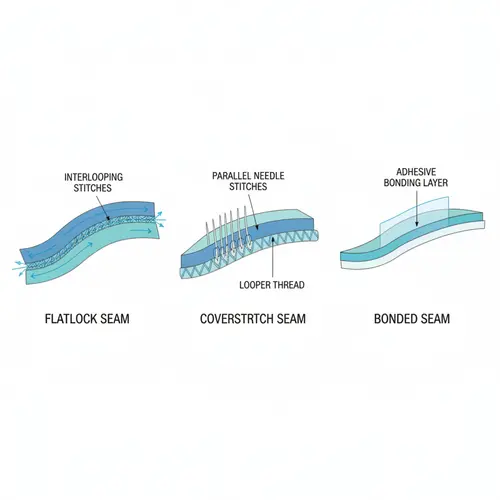
A seam is the stitched, bonded, or fused join between two fabric panels, and the construction method behind it determines how it actually holds up. Industry construction standards for swim treat seam type as a specified, tested requirement rather than a cosmetic choice — general seams, coverstitch, and binding each carry their own stitch-per-inch and finishing specifications in professional swim construction guidelines. Flatlock, coverstitch, and bonded seams fail in different ways, and "seamless" on a product listing almost never means the garment is literally free of seams — it usually describes a specific construction technique that minimizes visible seam lines, not their total absence.
Cut-Out Edge
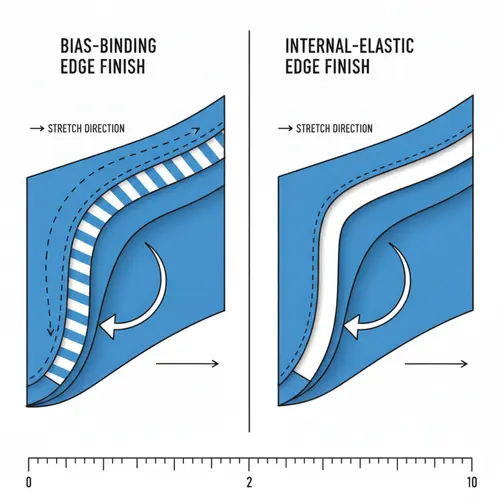
A cut-out is an open or raw edge in a garment — a deliberate gap in the fabric for a design effect — and it needs its own reinforcement to stay stable. Bias-binding and internal-elastic techniques are the real methods used to stabilize an open or raw edge so it doesn't curl or distort over repeated wear, rather than leaving the cut edge unfinished.
Lining
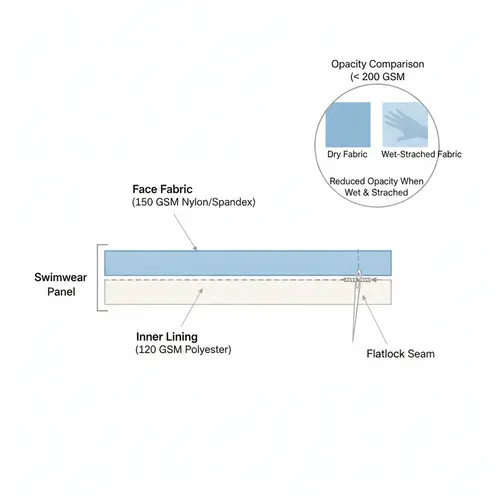
Lining is a separate inner fabric layer sewn underneath the face fabric, and it solves more than one problem at once. Fabric under about 200 GSM gets lined in our standard practice, even in dark colors that already look opaque dry — because lining affects comfort against the skin as much as it affects wet-stretched opacity, and the two reasons for lining are worth separating when you're speccing a garment.
Care and Composition Label
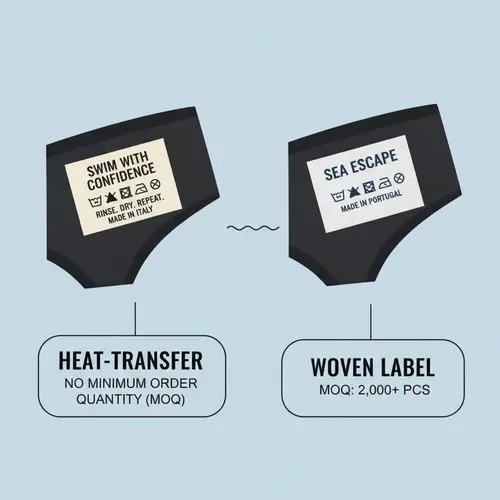
The permanent label listing fiber content and wash instructions, distinct from a branded hang tag. Heat-transfer and sewn-in labels have different MOQs entirely — heat transfer carries no minimum order at all, while sewn labels start around 2,000 pieces, which matters for a brand's first small production run.
Hang Tag

The branded tag attached externally to the garment, separate from the permanent care label sewn inside it. A custom hang tag's real cost centers on a one-time mold fee, not a per-unit charge, and any quantity can actually be produced despite a standard cost-efficient range existing.
Why This Glossary Exists
A tech pack or a sourcing conversation moves faster when both sides mean the same thing by the same word. Each term above links to a full article with the real construction data, cost, and trade-offs behind it — this page is the map, not the full explanation for any single term. For the broader materials picture, see our Real Fabric & Trim Library, and for how these parts come together by garment type, see our construction guide organized by swimwear type. You can also browse real components directly in our materials database.
FAQ
Q: What's the difference between a gusset and a hygiene sticker?
A: A gusset is a permanent, sewn-in lining panel in the crotch area. A hygiene sticker is a disposable adhesive layer. They solve related but different problems and aren't interchangeable.
Q: Does "seamless" swimwear actually have no seams?
A: Almost never literally. "Seamless" usually describes a construction technique that minimizes visible seam lines, not the total absence of seams.
Q: Is underwire poke-through caused by low-quality wire?
A: Rarely. Genuine stainless steel underwire barely varies in price between suppliers, so poke-through is almost always a surrounding construction or QC issue, not the wire itself.
Q: Does padding alone count as bust support?
A: No. Real structural support comes from specific construction elements working together — padding alone can look supportive without providing structural support.
Q: Why does strap construction matter if the length looks the same?
A: Elastic-core straps expose their white core if trimmed shorter. Coreless fabric-tube straps can be cut down without that issue. The right choice depends on the garment and whether adjustability matters.
Q: Is a hang tag the same thing as a care label?
A: No. A hang tag is an external branded tag, usually removed before wear. A care label is sewn permanently inside the garment and lists fiber content and wash instructions — it has its own separate cost and MOQ structure.
Have a Term You Want Defined for Your Own Project?
Send us your design or reference photos and we'll walk through the real construction terminology relevant to your specific garment. Start with our no-MOQ guide if you're still planning your first order.